By Lukas Fiala
Earlier this week, I was asked to reflect on the main drivers of Chinese foreign policy in the coming months and into next year, in the context of the ongoing Russian war in Ukraine.
While I was studiously reading the latest Chinese commentary on the war and Beijing’s relationship with Moscow, Kyiv, and the United States, I was reminded of two priorities that shape Chinese foreign policy engagements globally but that may well compete at times in the coming months.
The first concerns the broader push-back against the, now perhaps formerly, U.S.-led international system. All things considered, China is now in a more powerful position than even a year ago in its ability to discredit U.S. leadership, especially in the economic and security domains.
Beijing has moreover spent the last four years creating and promoting its own global initiatives, providing Chinese officials with the vocabulary to articulate Chinese positions on issues such as the wars in Ukraine, Gaza, and Iran with growing confidence.
Sure, Chinese ideas are vague and often skirt over inconvenient complexities to bolster Chinese official diplomatic positions. But the overall point still stands: Beijing has invested intellectual and diplomatic capital into articulating these narratives and, in some cases, stitching together coalitions from across the Global South to support them.
And Washington’s recent adventures in the Middle East present yet another opportunity for China to sell its alternative vision of stability, one that resonates with developing country priorities.
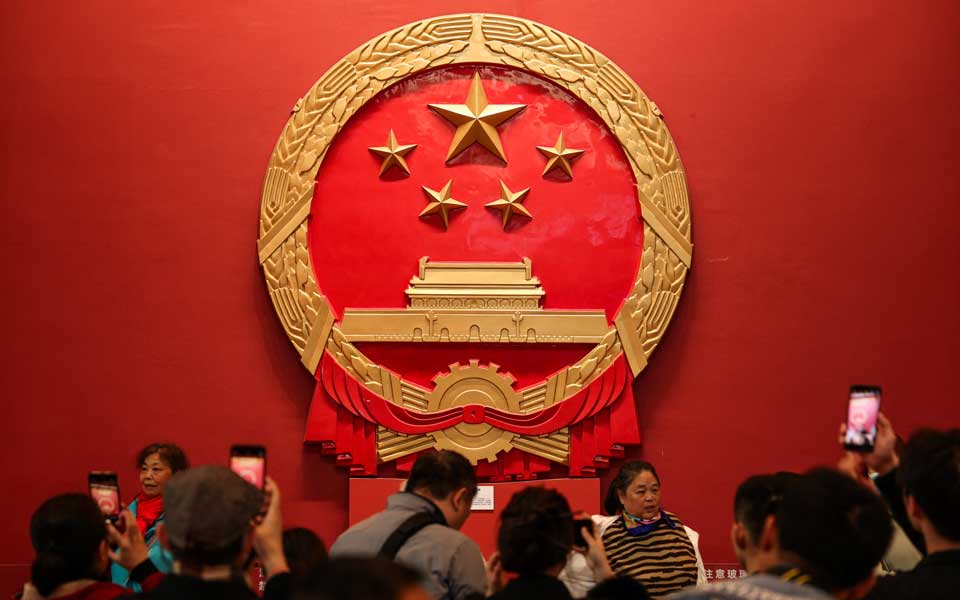
At the same time, however, the Chinese government’s second – and perhaps competing – priority in the coming year will be domestic politics, especially as we’re heading towards the crucial political year of 2027 and the 21st Party Congress. The latter will be a period-defining event, with a significant leadership reshuffle, even if Xi remains in charge.
In the context of the unprecedented purge of the military’s senior leadership in recent months, culminating in the removal of Generals He Weidong and Zhang Youxia, domestic political calculations and internal party politics may well overshadow the implementation of China’s initiatives to reform the international order or, in some cases, specific regional priorities.
Take, for instance, China’s carefully calibrated response to the war in Iran, reiterating longstanding Chinese diplomatic rhetoric while avoiding further alienation with the U.S. ahead of a series of meetings between Xi and Trump later this year. In Beijing’s view, stabilising the bilateral relationship with Washington may well contribute to greater predictability ahead of Xi’s crucial political year, easily outweighing the benefits of becoming entangled in a regional conflict in the pursuit of pushing back more assertively against U.S. primacy.
These two priorities might mean that China will perform a balancing act in the coming months between protecting key Chinese interests when necessary, while avoiding greater disruption ahead of a monumental juncture in Chinese domestic politics.
Caution, of course, doesn’t mean passivity, and a newly consolidated Chinese leadership may well feel emboldened to pursue a more assertive foreign policy agenda. But overall, it seems that the U.S. is not the only great power undergoing a period of domestic political transition that will reverberate across its relationship with the rest of the world.
Lukas Fiala is the Project Head for LSE IDEAS