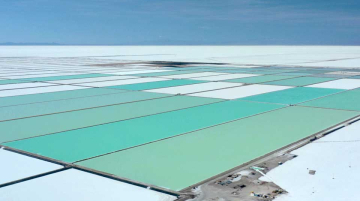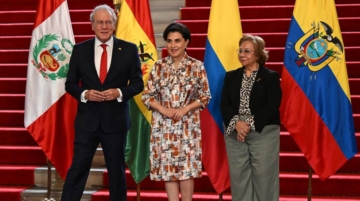

The Lithium Triangle is one of the most important geostrategic sectors in the Latin American landscape. Spanning through Chile, Argentina and Bolivia, the Lithium Triangle is home to between 60 to 75% of the earth’s known lithium reserves and is the centerpiece of the global energy transition.
While South America possesses the resource, China dominates the ability to process it, holding a near-monopoly on the global industry. Unsurprisingly, Chinese companies have built a strong and visible presence across the lithium industries of all three countries.
But elections across the Triangle have begun reshaping this landscape. Recent political shifts in Bolivia and Argentina have weakened China’s position and opened new doors for the United States, turning electoral outcomes into a wildcard with the power to alter geostrategic dynamics in the critical minerals sector.
Now, in Chile, the crown jewel of the Lithium Triangle, the results of the first round of the presidential election suggest the regional political pendulum is swinging to the right, potentially extending a trend that is increasingly unfavorable to China’s strategic interests.
A True Geopolitical Swing State
Chile is a rare example of a true geopolitical swing state. Historically, it is aligned with the U.S. on the values and principles side, with support for democracy and free markets. Even so, it has remained open to robust trade and engagement with China. For much of the 21st century, successive presidents from across the political spectrum – Ricardo Lagos, Michelle Bachelet, Sebastián Piñera, and Gabriel Boric – have carefully balanced both superpowers and crafted a sort of strategic autonomy.
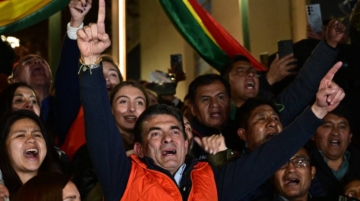
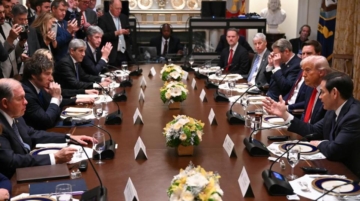
The balance, however, appears to be faltering as the region faces Trump 2.0. In contrast with the Trump first term, when the likes of Bolsonaro and Bukele only had to be rhetorically aligned, today’s resurgent Latin American right appears more inclined to undertake concrete actions to counter Chinese influence in key sectors. Bolivia’s Rodrigo Paz and Argentina’s Javier Milei offer clear examples: both have reoriented foreign policy toward Washington, in part because of the lithium question.
This raises the same question for Chile: could its election usher in a strategic repositioning of its own?
A Country Leaning Right
The results of the presidential elections are telling. While Jeannette Jara from the Communist Party (part of the incumbent coalition) came in first place with almost 27 % of the vote, she was closely followed by far-right candidate José Antonio Kast with approximately 24%.
The candidates are set to have a runoff election on December 14. Kast enters with a structural advantage, given the strong performance of other right-wing candidates: Johannes Kaiser on the extreme right with roughly 14%, and Evelyn Matthei from the center-right with 12%.
While Kast, Kaiser, and Matthei generally adopt pragmatic views toward China, both Kast and Kaiser have been openly critical at times. Their positions do not guarantee China a stable foothold in Chile. If elected, Kast will likely move closer to the U.S. on security, migration, markets, and free trade policies, creating opportunities for new bilateral initiatives in sectors like lithium. It is no coincidence that Washington is widely expected to be one of Kast’s first international destinations.
The Feasibility of a Major Geostrategic Shift
Despite these political shifts, a dramatic break in Chile’s China policy remains unlikely. Relations with China are critically important to Chile’s economy, as China is the country’s top trading partner for both exports and imports. It is top export destination for Chilean copper (the country’s most important export), while Chinese companies hold significant stakes in lithium production as well.
These realities point to Chile continuing its engagement with China. Yet they also underscore a growing need for diversification. This is where deeper cooperation with the United States becomes relevant.
As signaled by the examples of Bolivia and Argentina, Washington is now invested in competing with China in the critical minerals sector of its own hemisphere, particularly in the Lithium Triangle.
Of all the countries of Latin America, Chile remains the most strategically important for copper and lithium. The runoff election may not trigger an immediate geostrategic realignment, but a Kast presidency could mark the start of a gradual recalibration when it comes to the country’s critical minerals.
As the Lithium Triangle’s most valuable player, Chile’s next moves will shape not only its own mineral future but the broader geopolitical contest unfolding across the region.
Alonso Illueca is CGSP’s Non-Resident Fellow for Latin America and the Caribbean.