Peru’s June presidential runoff is drawing attention in China, where analysts are watching whether the next government will reshape ties with Beijing and place new pressure on Chancay, a Chinese-operated megaport that has become one of China’s most important infrastructure projects in Latin America.
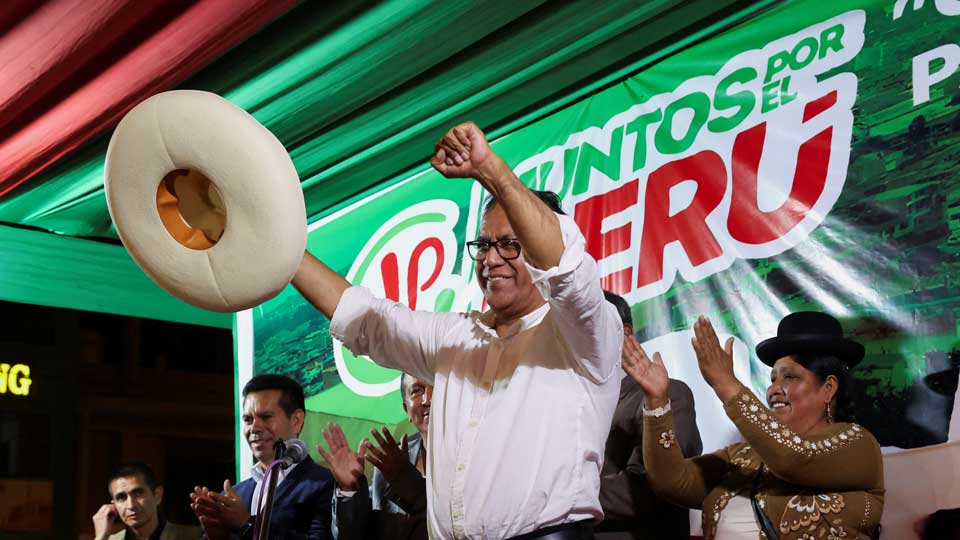
The vote will pit right-wing candidate Keiko Fujimori against left-wing congressman Roberto Sánchez. Chinese analysts say the result could draw Chancay deeper into the U.S.-China contest for influence in Latin America, following tensions in Panama, where Washington pressured Hong Kong-based CK Hutchison over its port operations near the Panama Canal.
Chancay, a $1.3 billion deepwater port about 80 kilometers north of Lima, is majority-owned by China’s state-run Cosco Shipping Ports. The port is designed to cut shipping times between Peru and China from about 33 days to 23 days and reduce logistics costs by at least 20%, giving Peru a more direct route for exports to Asia.
Chancay has become a target of U.S. scrutiny. U.S. officials and lawmakers have warned that the port could create risks of Chinese espionage or future military use, claims Beijing has rejected.
In April, Rep. Maria Elvira Salazar, chair of the House Foreign Affairs Subcommittee on the Western Hemisphere, called on Peru’s next government to “take back” the Chinese-controlled port and said Washington would help.
In an interview with Hong Kong China News Agency, Li Min, an assistant researcher at the Shanghai Academy of Social Sciences’ Institute of International Relations, said U.S. concern over Chancay reflects three layers of strategic anxiety:
- Containing China’s logistics foothold in Latin America: Li said Washington sees Chancay as a challenge to trade routes long dominated by the Panama Canal and North American ports. The Chancay-Shanghai direct route weakens U.S. control over regional logistics and gives China a more efficient channel for South American minerals, agricultural goods, and other exports.
- Building a “containment” framework in the Western Hemisphere: Li accused U.S. officials of politicizing a commercial port by repeatedly raising “dual-use” military concerns. She said Washington is using language about security and sovereignty to pressure local governments, interfere with contracts and push Chinese infrastructure projects into U.S.-led investment and security rules.
- Using the election to shape Peru’s political direction: Li said U.S. pressure over Chancay reflects a new form of “Monroe Doctrine” thinking. In her view, Washington wants Latin American countries to decouple from China in critical infrastructure, minerals and telecommunications, and to reassert U.S. dominance in the Western Hemisphere.
Li compared the Chancay dispute with recent U.S. pressure over Chinese-linked ports in Panama. In both cases, she said, Washington has used a “sovereignty anxiety” narrative to argue that Chinese control of infrastructure weakens national sovereignty. But she said the two cases are different. The Panama Canal has a long history of U.S. military and institutional influence, while Chancay is a Peruvian sovereign project. That leaves Washington with fewer direct tools, forcing it to rely more on political pressure and regulatory scrutiny.
Li said Peru’s next government could face pressure to move closer to Washington, especially if Fujimori wins. But she argued that a full takeover or cancellation of the port is unlikely because China-Peru economic ties are deeply embedded, the legal barriers are high, and Chancay brings trade and jobs Peru can hardly ignore.
Still, she warned that the election could create new uncertainty for Chinese companies.
“If a right-wing candidate wins, it will be difficult to directly abolish the port contract,” Li said. “But the new government could increase operating difficulties for Chinese companies by raising regulatory costs and attaching new investment conditions.”
Li said the U.S. “sovereignty opposition” narrative could continue to politicize Chancay after Peru’s next government takes office, creating a new round of diplomatic and public pressure.
That pressure, she said, could “force Peru to make a choice more inclined toward the United States between China and the U.S., squeezing the space for China-Peru cooperation.”