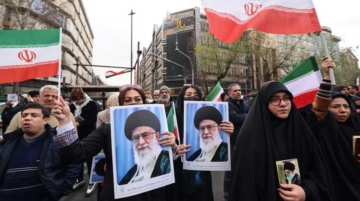
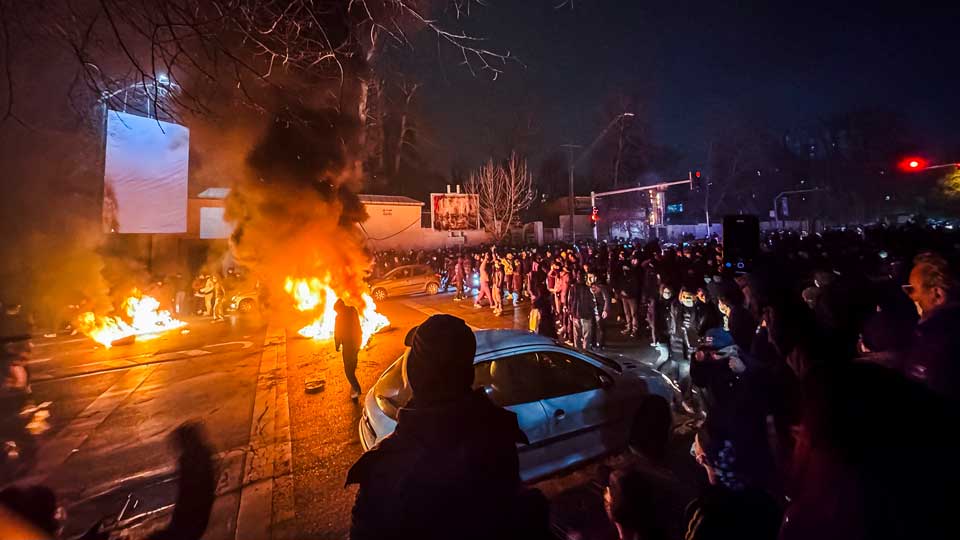
As Iran undergoes another wave of political protests, a question has been circulating on Chinese social media: could Iran become “the next Venezuela”? The speculation gained traction after the United States took action against Venezuelan President Nicolás Maduro, combined with increasingly tough rhetoric on Iran from U.S. President Donald Trump and Israeli Prime Minister Benjamin Netanyahu.
Fan Hongda, one of China’s foremost Mideast scholars and director of the China–Middle East Research Center at Shaoxing University, argues that such a scenario is unlikely. In a recent analysis, Fan writes that despite Iran’s current unrest, the geopolitical conditions that enabled U.S. pressure tactics in Venezuela do not exist in the Iranian case.
Fan points out that the immediate trigger for the latest protests was economic. A sharp depreciation of Iran’s currency, soaring inflation, and the temporary shutdown of Tehran’s Grand Bazaar pushed merchants into the streets. These pressures were compounded by longer-term grievances, including ineffective government measures following the June 2025 “12-day war” with Israel and a worsening water crisis caused by severe drought. Even so, Fan stresses that most Iranians do not want nationwide turmoil.
Public sentiment, he argues, leans more toward improving government efficiency and restoring economic stability than toward regime collapse.
A key reason Iran is not Venezuela, Fan says, lies in the weakness of its exiled opposition. After the protests began, some U.S. and Israeli actors promoted Reza Pahlavi, the son of Iran’s former shah, now living in the United States, as a potential opposition figurehead. Fan points out that Pahlavi has minimal influence inside Iran. Moreover, following the June 2025 conflict and amid widespread anger over Israel’s actions in Gaza, Iranian public hostility toward Israel has intensified, further reducing the appeal of figures closely associated with it.
Fan also highlights a fundamental divergence between U.S. and Israeli interests. Washington, he argues, ultimately prefers a stable Iran – ideally one that is not aligned with U.S. rivals – because Iran’s collapse would endanger broader Middle Eastern security. Israel, by contrast, would benefit most from a severely weakened or fragmented Iran that no longer poses a strategic threat. That outcome, Fan concludes, may align with Israeli interests, but not necessarily with America’s.
From this perspective, Fan argues that the idea that Iran is on the verge of becoming “another Venezuela” overstates both the depth of Iran’s internal crisis and the likelihood of U.S. backing for such a strategy.
WHY IS THIS IMPORTANT? Iran has long become a closely watched case on Chinese social media, where netizens increasingly interpret Middle East crises through the lens of U.S. power and regime-change politics. At the same time, Chinese scholars and official media consistently stress Iran’s geopolitical complexity and internal resilience, pushing back against simplified narratives that assume U.S. pressure can destroy the country.