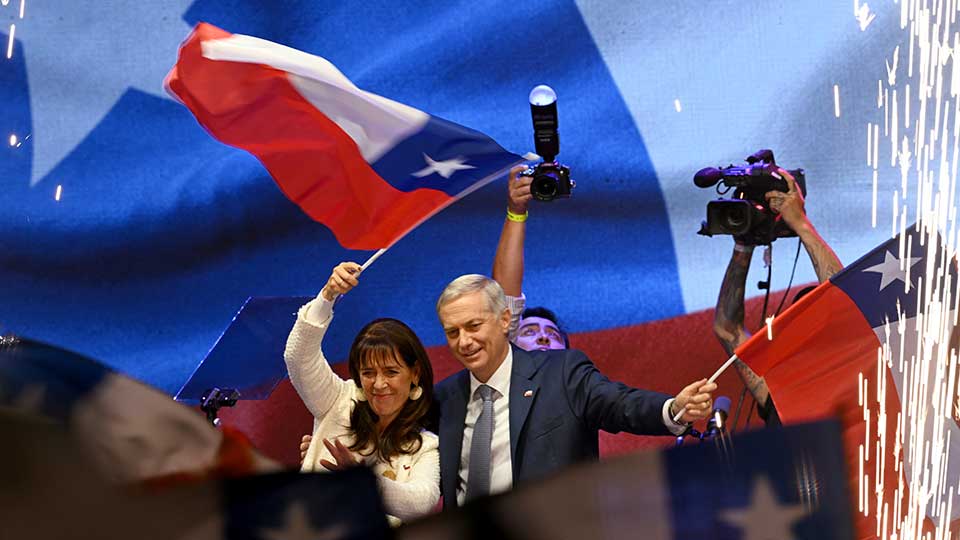
As vote totals came in over the weekend in Chile’s presidential run-off election, Chinese social media began to anticipate what José Antonia Kast’s victory could mean for China.
A WeChat account focusing on international affairs tried to analyze how Kast’s victory could reshape one of Beijing’s most important overseas resource and infrastructure footholds.
The author points out that Beijing has built one of its most entrenched overseas footprints in Chile: It is a major shareholder in SQM and a key investor in the Atacama lithium projects; Chinese firms work closely with Codelco across top copper sites; State Grid and China Southern Grid now control more than half of Chile’s electricity distribution network, anchoring a “minerals–energy–processing” chain few countries can match.
However, Kast is likely to lean to the U.S., opposing Boric’s state-led lithium strategy and favors reopening privatized bidding. The author argues that he would make changes that could subtly disadvantage Chinese firms while inviting U.S., Canadian, and Australian miners to expand, using tougher “national security” review mechanisms to further slow Chinese acquisitions and raise political costs.
In technology, the shift may be even sharper. Chile has so far maintained “tech neutrality,” allowing Huawei to dominate 5G, data centers, and telecom equipment. Kast’s pro-U.S. security orientation could end that neutrality and align Chile with Washington’s “Clean Network” agenda, limiting Huawei in critical infrastructure and opening space for American cloud giants to expand. Subsea cables, data governance, and AI infrastructure may become new arenas of competition.
In the end, the author warns that the ripple effects will not be confined to Chile. Washington increasingly frames Latin America as a strategic front in its rivalry with China. A Chilean right turn could serve as a model for other governments looking to dilute Chinese influence in minerals, energy, and digital infrastructure.
WHY IS THIS IMPORTANT? Chinese media and online commentators are also framing Chile’s election within a broader regional shift. They argue that South America’s political and business environment is undergoing a major transformation – from Bolivia’s recent swing to the right, to Argentina’s Javier Milei openly aligning himself with Donald Trump, to Washington’s December 4 release of the National Security Strategy 2.0. Chinese media view this new U.S. strategy as a fundamental reset of Latin America policy: a move from “democracy first” to “security first,” and from passive defense to active intervention.