
As the United States inserted itself into Congo’s decades-long conflict, a Chinese WeChat commentator dissects the real motivations behind Washington’s diplomacy and why the so-called peace may be more fragile than it seems.
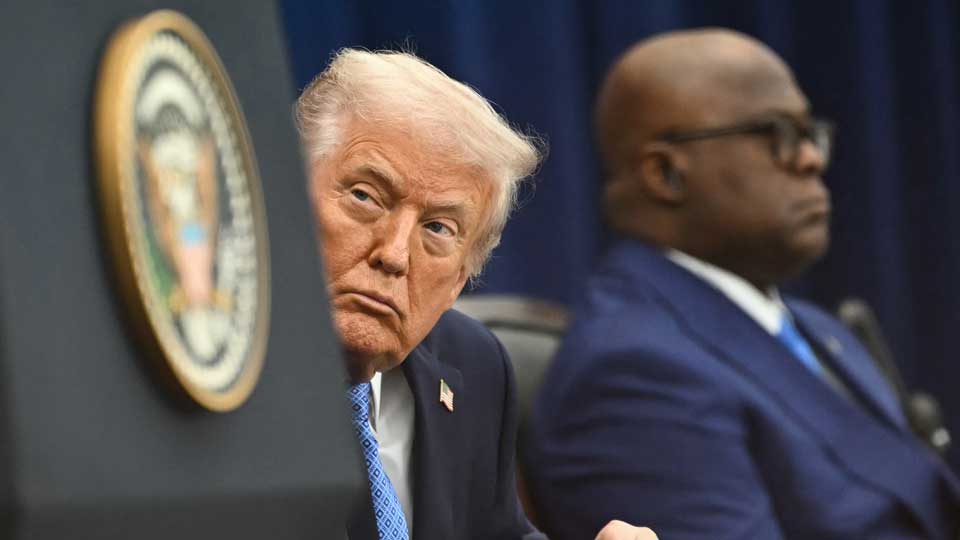
Congolese President Félix Tshisekedi and Rwandan President Paul Kagame last week signed a high-profile peace deal in Washington, presided over by President Trump. While framed as a historic breakthrough, the agreement heavily emphasizes U.S. access to critical minerals such as cobalt and tantalum, which are essential for smartphones and electric vehicles.
Given that Congo holds 50% of the world’s cobalt reserves and produces 73% of the global supply, while China controls 90% of cobalt refining worldwide, Washington’s motivation is clear: to reduce American dependence on Chinese supply chains.
The WeChat commentary underscores a key flaw: the deal prioritizes mineral access over human security.
Eastern Congo’s humanitarian crisis – millions displaced, systemic insecurity, intercommunal tensions – barely appears in the document. The future of the M23 and the FDLR, the grievances of border communities, and the question of who actually benefits from mineral extraction remain unaddressed. Congo’s Chamber of Mines acknowledges that 90% of mining profits currently go to multinational corporations; local communities see only 2% in development funds. Without changing this distribution, expanded resource extraction risks worsening, not easing, social fractures. The author cites Zhu Weidong, a scholar at the Chinese Academy of Social Sciences, who argues that the deeper problem lies in a decades-long trust deficit and the legacy of colonial-era borders, which continue to fuel ethnic tensions.
The commentary also warns that external powers mediating primarily for “resource security” have historically deepened inequalities and fueled new rounds of instability. The United States’ heavy-handed role in designing supply-chain systems, demanding tax stability guarantees, and creating a joint oversight body for mineral exports may reinforce perceptions that peace is being engineered to secure foreign access rather than promote local well-being.
WHY IS THIS IMPORTANT? China is watching Washington’s assertive entry into Congo with concern. Chinese companies already hold significant mining assets, and the U.S. push to secure cobalt and copper threatens to disrupt their position.