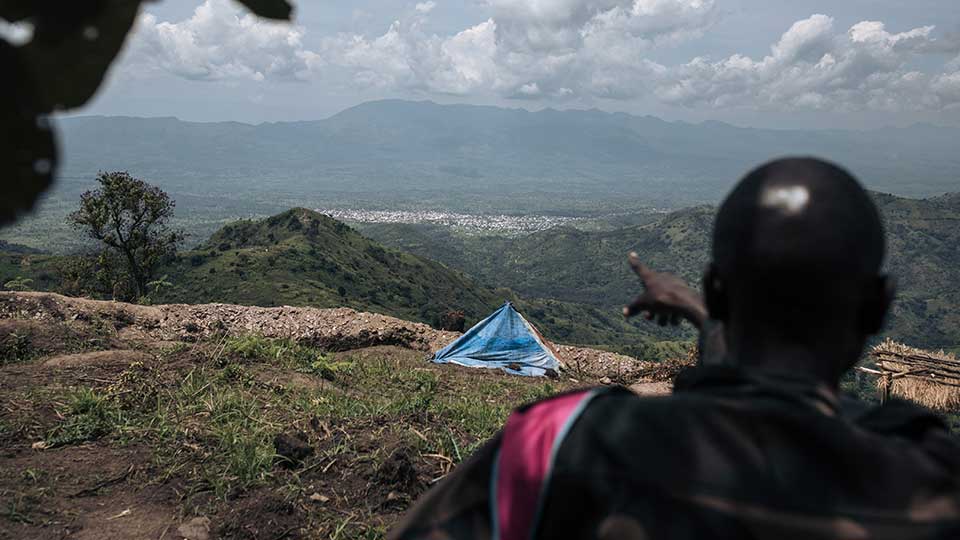
In late November, China’s Foreign Ministry issued a stark warning about the Democratic Republic of Congo: the security situation in the east has deteriorated sharply, with armed clashes, extremist activity and attacks against foreign workers rising again.
Congo sits at the heart of the global copper–cobalt supply chain, and dozens of Chinese miners and traders (Zijin, CMOC, Huayou, Minmetals, Jinchuan, China Nonferrous, China Railway resources, etc.) already operate large projects across the country.
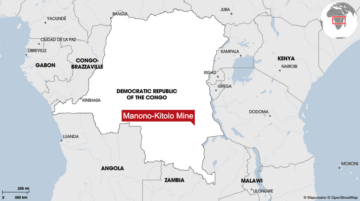
A recent analysis from a WeChat public account that tracks global mining trends unpacks the potential impact on Chinese mining companies from a geographic perspective. Most Chinese copper-cobalt operations are located in the far south of the country, clustered around the provinces of Lualaba and Haut-Katanga.
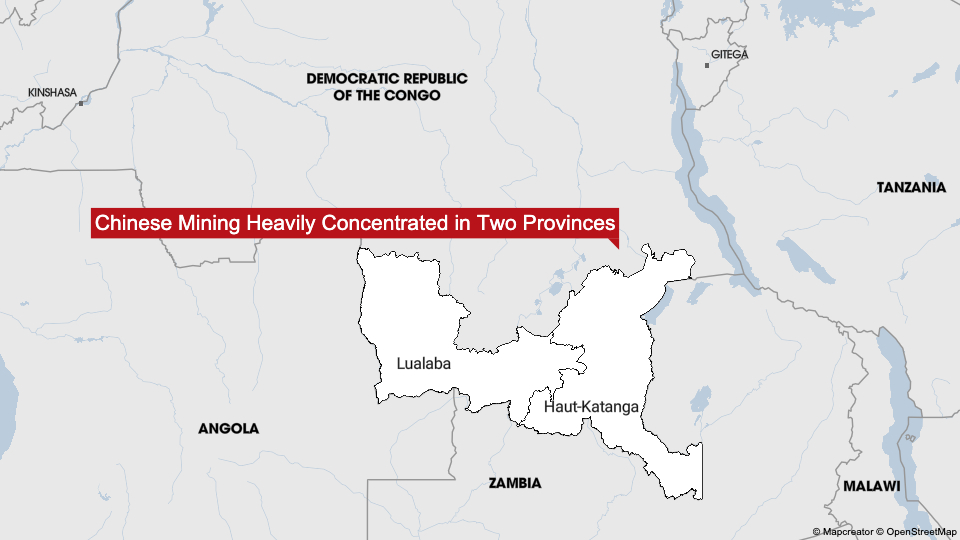
Zijin Mining’s Kamoa–Kakula project is Africa’s largest high-grade copper deposit, with proven copper reserves of 43.69 million tonnes. It produced 437,000 tonnes of copper in 2024 and plans to increase output to 520,000–580,000 tonnes in 2025, making it one of Zijin’s most important copper bases. The mine is located in Kolwezi, Lualaba Province in southern DRC, far from the eastern “war zone,” but if the conflict expands, the transport routes used to ship its copper concentrate could still be disrupted, potentially threatening production.
Also in southern Lualaba Province are Zijin’s Kolwezi copper mine, CMOC’s TFM and KFM copper-cobalt projects, and Huayou Cobalt’s PE527 project.
JCHX’s Lonshi (Longxi) copper project is located in Haut-Katanga Province. Its western section entered production in Q4 2023, with a designed annual output of about 40,000 tonnes of copper. The eastern section is under construction, and once both sections are operating, total annual copper production is expected to reach around 100,000 tonnes. Also in Haut-Katanga is the Kinsevere mine operated by MMG, a subsidiary of China Minmetals.
At first glance, the geography appears reassuring: the major Chinese mines are not inside the conflict areas. But Congo’s internal instability does not stay neatly contained. Transport arteries, cross-provincial highways, and rail links to ports in Tanzania and South Africa are all vulnerable to disruption if conflict escalates or triggers nationwide political turbulence. Even a mine far from the fighting can be hit by delays in concentrate shipment, rising security expenses, or temporary shutdowns caused by threats to staff safety.
The deeper risk comes from what happens when violence erodes the state’s ability to govern. Once a country enters prolonged instability, any local shock can spiral into nationwide logistics breakdowns, regulatory uncertainty, contract disputes, or even forced asset interventions. For long-cycle mining investments, these indirect risks can be more damaging than the conflict itself.
WHY IS THIS IMPORTANT? For now, Congo’s southern mining heartland remains operational. But as the eastern crisis intensifies, Chinese companies must prepare for a broader range of scenarios: securing transport routes, revisiting insurance and evacuation plans, strengthening local community engagement, and closely tracking political signals in Kinshasa.