
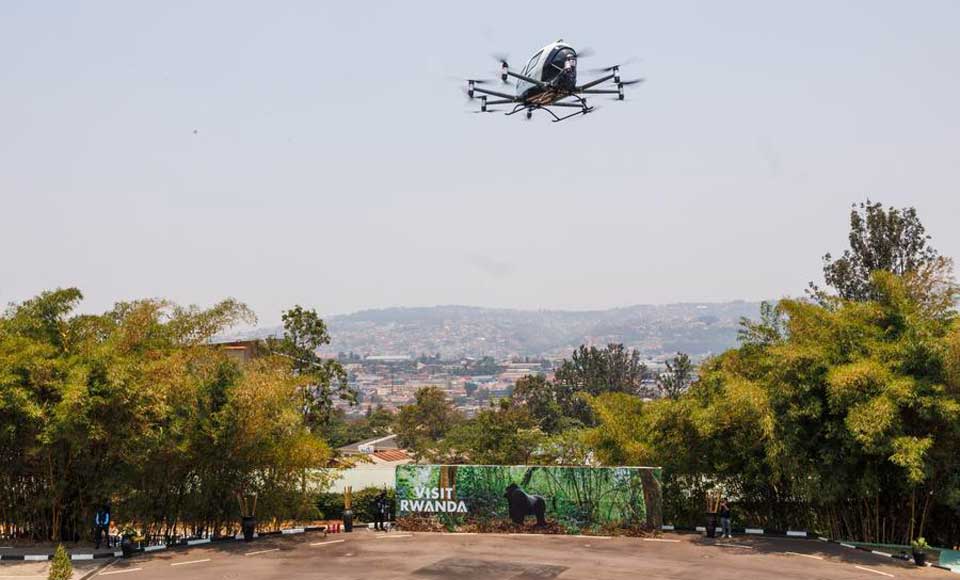
African countries are increasingly adopting Chinese drone technology, a move that highlights both the potential of drones as a future economic growth driver and China’s expanding role in the sector. Rwanda and Senegal, for example, recently signed an air transport agreement to expand cross-border routes and strengthen cooperation in Africa’s emerging “low-altitude economy.”
According to a report by China Daily, this follows the debut of China’s autonomous electric vertical take-off and landing (eVTOL) aircraft in Africa at the 2025 African Aviation Summit and reflects growing regional interest in using drones for logistics, healthcare, agriculture, and other commercial applications.
The “low-altitude economy” is gaining attention as a growth area linking aviation and digital technology. According to the International Air Transport Association (IATA), Africa’s air cargo market is projected to grow at an annual rate of 5% from 2020 to 2025, reaching nearly 4 million tons, with a market value expected to surpass $6 billion.
For countries with limited infrastructure and challenging geography, unmanned aerial systems are being explored to improve the delivery of medical supplies, support agriculture, and assist in mining and humanitarian operations.
Rwanda has been a regional pioneer, becoming the first country to implement a national drone delivery system in 2016. Drones are used to transport blood, vaccines, and medicines to remote areas, reducing delivery times from hours or days to approximately 30 minutes.
Other African countries, including Ghana, Kenya, and Malawi, are expanding drone applications to agriculture, mineral exploration, and humanitarian aid, while developing local technical talent such as drone operators, maintenance personnel, and data analysts.
China-Africa cooperation in low-altitude technologies is expanding. In Zambia, Chinese teams have used drones for mapping and mineral exploration, while in South Africa, Chinese agricultural drones are applied to large-scale farming, offering potential efficiency gains and reduced pesticide use.
Experts note that Africa’s drone industry is still in its early stages, with challenges including fragmented markets, regulatory gaps, limited technical expertise, and insufficient infrastructure. Chinese companies are engaging in technology transfer and training initiatives, which may support the development of Africa’s low-altitude economy.
Why Is This Important? Drones are often considered sensitive technology due to their dual-use potential in both civilian and military applications. Yet, they are also emerging as a significant driver of future economic growth, particularly in sectors like logistics, agriculture, and healthcare. Africa’s increasing adoption of Chinese drones signals both a market opportunity and a vote of confidence in Chinese technology.