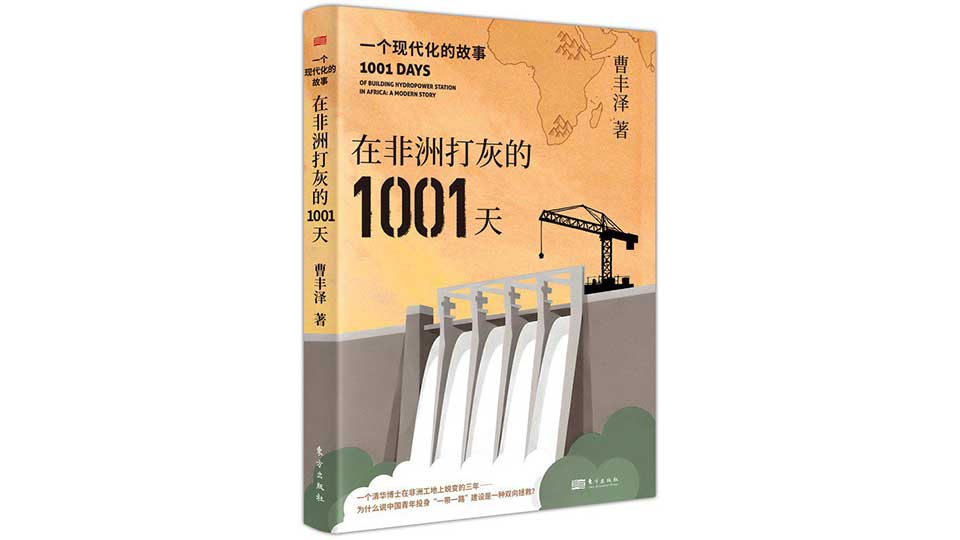
A recently published memoir titled 《在非洲打灰的1001天:一个现代化的故事》 (“1001 Days of Pouring Concrete in Africa: A Modernization Story”) has ignited widespread discussion on Chinese social media.
The author, Cao Fengze, holds a PhD in civil engineering from Tsinghua University and previously served as the chief engineer on a Chinese hydropower project in Tanzania. His book offers a rare, firsthand account of life on a remote African construction site, seen through the eyes of a highly educated Chinese professional.
Cao recounts the physical and emotional challenges of working under extreme conditions, including frequent water and electricity outages, and even shares how they plant beans in Africa. He also shares his impressions of African laborers and local university graduates, portraying them through his own framework of development and progress.
More than anything, readers are drawn to his personal choice. After graduating from China’s most prestigious engineering program, Cao opted out of a predictable middle-class path at home. Instead, he spent three years in a little-known corner of the world, seeking something beyond conventional success. His story has captivated many who are similarly disillusioned with the competitive pressure of urban life in China.
Cao has been actively promoting his book, appearing on multiple podcasts and in media interviews. Public response has been mixed. Many admire his courage to step away from the rat race and appreciate his detailed, literary reflections on Africa and modernity. Others, however, have criticized the way he talks about African people and their choices. In one podcast, he expressed frustration that local workers preferred cash bonuses over benefits like insurance and social security, which he described as short-sighted. Some listeners argued that this perspective lacks real empathy and reflects a condescending attitude toward the lives and priorities of others.
Why Is This Important?
In the past, most accounts of Chinese people in Africa have come from small traders, unemployed youth, or low-level entrepreneurs seeking opportunity abroad. These stories focused on practical survival, daily frustrations, and economic ambition. Cao’s perspective stands apart. His writing blends technical expertise, romantic yearning, and ideological questioning. It reflects a growing trend among China’s educated elite to search for meaning and alternative futures far from home.
As China’s role in Africa continues to expand, stories like Cao’s help explain how that engagement feels on a human level. The book also highlights the tension between development as a goal and development as an identity, or in Cao’s words, “what global development means to us”. His book may be about Africa, but the conversation it has sparked is just as much about contemporary China.