
Tag: Chinese loans to Africa
Related Posts




China’s Evolving Lending Footprint in Africa: Selective Engagement and Strategic Retooling
By Mengdi Yue and Yiyuan Qi Chinese loans to Africa are down once again, but not out. Boston University Global Development Policy Center’s newly updated Chinese Loans to Africa (CLA) Database shows that, despite a slight rise in 2023, Chinese ...
Related Posts
Report: African Governments Must Do More to Work Together and Enact Radical Transparency to Better Manage Chinese Debt
China is not the largest creditor to African governments but it is certainly one of the most important, particularly because Chinese loans are far more opaque than those from other lenders. Now, in the midst of a burgeoning debt crisis in ...


Mapping the Emerging Africa-China Landscape
Boston University's Global Development Policy Center published a new policy brief tracking trends in Chinese financing to Africa. It notes the sharp decline in the size and number of loans compared to the 2010s. This point has been made before and ...


What Does Chinese Lending to Africa Look Like Now?
China has been one of the most important development lenders to Africa over the last quarter of a century. This has transformed the African development landscape in helpful and problematic ways. It is also changing very rapidly. A new report from ...


Chinese Loans to Africa by Region, 2000-2022
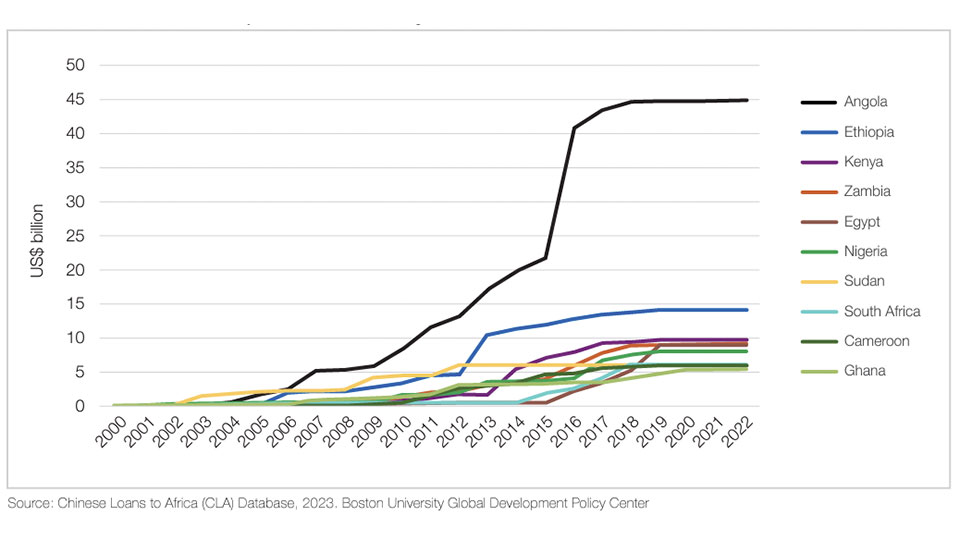
From 2000-2022, countries in Southern Africa and East Africa historically borrowed the most from China primarily due to large-scale loans in Angola, Zambia, South Africa, Ethiopia and Kenya. In 2021 and 2022, the regional composition is distinct from previous years; lending ...
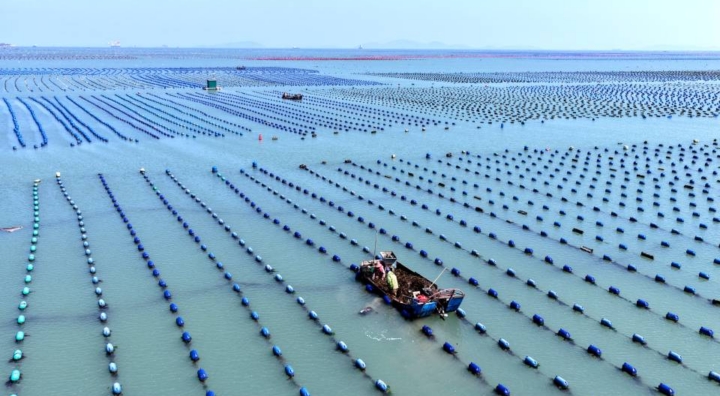
Fishermen conduct abalone management and protection operations at sea in the waters of Xiaocheng Town, Lianjiang County, Fuzhou City, Fujian Province, China, on March 14, 2026. (Photo by Costfoto/NurPhoto) (Photo by CFOTO / NurPhoto / NurPhoto via AFP)
"China's financial commitments are simply more tangible and easier to grasp than those of Europe," one delegate from an island state remarked to me on a bright spring day in late March, as we both gazed out at the East River from the United Nations Headquarters. Behind us, in airless ...

China’s Evolving Lending Footprint in Africa: Selective Engagement and Strategic Retooling
By Mengdi Yue and Yiyuan Qi Chinese loans to Africa are down once again, but not out. Boston University Global Development Policy Center’s newly updated Chinese Loans to Africa (CLA) Database shows that, despite a slight rise in 2023, Chinese ...
Report: African Governments Must Do More to Work Together and Enact Radical Transparency to Better Manage Chinese Debt
China is not the largest creditor to African governments but it is certainly one of the most important, particularly because Chinese loans are far more opaque than those from other lenders. Now, in the midst of a burgeoning debt crisis in ...
Mapping the Emerging Africa-China Landscape
Boston University's Global Development Policy Center published a new policy brief tracking trends in Chinese financing to Africa. It notes the sharp decline in the size and number of loans compared to the 2010s. This point has been made before and ...
What Does Chinese Lending to Africa Look Like Now?
China has been one of the most important development lenders to Africa over the last quarter of a century. This has transformed the African development landscape in helpful and problematic ways. It is also changing very rapidly. A new report from ...
Chinese Loans to Africa by Region, 2000-2022
From 2000-2022, countries in Southern Africa and East Africa historically borrowed the most from China primarily due to large-scale loans in Angola, Zambia, South Africa, Ethiopia and Kenya. In 2021 and 2022, the regional composition is distinct from previous years; lending ...

China’s Share of Nigeria’s Ballooning Debt Remains Steady at Around 4%
Chinese creditors account for just 4.1%, or $4.7 billion, of Nigeria's $114 billion total public debt, according to the latest figures released by the Debt Management Office in Abuja. While China's share is significantly larger than other bilateral creditors, France is ...