
China has launched a series of global governance and trade initiatives over the past decade that have sparked concern in U.S. and European capitals about whether Beijing is seeking to displace the Western-led international order. The so-called “5Gs” include the Global Governance/Security/Development/Civilization/AI Initiatives, along with the BRI, SCO, AIIB, and numerous other Chinese-initiated programs, all of which seem to suggest that China is, in fact, building a parallel international governance architecture to replace the post-WWII institutions.
But Joel Ng, senior fellow and head of the Centre for Multilateralism Studies at the S. Rajaratnam School of International Studies at Nanyang Technological University in Singapore, offers a different interpretation. He argues that China’s new governance initiatives are not primarily designed to replace the existing international order. Instead, Beijing is using them as instruments to advance its own more narrowly defined strategic interests.
Joel joins Eric to discuss the new book he edited, The Dragon’s Emerging Order: Sinocentric Multilateralism and Global Responses.
 Topics Covered in this Episode:
- What “Sinocentric multilateralism” actually means
- Whether China is creating parallel institutions to the UN system
- The role of BRICS and other emerging multilateral platforms
- Why many Global South countries find China’s initiatives attractive
- How China’s global governance ideas differ from U.S. alliance systems
- What could happen if the United Nations weakens or collapses financially
Show Notes:
- The Diplomat: What China Wants With Global Governance by Steven Langendonk and Matthew D. Stephen
- Foreign Policy: China’s Global Initiatives Are Worth Taking Seriously by Henry Tugendhat
- Africa Center: Africa as a Testing Ground for China’s Global Security Initiative by Paul Nantulya
About Joel Ng:
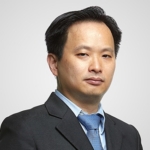
Joel Ng is a Senior Fellow and Head of the Centre for Multilateralism Studies (CMS). His research focuses on regionalism, integration, security, and intervention norms, focusing on ASEAN and its dialogue partners as well as the African Union. He began his career in international affairs working in Uganda on peace, conflict, and refugee issues. He has also worked in the private sector in Singapore in public and investor relations. He is presently in the Singapore committee for the Council for Security Cooperation in the Asia-Pacific (CSCAP). Dr Ng is the author of Contesting Sovereignty: Power and Practice in Africa and Southeast Asia (Cambridge University Press, 2021). He has published widely in venues such as International Affairs, Project Syndicate, the Council on Foreign Relations, and the Carnegie Endowment for International Peace. He has a DPhil from the University of Oxford, where he was an Oxford-Swire and Tan Kah Kee scholar, and also holds an MA (Distinction) from the University of Sussex and a BA (Hons) from the University of East Anglia.
Transcript:
ERIC OLANDER: Hello and welcome to another edition of the China Global South podcast, a proud member of the Sinica podcast network. I’m Eric Olander. Today, we’re going to talk about China’s global governance initiatives and its efforts to create what some are calling a new Sinocentric Multilateral Order.
And we’re going to dive into what that means. But the timing of this discussion comes at a crucial moment, when much of the international order is in turmoil. In fact, as we are recording this on Monday, oil just passed the $100 mark for the first time in four years.
That is going to be a big challenge for many countries, particularly here in Asia, where dependence on Persian Gulf energy imports is highest. Interestingly enough, the talk in the United States and in Europe about the negative impact of the closure of the Straits of Hormuz on China may be exaggerated in some respects when we actually look at the effects on the ground. China imports about 20 percent of its energy from abroad, and about 45 percent of that, almost half, passes through the Strait of Hormuz.
However, the Chinese have a lot of tools in their tool belt to mediate some of this and blunt it. China’s huge strategic petroleum reserves will be put into action this week to increase some of the supply out there. China has vast coal reserves at its disposal that it doesn’t necessarily want to use to harm its climate objectives.
But if energy is in short supply, you may see a turn on of some of these coal plants much higher. And then, of course, let’s not forget that China is electrified much of its grid, so it relies less on imported energy than many other countries in Asia, namely Singapore, Hong Kong, Korea, India, Indonesia, and Vietnam, all of which have much greater reliance on imported energy from the Persian Gulf. Other quick news about China and the war right now.
China’s special envoy for the Mideast, Zhai Jun, met with Saudi Foreign Minister Faisal bin Farhan Al Saud in Riyadh on Monday. This is part of a new initiative that China is taking to try to mediate some of what’s happening. Of course, the United States and Israel have no interest in China playing a mediation role.
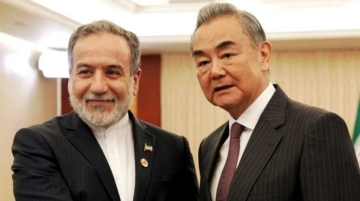
Nonetheless, Zhai is starting to handle some shuttle diplomacy in the Persian Gulf countries. And this follows conversations Wang Yi had last week with Iran’s foreign minister, France’s foreign minister, and the foreign ministers of other Gulf countries. So China’s very active right now in working the phones.
Last thing on this point that I want to bring up is the fact that Chinese Foreign Minister Wang Yi addressed the Iran issue and the war during his annual press conference on the sidelines of the National People’s Congress, and those are known as the two sessions, and that’s the parliamentary gatherings that happen in Beijing. And he had some pretty sharp words directed mainly at the United States.
WANG YI: Seeing the Middle East engulfed in flames, I want to say that this is a war that should not have happened. It is a war that does no one any good. The history of the Middle East tells the world time, and again, that force provides no solution, and armed conflict will only increase hatred and breed new crises.
Once again, China calls for an immediate halt to military operations to avoid a spiraling escalation and prevent the conflict from spilling over and spreading.
ERIC OLANDER: A few other points on the Iran war before we move on to our discussion about global governance. One, keep an eye on fertilizer. So while oil and energy may be something that the Chinese can blunt with other tools and resources, urea and sulfur are two resources that pass through the Strait of Hormuz in large volumes and that China depends on.
Prices have surged 16%. 56% of China’s sulfur imports come from that region, right ahead of the spring planting season. So this should be a concern for the Chinese.
On a better note for the Chinese, on the aviation side, Chinese airlines are actually benefiting enormously from the conflicts, and I say conflicts because of Russia, Ukraine, and now the Gulf. As we know, travel through the Persian Gulf has been all but stopped, and now travelers are scrambling to find tickets to go around it. Chinese airlines are among the few that can actually travel over Russia.
So their fuel costs and the frequency of their flights is much more efficient between Asia and Europe, and they have been benefiting enormously. Speaking of airlines, Air China, China Eastern, and Hainan Airways are all resuming their flights to Persian Gulf countries, including Oman, Dubai, and Saudi Arabia. So they don’t seem as concerned as others about the dangerous conditions on the ground.
Okay, let’s talk about global governance because that also came up at Chinese Foreign Minister Wang Yi’s press briefing in Beijing this week, and again, it brings up this question of what role for the United States. A lot of people have been talking about Donald Trump’s efforts to gut the United Nations. If you recall, he withdrew from 66 different organizations, mostly from the United Nations, in the first year of his presidency.
The United States does not really believe in the multilateral order. This is something that Secretary of State Marco Rubio said in his confirmation hearing, that the liberal international order has been unfair to the United States. Now the Chinese are coming out with a vastly different, you know, slate of programs.
As we’ve talked about many times on this show, there are the five G’s, if you recall. The global governance initiative, the global security initiative, the global development initiative, the global civilization initiative, and the global AI initiative. This pairs along with the BRICS and the Shanghai Cooperation Organization and the Belt and Road and the Asian Infrastructure Development Bank, and it goes on and on.
The New Development Bank, along with any number of these organizations that have come up, which in many ways are forming a parallel international governance architecture outside of the Western-led multilateral system. All of this contributes to a concern in the West that China is trying to replace the United States and Europe as the hegemonic powers within the global order and create a new international order. People who know this space very well, like our guests today, will say, “No, that’s not the case,” but they are building a new multilateral order.
And there is a new book, The Dragon’s Emerging Order: Sinocentric Multilateralism and Global Responses, edited by Joel Ng, a senior fellow and head of the Centre for Multilateralism Studies at the S. Rajaratnam School of International Studies at Nanyang Technological University. And he joins me today from Singapore.
A very good afternoon to you, Joel. Thank you. Good afternoon to you.
Joel, congratulations on the book. It’s a very, very interesting read and a very timely read. And you collected a number of fantastic contributors to each.
You talk about their specializations on how China is building this new sinocentric multilateralism that you talk about. I think that’s a good start for us, particularly in the context of what’s happening in the Middle East. What is, first, a sinocentric multilateral order?
JOEL NG: Well, your mention of the travel disruptions in the Gulf, I was literally caught in that last weekend as I tried to get through Dubai.
ERIC OLANDER: Well, had you taken a Chinese airline, you would have probably gotten back home faster.
JOEL NG: Well, I was in the Indian Ocean, a little bit difficult to get back through China. But yes, I mean, these disruptions to the global order right now are, as you just said, extremely far-reaching, not just from where the war is going on, but also all around the world. And supply disruptions are hitting small island economies like Mauritius particularly hard because they are often routed through the Gulf.
Now, a sinocentric multilateral system is not one thing. So it’s not as if China has this extensive institutional network that’s creating all these structures parallel to the UN or something. What we looked at was really the things where China convened a number of formats that brought all of its partners together in one place.
So we have something like the Forum on China-Africa Cooperation, China with the Latin American and Caribbean states, ASEAN Plus One. This is China shaping its agenda with the relevant partners of a particular region and then trying to see how those partners respond or interact with China, what are their needs and demands, and whether China can meet those in line with its own objectives, of course. So what we were trying to do is really get a big global survey of what China is actually doing, not what headline news or media reports often like to blur out, but actually the actual institutions and formats that it engages the global south with particularly.
And we found, of course, as you said, a parallel structure, but not one that’s intended to replace anything. Of course, it’s not the same as the liberal international order, perhaps you’d say, or it’s not even the same as the UN system. It’s actually really about China just finding a way to practically deal with its multiple bilateral relationships around the world with hundreds of different countries around the world and convene them in a summit for experience, really, to be able to speak to everyone at once.
ERIC OLANDER: So what does this actually mean in practice? We know that China gets together every three years for the Forum on China-Africa Cooperation. Every several years, they get together, as you talked about, with CILAC, which is the Latin American.
They have something similar to the Gulf countries as well. But what does it mean in practice? And again, there’s this line in the US in particular that says China is trying to replace the United States.
You’re saying they’re not. But when we talk about these groups like BRICS, here we have a situation where the United States and Israel attacked a full-fledged member of the BRICS coalition. And yet you’ve heard nothing from any of the BRICS countries.
Brazil hasn’t said anything in the BRICS context. The BRICS organization as a unit has done nothing to rally a response on this. And so I guess a lot of people may wonder, what is the point of this Sino-centric coalition?
And again, BRICS is not a purely Chinese entity. It’s partially Chinese. But it raises the question, what’s the point of all these initiatives if they’re so loose and there’s no consequence for, say, attacking a member?
What does this mean in practice?
JOEL NG: Okay. So that’s a great question, actually. And of course, everyone is thinking, if these were supposed to be the representatives of a new multipolar order, why are they so silent?
I think one of the things to bear in mind is that they’re not security arrangements, right? In fact, they’re kind of low-hanging fruit arrangements where they’re trying to find ways to cooperate where they traditionally have never actually cooperated on a series of issues. These mostly come up in the development and economic sphere, right?
That some element of financing, as well as infrastructure, is the key thing there. So security has not been on the central agenda of BRICS. Even the Shanghai Cooperation Organization, which does have a security agenda, has a fairly limited set.
It’s certainly not the way Western critics would have thought of an international structure like NATO, for example. The other thing is that a lot of Western analysts project a little bit too much; they think that if this is how the US built its order, they’re expecting China to do something quite similar. Now, China doesn’t do something that at all similar.
In fact, it doesn’t have an alliance system. It doesn’t have security partners that it’s willing to defend physically in that sense. So as you mentioned earlier, the condemnations from the Chinese have been overt.
You’re not seeing them move warships to try to fend off certain particular areas of the world, even where they have very specific interests, including in the Gulf. Instead, what they’re trying to do is still actually a helpless appeal to the UN system to come back to the table and try to work through a legitimate multilateral system.
ERIC OLANDER: Yeah, I want to get to the UN very quickly, but let’s stay on the security theme for a little bit here. So if you say, and I agree with you, there’s this huge debate that’s going on right now on X and among China analysts and those maybe who aren’t China analysts who say, look, Venezuela got taken out. That was a they call an ally of China or part of China’s network.
And now Iran is going down. And if you watch Fox News this weekend, it was just chock full of, see, we’re taking down China’s alliance network. As you pointed out, China does not have allies the way that the United States does.
And there’s been this pushback from very, very knowledgeable China watchers like Evan Feigenbaum, Ryan Haas, any number of these of these folks in D.C. are saying, as you’ve said, listen, you cannot project onto the Chinese and American structure of alliance and security the way that the United States would have responded should one of its allies been attacked. So I guess this is a key part of it when the Chinese then come up and talk about this thing called the global security initiative, which analysts say was really created in response to NATO and the concern that the U.S. alliance network was going to be brought deeper into Asia and NATO specific. If it’s not going to be a network of mutual protection, what is the GSI then?
JOEL NG: I mean, I’m a little bit critical of China’s global initiatives for the fact that it’s very difficult to find the policy specifics within them. Right. A lot of it is maybe somewhat taken from UN language, especially the Global Development Initiative, of course, but others are fairly large motherhood statements, and then very difficult to get down to the specifics.
I think one of the reasons why that is, is that China is looking for convergence of neutral interests. So it leaves things a little bit broad and ambiguous. So as that states that don’t have an automatically hostile stance towards it or might be willing to come into that umbrella.
But that also has a weakness because then you don’t know what you’re signing up to. And there’s no real commitment from those states to actually enforce or even align with China on anything. And so the flip side of that really is, if you think about it, the narrative of China as a threat is actually also being unwound here.
If China were such a threat, surely it would have responded in a much more forceful way than it has. And for me, who has been studying Sinocentric Multilateralism and looking at the structures that China actually builds, they’re not fit for the sort of threat projection that Western analysts like to put on.
ERIC OLANDER: Yeah. So I guess I’ll just come back. What is the GSI then?
What do you mean? What is the GSI? What is it?
I mean, is it a group that comes together to talk? Do they share information? Is there some kind of coalition that is deeper than just showing up at meetings?
And when we talk about the GSI, the same thing applies to the GDI, the Global Development Initiative. Does money come through it? I mean, again, you wrote in the book that these are such loosely institutionalized organizations or initiatives that to the point where they seem, at least to some people on the outside, almost meaningless because there’s no substance beyond just the convening of it.
JOEL NG:
So what I would think about the Global Security Initiative, it has a kind of doctrinal quality. That means it sets out China’s position. But there’s no tangible format associated with it.
It doesn’t have a summit. It doesn’t have a group of states that sign up to it. It’s just China’s pronouncement of how it understands security.
And that is in contrast to, let’s say, liberal order, which had its own set of, I guess, normative documents. So in that sense, the GSI is China’s normative document in contrast with liberal versions. Of course, in the liberal sense, or in the liberal international order, there’s no one document, whereas China has conveniently put at least one document for us on global security.
ERIC OLANDER: And it looks like, too, there’s a little bit of, I’ll make up a word here, reverse architecture that’s going on. Hu Changchun, China’s special envoy to the Horn of Africa, recently convened a group in the Horn and kind of talked about all the different successes of the GSI, starting to fold in a whole bunch of things from the past several years, even before the GSI was created. So the UN commitments that the Chinese made to peacekeepers in South Sudan, GSI.
Arms sales to certain countries, GSI. Everything got kind of thrown into the GSI, which, by the way, China is not alone in doing that. The Europeans certainly recycle announcements, and the Americans often recycle announcements.
So that is a part of diplomacy. But it was notable that there were no new initiatives in Hu’s statement about the GSI, but they recycled a number of their old accomplishments on the security front in Africa and designated those as all GSI contributions. So I just thought that was a little bit interesting, but to the point where we’re still all trying to figure out what these global governance initiatives are.
You mentioned the United Nations. This is very interesting because it comes at a time when the UN is extraordinarily frail right now. In fact, the Secretary General, Guterres, recently said that it is on the verge of financial collapse.
The United States has all but quit the institution. Basically, it’s withdrawn from most of the major organizations. That’s significant because the UN is largely funded by the US, and the US is in arrears by billions of dollars.
And so a lot of people have been wondering what China sees in the UN. Do they see these new governance initiatives as some type of replacement or complement to it? I’d like to play some sound from Chinese Foreign Minister Wang Yi, who addressed this very issue at the press briefing on Sunday, and then I’d like to get your response.
WANG YI: The most explicit message of the GSI is that the leading status of the UN must be upheld, not challenged. The central role of the UN must be strengthened, not weakened. The UN is not perfect, but without the UN, the world would only be worse.
Creating parallel structures outside the UN, or worse still, putting together various exclusive blocs and circles, is unpopular and unsustainable. The most unequivocal requirement of the GSI is that the UN must keep pace with the times, reform its governance system, and adapt to the evolving international situation and the changing dynamics of the global balance of power in the 21st century. In particular, it should increase the voice and representation of countries of the Global South and better reflect the legitimate demands of developing countries.
The goal is to build a more just and equitable global governance system.
ERIC OLANDER: So the GGI that he referenced at the beginning is the Global Governance Initiative. Joel, I think a lot of people are going to find Foreign Minister Wang’s comment a little curious because he said the establishment of parallel institutions and blocs is counterproductive to the United Nations, which is precisely what people have been accusing China of doing. The blocs that he is talking about, of course, is the US-led Board of Peace and these new US coalitions that Washington is trying to do to exclude China.
But I think a lot of people would look at the BRICS as one of those blocs. A lot of people would see the GGI, the GSI, and the GDI as parallel institutions. Does that comment strike you a little bit curious?
And if not, maybe you could explain it to us. Well, I’m not sure I can explain it on behalf of the foreign minister, but I… No, not to speak on behalf of the foreign minister, but just to help us contextualize it.
JOEL NG: Sure. I think there have always been parallel structures because the UN cannot do everything. We have the G7, the G20, the BRICS, and so on.
Many, many different structures. What is, I think, apparent is that these must not attempt to counter or contradict the UN initiatives. They must be complementary to it and therefore able to work within the UN system if need be.
If they’re trying to provide an alternative that actually undermines the UN, then I think that’s where his criticism comes from. Now, if you look at things like the Belt and Road Initiative, it’s quite complementary to the UN’s Sustainable Development Goals. In fact, the GDI explicitly appeals to the SDGs for their normative weight, and the Belt and Road Initiative is a core part of that.
Similarly, the use of the Global Security Initiative still always calls back to the UN Security Council, as problematic as it is. The interesting thing about this speech you just played there, Wang Yi and other Chinese officials now, they actually seem to be the only ones still actually vouching for what we would have called the liberal project back in the day, an appeal to the broad multilateral structures.
ERIC OLANDER: Which is curious because they did not like the US-led liberal international order for a long time.
JOEL NG: Yes, and although that probably is more to do with the financial architecture, not necessarily the UN system, but in the UN system, they’ve been strong defenders for a very, very long time. And they’ve recognized that, as flawed as the UN is, those structures, you cannot do away with them. You get something that’s much worse without the UN, even if the UN is problematic.
I think, though, the key question is whether China can actually push reform at the UN. And I think all the major actors in the UN recognize the need for reform, but none can agree on what kind of reform is needed.
ERIC OLANDER: And that’s this impasse we’re stuck with. Well, it’s an interesting time. There was an article in Foreign Affairs last month, and I forget by whom, but it was by a very conservative American, who talked about how the future of the UN system and the liberal international system should be basically state sovereignty, should be the paramount interest.
And as somebody who watches China, I was just giggling all the way through reading this, because state sovereignty, of course, is what China’s approach has always been: that there should not be international norms of human rights. There should not be international norms for digital sovereignty or digital governance. These should be up to each individual state to decide for themselves.
And so it looks like we’re coming to a point where, believe it or not, there might actually be some consensus between the right wing in the US and the Chinese Communist Party on the issue of governance and the role of the state vis-a-vis these international institutions. The right wing doesn’t like global governance any more than the Chinese like global standards on human rights. So it does seem that we may actually get to a new level of convergence among major powers centered on state sovereignty as opposed to global norms.
What do you think of that?
JOEL NG: Well, I mean, sovereignty is the baseline. And I think nobody disagrees with that. But of course, the problem is, it’s frequently violated.
And then there’s insufficient pushback against the violator whenever it happens, whether it’s in Russia, Ukraine.
ERIC OLANDER: Which is what we’ve seen in Iran and Venezuela recently. Those are violations of state sovereignty.
JOEL NG: Exactly. And we don’t yet have a system that is able to forcefully push back. Nobody has the military might of the United States.
So as you can see, they’re just doing whatever they want. But I do fear that the loss of values in international relations will make it much harder for conflicts to be contained or to be restrained. Because as you can see with the United States, Pete Hegseth said, we don’t need rules of engagement anymore.
ERIC OLANDER: I think he said stupid rules of engagement, or dumb rules of engagement.
JOEL NG: Exactly. And that’s what leads to you shooting down your own F-15s or the Kuwaitis did, apparently. So if you don’t have those values and sense of restraint in conflict, then every conflict is going to be atrocious, 19th-century-style conflict, where everyone basically kills each other.
And not that there’s any good type of conflict. It’s just that they will be much worse than what we’re actually used to seeing.
ERIC OLANDER: You study multilateralism, and the book focuses on a new Sinocentric multilateralism. But I think we have to seriously entertain the prospect that the UN does collapse. The United States, again, is not supporting it anymore.
And this was an institution that was built primarily by the United States. What happens if António Guterres’s forecast comes true, where he says that financial collapse is imminent, and it does actually come true? What happens?
Does China step in to pay billions of dollars to keep the UN aloft? Does the UN move to somewhere else? What does the world look like in a post-UN era?
JOEL NG: Yeah. I mean, here in Singapore, we’re great scenario planners. We love doing scenario planning.
So we think about all of these sorts of eventualities. But he’s quite right that there is an enormous budget crisis. And we’ve actually been here before.
The League of Nations, if you recall, collapsed after Italy invaded Ethiopia. And what resulted was that there was no restraint, World War II, and so on. An era of power-based politics is exactly what we had in the 19th century.
So there was a kind of stability and order, if you will. Except, of course, it was the strong doing what they like and the weak suffering what they must. And then alliances were deemed to be the kind of safeguard for the 19th century.
You remember these European concerts of power, where the various states formed these vast alliances where it was thought that this sort of mutually assured destruction would keep us from conflict. And of course, we know how the long 19th century ends. It ends with World War I.
And those vast alliances just made the conflict much, much more global. And I think what’s different now, though, is that states are aware of that HP, and states don’t want to get dragged into the kind of security commitments that some states will have. So the US is unfortunately getting away with the conflicts that they’re starting, but there’s much less willingness to follow down the path that they’re doing.
And I think if there is a world without the United Nations, it will turn down to the regional order. That means like here in Southeast Asia, we have ASEAN in Africa, the African Union, and so on. And they have varying degrees of effectiveness.
I wouldn’t say they’re very weak.
ERIC OLANDER: Both ASEAN and the AU are both weak institutions in terms of managing the behavior of their member states.
JOEL NG: That’s right, especially on conflicts. We’re not very good at that. But that said, if regional groupings are the way in which order develops, there’s a kind of focus that can come out of that.
There’s also a much more stronger sense of common interest at the regional level. I’m Singaporean, so I know the long bilateral history with Malaysia, and we’ve never had such good relations with Malaysia, Indonesia, and our closest neighbors in recent years because of that global instability and understanding that we need to pull together right now. So at the regional level, maybe the picture is bleak for certain individual states, but for a broader grouping of middle powers relatively still optimistic about their growth prospects, I think that there’s a very strong motivation not to get dragged into these conflicts.
ERIC OLANDER: One of the things that you brought up in the book was the role of the Global South and how important that is to China’s multilateral initiatives and these new governance initiatives. That’s a topic we talk about a lot here at the China Global South Project. You would expect that to be the core.
One of the conversations that we have with stakeholders quite a bit is that when the Chinese talk to Global South countries in Africa, Asia, Latin America, Central Asia, and other places, and they say, listen, we’ve got this buffet of new initiatives, whether it’s development finance, whether it’s security, whether it’s artificial intelligence, any number of things. The point is, they may not have much substance, but they include these countries. They are forward-looking toward countries that my colleague, Dr. Cobus van Staden, says are, in many cases, future-starved. When Europeans, Australians, Americans, and others come to Global South countries, they talk about the rules-based international order. For many people in the developing world, when they hear the term “rules-based international order,” they think it’s a backward-looking vision. That’s what they want to return to the way things were, not to a future that’s inclusive of them.
And looking back, again, the point of view from the United States is that the past 75 years, since the post-war era, has been a period of unbridled prosperity, it’s been a period of growth, and in many cases, peace and stability. If you are here in Southeast Asia in the 1960s and 70s, it was not stable. The Cold War was extraordinarily volatile for the Global South.
And so they don’t look with any type of romanticization back to what it was 20, 30 years ago, the way that many people in US and Europe talk about it. So I guess I’m curious about the appeal of these Chinese initiatives to countries in the Global South, and this notion of one being forward-looking and one vision being backwards-looking. And how does the book address that?
JOEL NG: Well, we don’t really touch too much on rules-based order. But I would say that the way one would think about reform needed for development is you do need a certain set of rules. If you want to attract businesses and get them to do long-term planning over decades-long horizons, there needs to be a certain stability in the domestic rule of law for them to do it.
We’re getting a fresh lesson on this with Trump’s unilateral tariffs. If he changes the tariffs every two weeks, you can’t plan. And in some ways, the Global South countries don’t always have a stable set of domestic laws that they can rely on.
And the reform is really hard. Now, when China comes along and says, as you put it, we have this menu of options, and they don’t require deep domestic reform, that’s attractive. But I think it hits on diminishing returns becausefrom, some East Asia’s experience, much of what needs to be done is to actually strengthen those governance bases in those domestic countries.
And yes, the West got it wrong. They preached this kind of very selective rules-based order that privileged their firms and interests. But that doesn’t mean that the logic underlying it has dissipated.
Businesses do need stability. They do need to know that if they do have a dispute with the state, particularly the state, they have some recourse that will be just and fair to them, rather than a complete appropriation of their interests. And so all of these things come together.
And so you might not like the term rules-based order, but you still need international law, domestic law, and other kinds of forms of rules-based systems.
ERIC OLANDER: What happens, though, if the international law becomes meaningless? There was international law on the killing of civilians and the killing of infrastructure, which the Russians and the Israelis clearly disregarded. There’s international law on the kidnapping of leaders.
Clearly, the Americans have disregarded that or assassinating leaders. What happens if we’re in this new era where the law doesn’t matter, rules don’t matter? Does this help or hurt China’s initiative to create these new initiatives and this parallel governance universe that’s being established around the rules-based order?
JOEL NG: Yeah. So a lot of people have been using traffic rules as an analogy. Just because there are cars speeding around or not stopping at the traffic lights doesn’t mean that we can all start ignoring them.
And that’s the same thing with the international system. If you start feeling that because my neighbor or rival has ignored the laws, I can start ignoring them too. You get this very quick spiral into race to the bottom, basically.
And it makes this whole system as a whole much more dangerous. Imagine a city where the traffic laws are completely violated every single day. You couldn’t actually drive in that city.
And so we still need those laws. We need much more consistent support for the laws. We need states to actually say, hey, hang on, you’ve crossed the red line and we’re going to have to reduce our engagement with you or our level of partnership with you because of that.
And I do think that this is happening to some degree, but it’s very tentative or very early stages right now. I think Mark Carney’s speech at Davos, which has been talked around a lot, is significant because now the liberal states are also cleaving away from the U.S. as well. But the rest of the global south have already been doing it to greater or lesser extents, maybe not always by choice, even.
But this new sort of informal cooperative arrangements between other types of states and one where ideology is much less important, which it wasn’t in the so-called liberal order days, one where states are like-minded in their goals for, let’s say, to boost trade and development and to increase security or a stable order for their parts of the world. Those things are now on the uptake, and we’ll see whether we can get more out of it. I think the challenge is that it’s actually quite extensive, the kind of institutions you need to uphold a stable order.
Now that the U.S. is no longer willing to play that role, who can fill in that gap is a very open question. I think with our book, Sinocentric Multilateralism, we thought about it, but we were looking at what China does, not what other people say it does. And we find that China’s goals are actually much less ambitious than they put out.
It’s not trying to create a new Chinese version of a liberal international order. It’s just trying to stabilize its bilateral relationships, as we said. And that kind of much more limited ambition also means that it’s not going to play the role some states would like China to do.
ERIC OLANDER: Yeah, very poorly understood by many outside. By the way, speaking of Mark Carney’s speech, remember he talked about it? As you said, they put a sign in the window just to get along. A lot of people think that Mark Carney put the sign back in the window when it came to Iran, lined up behind the United States on Iran.
And just this week, I had a conversation with Donald Trump and said, he’s in coordination, and they’re trying to get alignment on a number of issues. So, quite a few people were disappointed in the prime minister’s follow-up on that really important speech. But the sign looks like it’s back in the window.
The Dragon’s Emerging Order, Sinocentric Multilateralism and Global Responses is the book. It’s a collection of essays that are absolutely timely for the moment that we are in. It was edited by Joel Ng, who’s a senior fellow and head of the Center for Multilateralism Studies at the S.
Rajaratnam School of International Studies at Nanyang Technological University in Singapore. Joel, thank you so much for joining us and for sharing your insights on this incredibly important topic. Thank you so much.
It’s been a pleasure to be here. It’s been wonderful to have you. And thank you all for joining us today for another edition of the China Global South podcast.
Of course, if you’d like to follow the work that the team around the world at CGSP is doing, go to ChinaGlobalSouth.com slash subscribe. Your subscriptions are what keep this independent research and analysis platform going. And we just can’t thank you enough for all of those who have subscribed and get our daily newsletter.
We now serve almost 25 governments, 15 universities around the world and thousands of analysts, stakeholders, diplomats, and we’d love for you to join our reader community. And again, go to ChinaGlobalSouth.com slash subscribe. Well, on behalf of the entire team at CGSP around the world, I’ll be back again next week with another episode of the China Global South podcast.
Until then, thank you for watching and for listening.