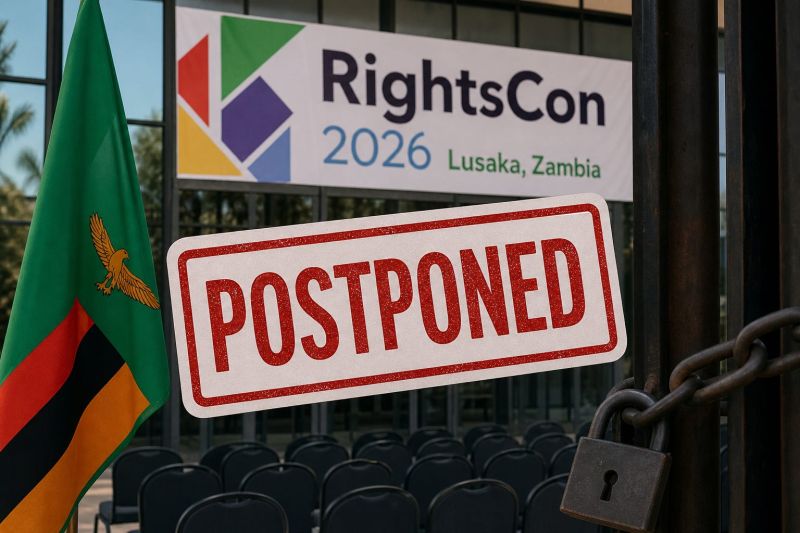
There’s been a lot of anguish over the past several days following the Zambian government’s surprise decision to cancel Rightscon, a long-running conference devoted to digital rights that was supposed to get underway on Tuesday.
The immediate narrative that spread quickly online was that China was responsible for the cancellation of the event because a handful of the 2,600 delegates who were to attend the conference came from Taiwan.
Human Rights Watch, Access Now, and other human rights groups were quick to blame China for the event’s cancellation, despite providing no evidence to support the claim.
While we don’t know for sure if the Chinese embassy in Lusaka pressured President Hakainde Hichilema, there’s plenty of reason to suspect they did and that the government may have been amenable.
Take last year’s Kafue River disaster as an example. The Hichilema government never held the Chinese mining company Sino-Metals Leach to account for the massive damage it caused when one of its tailings dams collapsed, spilling tens of thousands of liters of toxic pollutants into one of Zambia’s largest rivers.
The government agreed to allow the company to use its own firm to do the damage assessment rather than an independent auditor, and publicly backed the company numerous times rather than stand on the side of the victims of this awful environmental calamity.
So when people accuse the government of colluding with China, it’s easy to believe. But that doesn’t mean it’s true.
Zambian scholar Sishuwa Sishuwa, now a visiting scholar at Harvard University, pushed back on all the discussion that blamed the Chinese for the cancellation of Rightscon, instead arguing that domestic politics was they key reason.
“It is most absurd to suggest that a conference of over 2000 delegates would have been called off simply because one or two participants from Taiwan, who could have been denied entry visas or sent back on arrival, were going to attend,” he wrote in a lengthy post on X.
Instead, he contends that parliament, which will be dissolved next week ahead of general elections, is considering a staggering 70 bills that Sishuwa describes as “repressive proposed legislation that seek to arrest human rights.”
“It would have been very awkward for the government to discuss and pass these anti-human rights laws while the people in the neighboring building are denouncing them!” he declared.
Contrary to narratives from human rights organizations and others that framed Zambia as a passive victim of Chinese pressure, Sishuwa rightly notes that Hichilema and his government have agency and did this for their own reasons, not to protect China.