This is a free preview of the upcoming Africa EVs Weekly Digest, part of the new CGSP Intelligence service.
Chinese automakers are accelerating their push into Africa’s electric vehicle market, viewing the continent as one of the few remaining frontiers for rapid growth amid tightening trade restrictions from the United States and Europe.
Their expanding presence has already reshaped the competitive landscape, forcing established global manufacturers to rethink their strategies with legacy carmakers, which have long been slow to adapt, now responding with new initiatives aimed at restoring confidence among African buyers. At the same time, local manufacturing is gathering pace in countries such as Egypt and South Africa.
These brands are investing in charging networks, improving battery durability, and emphasizing long-term reliability—moves meant to signal that they intend to compete seriously in the electric era. Yet many continue to face a familiar barrier: their premium trims and pricing remain out of reach for most consumers, especially as Chinese rivals offer comparable features at far lower prices.
For African buyers, the rise of Chinese EV brands presents clear advantages, including lower prices. But many consumers’ inability to access credit delays their uptake of the currently available vehicles.
This week in Africa’s EV scene:
Uganda’s Pioneer Kayoola E-Coach Historic 13,000-kilometer Trans-African Expedition
Ugandan automaker Kiira Motors Corporation has launched the Kayoola E-Coach by undertaking a historic 13,000-kilometer, month-long trans-African expedition from Uganda to Cape Town.
The Kayoola E-Coach offers a driving range of 500 kilometers on a single charge, and the expedition is meant to validate the bus’s performance in real-world conditions across diverse terrains.
Why This Matters: Despite relying heavily on components imported from China, this venture suggests that African nations — working alongside Chinese partners — have the potential to build and scale their own electric-vehicle industries. Yet a central question lingers: how long can assembly alone sustain this model, given the economic value that continues to flow back to China? And are African countries prepared to cooperate more closely to lessen their dependence on foreign supply chains and EV technology?
Burkina Faso Begins Solar-Powered Electric Car Production With Chinese Help
Burkinabé engineers trained in Chinese factories and are now applying that expertise locally in Burkina Faso, assembling solar-powered electric vehicles under a new national brand called Itaoua. The project launched in January 2025 is building fully electric models, including the Itaoua Sahel, Native, Tenakuru, and a pickup truck called the Land Elder, all powered by solar charging systems.
Why This Matters: While African countries like Burkina Faso are building e-mobility solutions based on what is available, the partnership with the Chinese shows that technology transfer — not just assembly — is possible through collaborative partnerships and could shift the dynamics in favour of the local economy and the buyer.
Egypt’s New Vehicle Manufacturing Push
Egypt is positioning itself as one of the few countries in Africa capable of producing vehicles at scale, aiming to supply both its domestic market and buyers across the region. The plan is backed by Mansour Automotive Group, which aims to produce 50,000 vehicles a year in its first phase, with plans to double that output within five years.
Why This Matters: For Africans relying on Chinese EVs or parts production, Egypt’s
Many African countries depend on fully built imported EVs or partially built kits (CKDs/SKDs), often sourced from China. If Egypt succeeds, it could become a significant regional manufacturing hub, but the question is whether this would make vehicles and parts cheaper than those imported from China.
Financing and Infrastructure Nigeria’s EV push hinges on – Executives
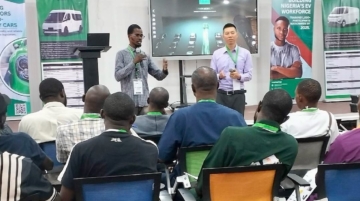
Nigeria’s EV sector could collapse without substantial backing of charging networks and the wider availability of affordable financing. Without charging infrastructure or expert mechanics, even the most affordable EV will struggle to deliver long-term value, which will hamper adoption.
Why This Matters: While the Nigerian government promises financing and a push to build infrastructure to make EV ownership more realistic, accessible, and sustainable, it remains to be seen if this will materialize.
BMW SA Pushing Ahead With Electrification Despite Government Policy Delays
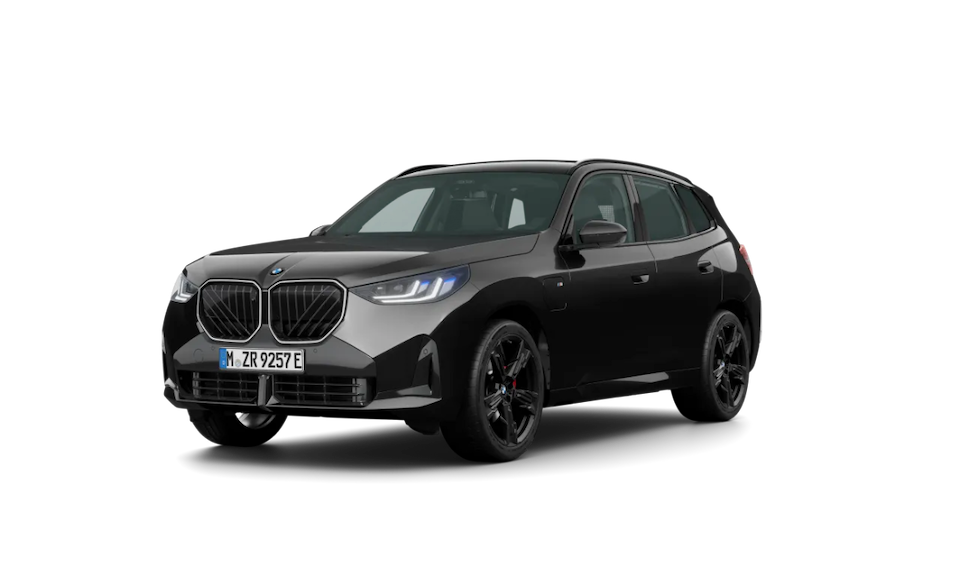
South Africa’s New Energy Vehicle (NEV) policy uncertainty is making automakers hesitant to invest, despite their need to align with global EV trends. BMW SA has reaffirmed its commitment to an electrified future, investing R4.2 billion to upgrade its Rosslyn plant to build the plug-in hybrid version of the X3.
Why This Matters: While BMW SA’s locally manufactured X3 is primarily export-focused to markets in Europe and the UK, it also means that local buyers will have a choice as Chinese EVs continue gaining a foothold in the market.
EV Model Available in North Africa Driving Xpeng’s Growth
Chinese EV maker Xpeng has produced its one millionth electric vehicle, hitting a major milestone in 11 years since its founding. The company attributed much of its recent momentum to the low-cost Mona M03 sedan, which has become a key driver of sales and one of the first Xpeng models to be exported to markets including North Africa.
Why It Matters: For African buyers, this milestone shows that Chinese EV makers are producing at scale, which can help bring down prices globally. The introduction and production of more affordable models mean greater access, more competitive pricing, and a stronger case for EV adoption on the continent, where a majority are locked out of buying premium vehicles.
In context
As more electric-vehicle makers compete for a foothold in Africa, prices will gradually begin to ease, bringing EV ownership within reach for a wider share of consumers. Traditional global brands remain positioned at the premium end of the market, but the expansion of local assembly and manufacturing offers a potential shift. If these efforts scale, they could narrow the affordability gap and give African buyers a broader range of options at prices more closely aligned with local economic realities.
The takeaway:
EV stakeholders across Africa are positioning themselves to compete in a rapidly shifting global market, hoping to secure an early foothold in a sector where first movers often gain the greatest advantage. Emerging local technologies and new business models are beginning to redefine access to electric mobility on the continent. Yet affordability remains a formidable hurdle—one that also presents an opening for policymakers and governments to act decisively while momentum is on their side.