This is a free preview of the upcoming Africa EVs Weekly Digest, part of the new CGSP Intelligence service launching in Summer 2025.
This week, news broke of Chinese automaker Changan’s plans to unveil an electric vehicle (EV) with a range of up to 1,500 kilometers on a single charge, rivaling industry leaders such as Tesla and Toyota.
While production of this battery is expected to commence by 2027, this technology may not reach African countries anytime soon after that. However, market dynamics indicate that the most popular e-mobility options, two- and three-wheelers, are gaining momentum, with deals being struck and launches taking place in Nairobi, Kenya, and across the continent.
In Uganda, an e-bike company is partnering with its customers to create the most user-friendly e-mobility solutions using its electric bikes. The company is also providing charging stations in convenient locations to ensure a seamless experience.
This week on EVs in Africa:
China’s TankVolt Seeks Partnership With Kenyan, Ugandan Financier MoGo
On Monday this week, Tankvolt’s Chief Operating Officer visited Kenya and Uganda to advance business cooperation in the electric vehicle sector.
The COO met with Kariuki Fernades, Development and Project Manager of Mogo’s Kenya Boda Financing, and Rahul Kattikar, Head of Mogo’s Uganda Motorcycle Branches.
Why This Matters: Such meetings and partnerships will only become more regular as Chinese companies seek to establish their foothold in Kenya and other African countries’ e-mobility sectors, which are also the most popular and fastest to electrify.
Spiro Uganda Partnering With Customers to Localize e-Mobility Solutions
E-mobility is beginning to take root in Uganda, and for companies like Spiro, success has hinged on listening closely to customers.
Central to its approach is a feedback-driven model of product development. Instead of relying solely on boardroom strategies or design studio concepts, the company incorporates input from riders at every stage of the process. That process has already produced four iterations of its electric motorcycles, each shaped by consumer experience.
Why This Matters: While the partnership facilitates technology transfer, it emphasizes a customer-driven approach over a top-down model. By incorporating riders’ feedback into design and production, Spiro fosters a sense of ownership among e-bike users and tailors solutions to meet their everyday needs.
Alpha eMobility Launches its Three-Wheelers in Nairobi
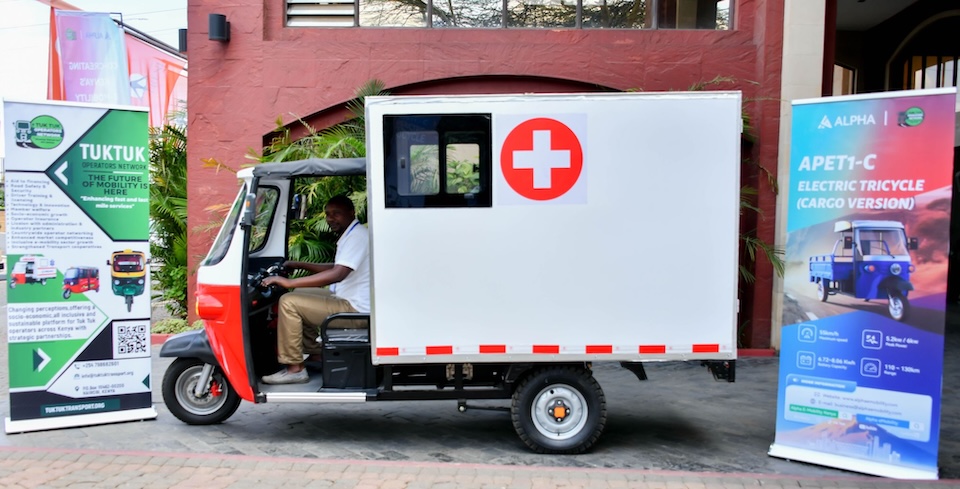
Alpha eMobility has launched electric tricycles (e-tricycles) and tuk-tuks, which the company claims are tailored to meet Africa’s urban and rural needs.
The company’s flagship models include a passenger tricycle with a swappable lithium phosphate (LFP) battery. The vehicle also features real-time monitoring, smart connectivity, and AI-driven diagnostics for enhanced safety and extended range.
A similarly designed cargo tricycle is lightweight, featuring fast charging functionality and fleet management integration. A special vehicle mode is also customizable for applications like ambulances or emergency services.
Why This Matters: Three-wheelers are emerging as one of Africa’s most popular and rapidly electrifying vehicle segments. The rollout in Nairobi is serving as a test case, with Alpha eMobility positioning itself for expansion across the continent. Success in the Kenyan market, a leader in e-mobility solutions, could prove decisive in shaping the adoption of three-wheelers elsewhere.
Tiggo 9 SUVs Crash-Tested in Johannesburg
In what is hailed as South Africa’s first dual-vehicle collision test, two Tiggo 9 SUVs were deliberately crashed into each other at 50 kilometers an hour. This trial recreated a far more common and dangerous scenario on South African roads which record one of the highest rates of fatal head-on crashes in the world, making the exercise especially relevant.
The plug-in hybrid (PHEV) emerged largely unscathed. High-speed cameras confirmed that the passenger cell remained intact, with no deformation of the A-, B-, or C-pillars. Airbags fired instantly, seatbelt pre-tensioners snapped into action, and the fuel system stayed sealed, reducing the risk of secondary fires.
Why This Matters: After the impact, all four doors opened freely, a detail that could mean the difference between life and death on the roadside. Chery’s test is more than a marketing gimmick for South Africans; it offers solid proof that Chinese EVs like this one can be trusted to deliver safety.
In Context
Transportation reflects a patchwork of local needs and economic realities in many African countries. For most people, affordability dictates mobility, making public transit a far more common choice than private car ownership. As a result, low-cost options will remain the most attractive, while more expensive modes of transport will likely serve only a small, wealthier segment of the population.
The takeaway: Africa’s luxury car market will likely remain confined to a small, affluent elite. At the same time, the majority of consumers will continue to rely on more affordable models. As more automakers introduce new products, the competition is expected to intensify, setting the stage for price wars across different vehicle market segments.