This is a free preview of the Africa EVs Weekly Digest, part of the new CGSP Intelligence service.
From Kenya’s green number plates to South Africa’s industrial incentives, a number of African governments are moving beyond small electric vehicle pilot programs and adopting broader policies to foster domestic automotive growth.
While these emerging frameworks increasingly treat electric mobility as an industrial, fiscal, and infrastructure priority rather than a niche climate experiment, the shift is also stirring unease in countries where gasoline and diesel remain central to economic activity.
But an even bigger shift is African countries moving to processing their critical minerals and limiting the export of raw materials. This has long been an idea, but now Mozambique has thrown cold water on the assumption that African countries can’t process their minerals, creating more value and beneficiation for their local and regional economies.
This week in Africa’s EV scene:
Mozambique’s Quiet Entry Into the EV Battery Minerals Processing
Mozambique’s push to process graphite domestically is a shift from exporting raw minerals to supplying higher-value battery material. This positions the country as a strategic player in the global electric-vehicle supply chain.
Why This Matters: Mozambique’s move, backed by Chinese investors, will spark discussions about the continent’s sovereignty and control over its critical minerals. Narratives framing the continent’s lack of capacity to process its natural resources as innate will face new doubts.
Kenya’s Power Utility Benefitting From EV Boom
Kenya Power, the country’s utility, generated nearly $1.5 million in revenue from electric vehicle charging in 2025, more than doubling the roughly $500,000 recorded the previous year. The figures from 205 EV charging companies show increasing consumption across the country. But the transition to e-mobility threatens long-standing business models that are likely to change only slowly, a reminder that, across the continent, even development initiatives can provoke resistance- not from citizens but from governments themselves.
Why This Matters: These numbers show that, even though Kenya’s economy is heavily reliant on imported fuel, revenue from the e-mobility sector will continue to grow. For businesses, investing in charging networks and improving reliability creates opportunities beyond oil.
China, India Partnering on EVs
China’s EV technology, manufacturing capacity, and operational experience are helping accelerate India’s growing EV market. Chinese firms are supplying vehicles, batteries, and components, while supporting joint ventures in sectors such as electric trucks and passenger cars, even as India pursues domestic manufacturing through subsidies and industrial policy.
Why This Matters: The vehicle market in many African countries has long benefited from Chinese-made vehicles ranging from two-wheelers to trucks. Now, this partnership means that these vehicles will at some point end up in these countries, challenging local automotive sectors.
Nigerian Company Pushes Forward with Locally Assembled Electric Vans
The Lagos-based company, Saglev, is now assembling electric 18-seater passenger vans in Nigeria using imported kits supplied by the Chinese automaker Dongfeng Motor Corp. The company says it aims to produce as many as 2,500 vehicles a year and ultimately assemble 17 electric models for markets in Nigeria and across West Africa.
Why This Matters: The Saglev van is the first locally assembled EV of its kind for mass transit in Nigeria. With logistics demand growing, Saglev could become a first mover, harnessing Dongfeng’s expertise to offer electric cargo services in Nigeria. This could bolster competition for local assembly, increasing variety and quality.
Leasing, Swapping, Surviving: Kenya’s Startups Hack the EV Tax Trap
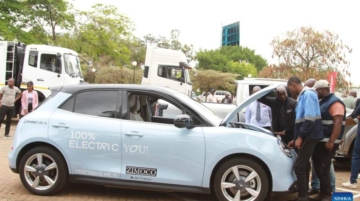
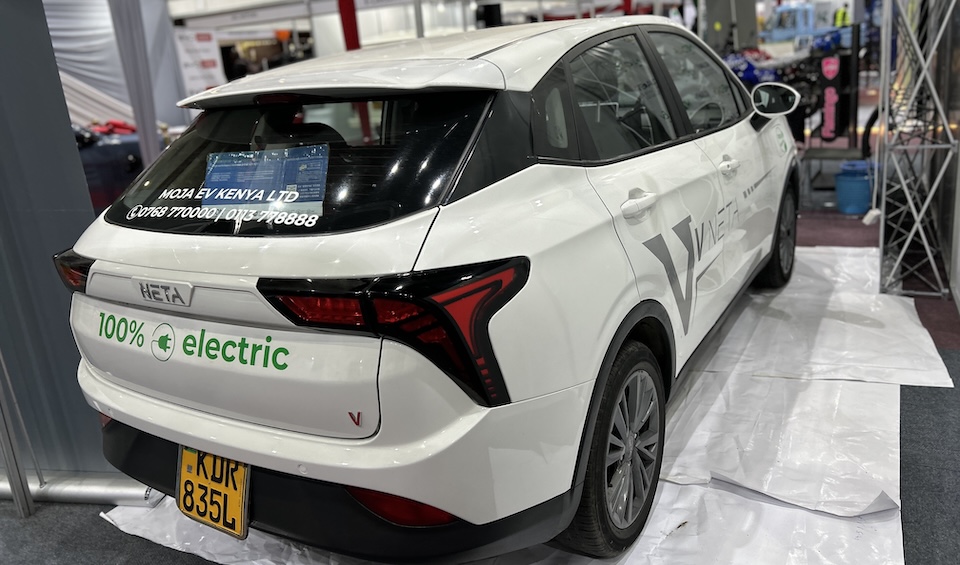
E-mobility startups in Kenya are finding innovative ways to evade the prohibitive taxes slowing the adoption of electric vehicles. To stay afloat, the companies are leveraging Chinese EV technology while building creative business models around leasing and service partnerships.
Why This Matters: Instead of selling vehicles outright, these companies are leasing Chinese-made electric vehicles to drivers and riders, allowing the cost to be spread over time while absorbing the steep import taxes that would otherwise put ownership out of reach. The model is opening new business opportunities and helping build much-needed expertise in a country where training in electric mobility remains limited.
Watch here:
Toyota’s 630,000 vehicle sales bet in South Africa as Chinese Rivals Loom
Toyota South Africa Motors expects to sell about 630,000 new vehicles this year, even as intensifying competition from Chinese brands, infrastructure constraints, and delays in the rollout of electric-vehicle policy continue to pose significant challenges.
The company has warned that its heavy dependence on exports to the United Kingdom and Europe could become a vulnerability as emissions standards tighten in those markets.
Why This Matters: To address these challenges, Toyota is pursuing a multi-step strategy that includes expanding its hybrid lineup and introducing its first battery-electric models locally. The approach shows that legacy vehicle makers will evolve to maintain or grow their market, challenging new entrants. This will increase competition, which could result in better prices, quality, and a competitive edge.
In context
The electric vehicle shift in many African countries faces various challenges, including policy and reliance on second-hand gas and diesel vehicles. These don’t only slow down the EV shift; they could also kill innovation in the sector and the long-term adoption of electric vehicles.
The takeaway:
African governments sometimes develop allergic reactions to innovations that challenge the status quo. Kenya’s attempts to slow down EV adoption show that oil remains king, buoyed by interests within and outside government. The EV shift may become a casualty of this trend.
Narrow-minded approaches hazard limited ecosystems where little creativity can thrive. As such, policies will remain good on paper but hardly actionable due to unnecessary bottlenecks that continue to hold back the vehicle manufacturing industry across the continent.