China is the world’s factory, but for one Kenyan company, it has become more than just a source of goods—it is a gateway to affordable technology for education.
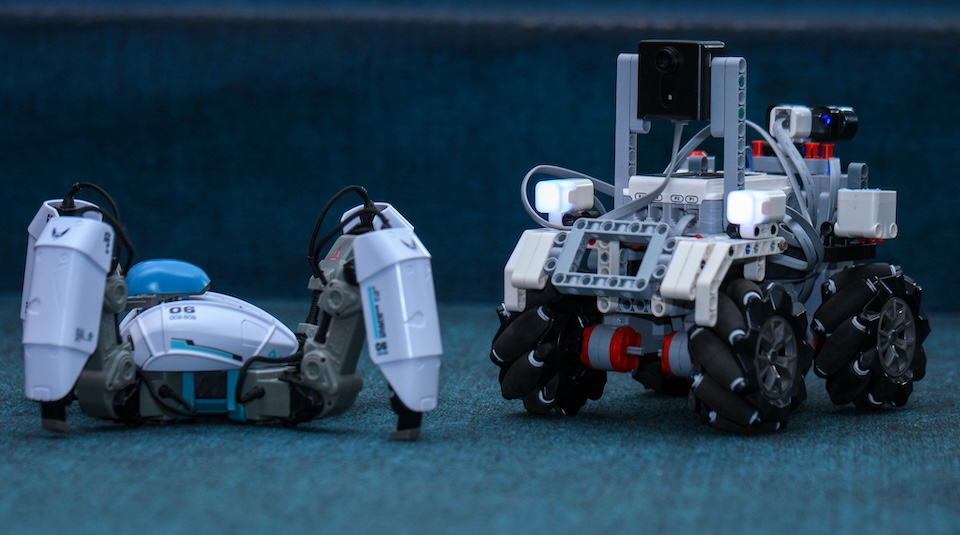
Afribot Robotics, a Nairobi-based firm specializing in STEM education, discovered this advantage when it sourced a robotics kit. While a single kit in Kenya cost $400, the company found that a set of ten in China was available for just $20. This price disparity reshaped its business model, leading Afribot to source all its equipment from China.
Since Kenya lacks a robust tech manufacturing sector, many businesses are forced to import from China. Afribot Robotics founder and CEO Jasin Owili saw an opportunity in this dynamic. He says that affordability and China’s advanced education system made collaboration a natural choice.
“We needed a manufacturer to help us mass-produce our robotic kits for an education series,” Owili said. “Local manufacturers were too expensive, and even after searching across Africa, we found no viable alternative. Eventually, we partnered with a Chinese firm that enabled us to produce our robots at a competitive price.”
Initially, Afribot Robotics focused on building robots for teachers. However, to create a comprehensive curriculum for students, the company sought an experienced education partner.
“We found a Chinese company with nearly two decades of experience in STEM education. They had introduced products worldwide but had yet to enter the African market. This created an opportunity for collaboration, and we’ve been working together ever since,” Owili said.
The cost gap between Kenyan and Chinese suppliers is largely due to high taxes and freight charges on imported goods. Once sellers factor in their profit margins, the final price for Kenyan consumers skyrockets.
Beyond importing products for STEM education, Afribot Robotics is also working on automation systems. It works closely with Fleixue Electronics, a Chinese firm that provides hardware with ready-to-integrate solutions. The Kenyan team researches the local market, while their Chinese counterparts adapt technology accordingly before rolling out products.

Afribot Robotics develops its curriculum locally and then outsources production to Fleixue Electronics. Software development follows a similar model, with Kenyan and Chinese engineers collaborating to create suitable learning platforms.
“We customized one platform in Swahili so that children could program robots in their first language,” Owili explained. “This made coding more accessible and engaging, as students could issue commands in Kiswahili.”
With artificial intelligence becoming an integral part of education, Owili hopes to expand collaborations to further enhance STEM learning across Africa.
“We have trained 108 teachers from across Africa in a virtual program. The quality of training, service, and products we receive from China surpasses alternatives from other countries,” he said.
Afribot Robotics works with NGOs, community-based organizations, and support centers. Notably, the company also runs a program at the American Center in Mombasa, where students access 3D printers and computers.

Despite these achievements, running a business in Kenya is not without challenges. Some projects have stalled due to regulatory barriers.
“We developed a large agricultural drone, but strict regulations prevented us from deploying it to help farmers. In education, the challenge is preparing students for advanced fields like aeronautical engineering and space technology,” Owili said.
To bridge this gap, Afribot Robotics has introduced customized aerial robots that allow students to explore aviation concepts in a controlled environment. The company has also had to navigate stringent regulations on drone weight, licensing, and cybersecurity, which hinder progress in AI and robotics education.
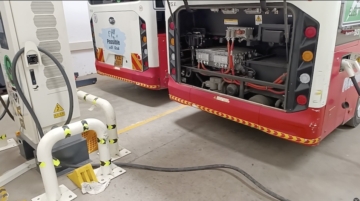
Afribot Robotics is venturing into sustainable transport where the team is working on retrofitting equipment to help businesses transition from fossil fuels to renewable energy. One ongoing project, developed in collaboration with a Kenyan green fuels technology firm, aims to provide eco-friendly logistics solutions.
While Kenya is a hub for tech innovation, bureaucratic hurdles and excessive regulation threaten its sustainability. This holds back not only those in business but also opportunities for students in STEM who could easily provide homegrown tech solutions.