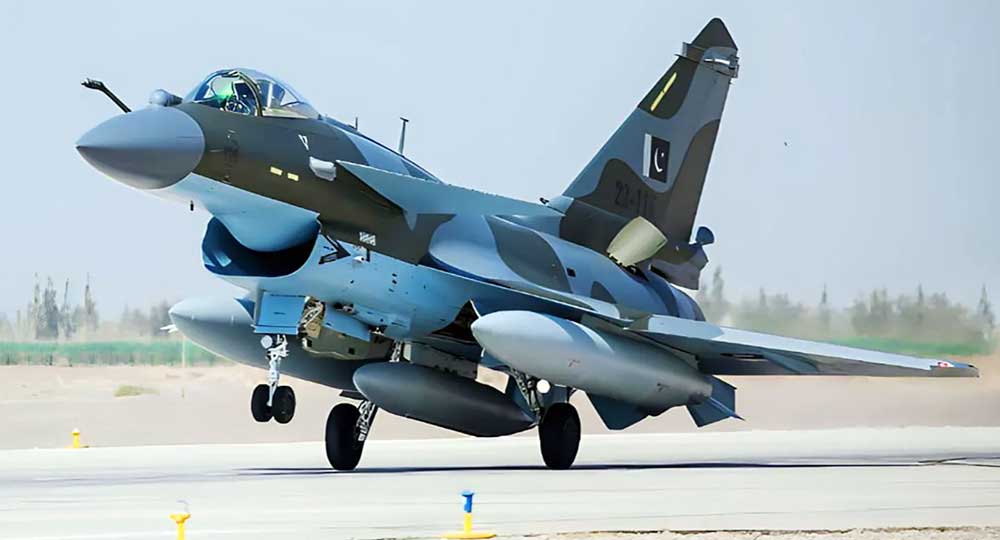
The Indonesian J-10C plan has sparked a broader debate about how Jakarta maintains its strategic independence while ensuring all systems are aligned and interoperating smoothly.
The rumor started with a line that sounded casual enough: Indonesia’s new Chinese-made J-10C fighter jets would be “flying over Jakarta soon.” No specs. No dates. Just a promise dropped by Defense Minister Sjafrie Sjamsoeddin, enough to light up a country that sits on some of the world’s busiest sea lanes and prefers not to choose between giants.
Jakarta framed the move simply: freedom to choose.
“This is Indonesia’s opportunity to demonstrate strategic independence, by modernizing defense equipment from any source that suits our requirements,” said Anak Agung Banyu Perwita, a senior professor at the National Defense University, told the China-Global South Project. The United States, he added, isn’t being pushed away; trade and fintech are the near-term focus there.
Finance Minister Purbaya Yudhi Sadewa said the government has set aside “about nine billion dollars” for the J-10C program in the 2026 defense budget. He was frank about the estimate, “$9 billion or more”, and left the exact tally for later.
Interoperability: One Map, Many Suppliers
Indonesia must bridge Chinese and Western data-link standards so Indonesian J-10C can share tracks with existing F-16s, Rafales, KAAN, and any future F-15s. That means gateways, management, and procedures when links fail.
Most countries buy the same “ecosystem” so everything talks to everything.
Indonesia buys parts from everyone: China, the U.S., France, Türkiye, Italy, and then has to make the cables and adapters that let it all work together. It’s harder. It’s also the point.
Is this a jab at Washington? A Jakarta analyst, Khairul Fahmi, waved that off. Indonesia, he noted, is still working on a U.S. F-15 deal and buys big in civilian aircraft and agriculture.
“I don’t see the J-10C acquisition causing any significant disruption in our relationship with the United States,” Khairul said to the China-Global South Project, “Ups and downs, sure. A rupture, no.”
Mixed Jets: Rafale, KAAN, and the Fleet at Sea
The choice of jet lands as part of a bigger purchase. France’s Rafales are due to start arriving in 2026. Türkiye’s new-build KAAN fighters are on the books for later in the decade.
At sea, Italian-designed frigates are already showing up, Turkish ones are on order, and two Indonesian-built “Merah Putih” frigates are taking shape in Surabaya. A light aircraft carrier is being studied, not bought, a sign of curiosity, not commitment.
All of this only matters if the pieces share a map. Pilots, ship captains, radar crews, everyone needs to see the same picture and keep working when high-end connections falter.
That glue, command systems, data links, plain-voice fallbacks, is increasingly being built at home under a state defense holding called Defend ID.
“The key is making all elements see the same map and speak the same language,” Khairul said. Build the backbone, define the gateways, and create backups. Teamwork wins fights and prevents them.
Indonesia calls this stance “independent and active.” To outsiders, it can look indecisive. To Jakarta, it’s insurance: many suppliers, many conversations, many doors that stay open when politics tighten elsewhere.
“This is not an arms race,” Khairul added. “We’re not trying to provoke any other countries in the region. This is an investment in stability, vital for sovereignty, not a provocation.”