
More than three weeks after elections were held, Honduras still does not have a new president. Nasry Asfura of the conservative National Party leads by a narrow margin, with roughly 43,000 more votes than his closest competitor, Salvador Nasralla of the Liberal Party.
To further complicate things, Xiomara Castro, the sitting president of Honduras, has claimed an “electoral coup” driven by U.S. interference. Her accusation refers to U.S. President Donald Trump’s endorsement of Asfura just days before the election, which she subsequently blamed for her party’s poor showing at the polls.
Responding to mounting pressure from the candidates, the Honduran public, and most recently, the U.S. State Department, Honduras’ National Electoral Council last week started recounting about 15% of the votes cast in the election.
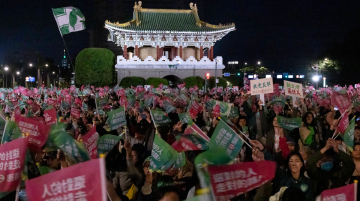
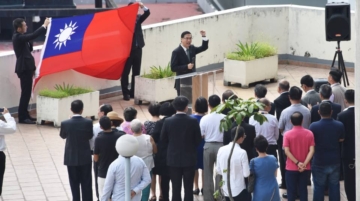
Despite the chaos in Honduras, the true winner in this election may ultimately be Taiwan. Both Asfura and Nasralla pledged during the campaign to break diplomatic ties with China and restore relations with Taiwan. Regardless of how the recount unfolds, the preliminary results are revealing: the only major candidate who openly supported maintaining ties with Beijing, Rixi Moncada, finished a distant third.
A diplomatic switch
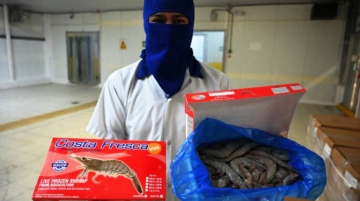
It was Xiomara Castro’s government that decided to break Honduras’ longstanding diplomatic relationship with Taiwan in 2023, adhere to the One China principle, and recognize China. The decision was not one that most Hondurans were expecting. It actually had immediate and damaging consequences for Honduras’ shrimp industry, one of the country’s key export sectors, and failed to deliver the broader economic gains that many had hoped for.
The fallout of the decision led the likes of Asfura and Nasralla to openly advocate for reestablishing ties with Taiwan, which was and still is one of the most important commercial partners of the Central American nation.
It’s not yet clear whether either Asfura or Nasralla would follow through on their campaign promises regarding Taiwan. But if they do, China would face a rare diplomatic reversal with implications far beyond Honduras.
The one China principle
China has been pursuing global adherence to the One China principle for several decades. References to the One China principle have appeared, in varying formulations, in all joint declarations establishing diplomatic relations between China and other states since 1972, but there have been many interpretations of how that principle is applied.
In the past, the One China principle did not preclude countries from establishing informal cultural or commercial ties with Taiwan. Taiwan maintains 110 posts in 72 different countries and ranks 33rd out of 66 countries in the Global Diplomacy Index of the Lowy Institute.
Beijing’s original diplomatic approach sought to merge United Nations General Assembly Resolution 2758 — which transferred China’s seat at the United Nations to the People’s Republic of China and expelled the Republic of China (Taiwan) — with the One China principle, gradually extending this interpretation into bilateral relations. Through this approach, Beijing tried to establish a normative standard requiring states to sever ties with Taiwan. However, this process was neither straightforward nor automatic, resulting in diplomatic showdowns over the issue around the world.
Since Chinese President Xi Jinping came to power, Beijing’s approach to the One China principle has become more rigid, and its tolerance for countries’ unofficial interactions with Taipei has diminished. For countries that established diplomatic relations with China after 2016, such unofficial interactions have effectively been banned.
It’s not yet clear whether either Asfura or Nasralla would follow through on their campaign promises regarding Taiwan. But if they do, China would face a rare diplomatic reversal with implications far beyond Honduras.
What’s next?
Honduras would not be the first country to revisit its diplomatic alignment between Taipei and Beijing. Such reversals are rare, but precedents exist — including Nauru, Senegal, Liberia, Chad, Gambia, Nicaragua, Saint Lucia, and Burkina Faso. However, Honduras could become the first country to directly challenge the contemporary reading of the One China principle.
The reverberations of this possibility are already being felt across Central America. In Panama, there is an ongoing debate about the type of relationship the country should have with Taipei, while in Costa Rica, a presidential nominee recently argued that his country should maintain diplomatic ties with both China and Taiwan. Any decision by Honduras’ next president is likely to have consequences across the region.
It remains difficult to say how China would respond to a diplomatic reversal in Honduras. Whether through quiet diplomatic pressure or more public signaling in the form of economic retaliation, Beijing would have to decide whether to make an example of Tegucigalpa or whether doing so could cause further reputational damage with spillover effects in Central America. In that sense, Honduras may be a litmus test for China’s resolve in upholding its contemporary interpretation of the One China principle.
Alonso Illueca is CGSP’s Non-Resident Fellow for Latin America and the Caribbean.