
As China Cracks Down on Ivory, Japan’s Open Market Becomes a Backdoor for Traffickers

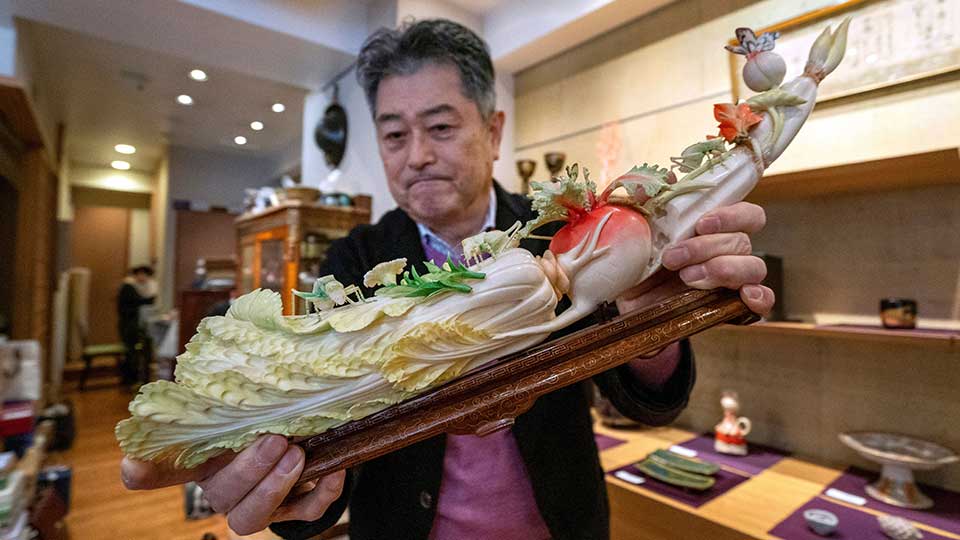
Hajime Sasaki, president of antiquities shops, displaying a decorative item made from ivory and designed in the shape of vegetables at his shop in Tokyo on December 4, 2025. Photo by KAZUHIRO NOGI / AFP

At his store in Tokyo’s ritzy Ginza district, Hajime Sasaki displays a disparate array of wares, from chopsticks to Buddha statues — including many made of ivory.

International trade in elephant ivory is illegal, but Japan hosts one of the world’s largest remaining legal domestic markets for the product, which can only be bought and sold within its borders.

  • Get a daily email packed with the latest news and analysis from Africa, Asia, and across the Global South.
  • Read exclusive insights on the key trends shaping China’s relations across the Global South.
  • Full access to the News Feed that provides daily updates on Chinese engagement in the Global South.

China, Africa and the Global South... find out what’s happening.

Subscribe today for unlimited access.

What is The China-Global South Project?

Independent

The China-Global South Project is passionately independent, non-partisan and does not advocate for any country, company or culture.

News

A carefully curated selection of the day’s most important China-Global South stories. Updated 24 hours a day by human editors. No bots, no algorithms.

Analysis

Diverse, often unconventional insights from scholars, analysts, journalists and a variety of stakeholders in the China-Global South discourse.

Networking

A unique professional network of China-Africa scholars, analysts, journalists and other practioners from around the world.