
This is a free preview of the upcoming China-Central Asia Weekly Digest, part of the new CGSP Intelligence service launching in late 2025.
This week’s developments highlight how China is deepening its engagement with Central Asian societies through education, culture, and governance training. Kazakhstan expanded its network of Chinese-supported vocational training centers, Uzbekistan and China agreed to establish mutual cultural centers alongside broader cooperation, and Kyrgyzstan confirmed plans to send hundreds of civil servants to China for professional training. Together, these initiatives underscore Beijing’s shift toward building direct connections with Central Asian populations, shaping skills, cultural ties, and governance practices that extend beyond traditional state-to-state projects.
This week in China-Central Asia news:
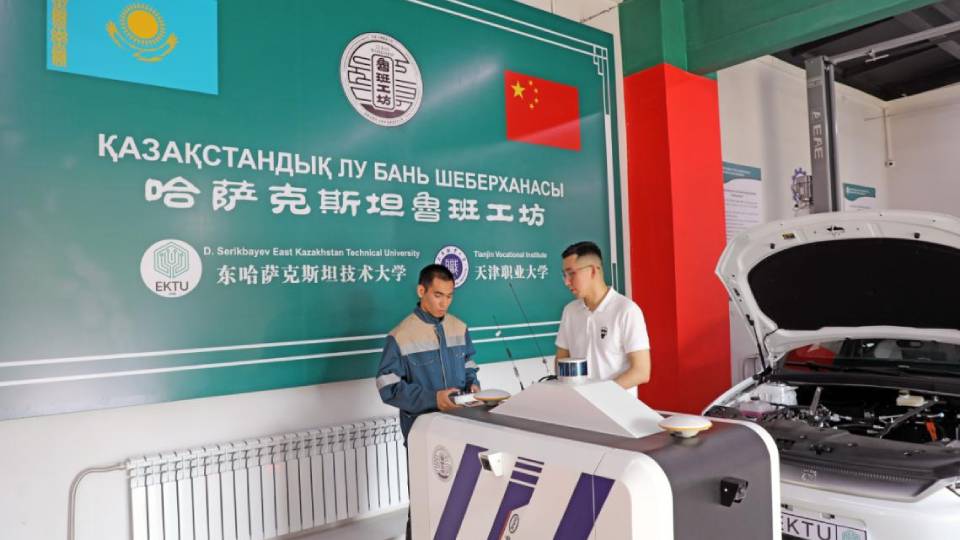
Two More Chinese Vocational Training Centers Open in Kazakhstan
Following high-level talks between Kazakh President Kassym-Jomart Tokayev and Chinese Chairman Xi Jinping during the SCO Summit in Tianjin, Kazakhstan opened its second and third Luban Workshops—Chinese-supported vocational training centers—as part of President Tokayev’s directive to expand the model nationwide. The second workshop launched at Gumilyov Eurasian National University in Astana, while the third opened at the Academy of Logistics and Transport in Almaty.
Why This Matters: These vocational training centers address Kazakhstan’s critical skills gap in technical and engineering fields while embedding Chinese educational standards and methodologies into the country’s workforce development system. The Luban Workshop model, developed by China’s Tianjin Bohai Vocational Technical College, has been exported to over 20 countries as part of China’s educational diplomacy efforts.
For Kazakhstan, the workshops provide access to modern technical training equipment and methodologies that domestic institutions might not afford independently. The practice-oriented approach addresses employer complaints about graduates lacking hands-on skills, while partnerships with Chinese companies could create direct pathways to employment for graduates.
However, the expansion creates dependence on Chinese training standards, equipment, and potentially instructors for technical education across multiple universities. As these workshops become integral to Kazakhstan’s vocational education system, they establish Chinese technical standards as the benchmark for industrial skills training, influencing how an entire generation of Kazakh technicians and engineers are educated and what technologies they become proficient in using.
Uzbekistan and China Sign Comprehensive Cooperation Package Including Cultural Centers
Following talks between President Shavkat Mirziyoyev and President Xi Jinping in Beijing, Uzbekistan and China signed a package of bilateral agreements with the key outcome being a Cooperation Program aligning Uzbekistan’s national development strategy “Uzbekistan-2030” with China’s Belt and Road Initiative. The ceremony included agreements on the mutual establishment of cultural centers and cooperation in healthcare services.
Why This Matters: The cultural center agreement represents China’s expansion into soft power projection through direct cultural exchange platforms in Central Asia. These centers typically host Chinese language classes, cultural performances, art exhibitions, and business networking events that create positive associations with Chinese culture while building people-to-people connections that support broader economic relationships.
For Uzbekistan, Chinese cultural centers provide access to Mandarin language training, which has become increasingly valuable for business and educational opportunities given China’s role as Uzbekistan’s largest trading partner. The centers also offer cultural programming, art exhibitions, and networking events that enhance understanding between the two societies.
For China, Uzbek cultural centers provide platforms to showcase Central Asian culture, history, and business opportunities to Chinese audiences, potentially attracting tourism and investment. The mutual nature of the agreement ensures both countries gain cultural representation abroad rather than creating one-way influence.
Kyrgyz Civil Servants to Receive Training in China
Hundreds of Kyrgyz civil servants and municipal employees will take part in professional training programs in China over the next two years. The initiative stems from a memorandum of cooperation signed earlier between the two countries, under which training opportunities for Kyrgyz officials have been steadily expanding.
In 2024, more than 500 participants completed short-term courses in China. The program initially offered only 50 slots, but following further negotiations, the quota was significantly increased. Looking ahead, the agency announced that by the end of 2025, between 500 and 700 civil servants and local government staff are expected to be sent for training.
Why This Matters: For Kyrgyzstan, this program addresses a critical governance capacity gap. Sending hundreds of mid-level officials to China provides them with direct exposure to modern public administration techniques, urban management models, and the implementation of large-scale infrastructure projects.
For China, this initiative is a profound investment in long-term bilateral alignment and soft power. Educating a generation of Kyrgyz officials in Chinese methods and models fosters a deeper understanding and appreciation of China’s development approach. This goes beyond simple goodwill; it actively cultivates a network of influential individuals within the Kyrgyz government who are familiar with Chinese standards, procedures, and business practices.
In Context
China is systematically expanding its influence in Central Asia through a long-term strategy of human capital development and institutional training. While infrastructure and energy projects form the visible backbone of Beijing’s engagement, it is increasingly complementing these with targeted investments in people—training civil servants, shaping technical education, and promoting cultural exchange.
Vocational programs like the Luban Workshops in Kazakhstan standardize technical skills according to Chinese industry needs, while large-scale training of Kyrgyz officials exposes a rising generation of public administrators to Chinese governance models and project management methods. In Uzbekistan, cultural centers serve as platforms to align public perception with Beijing’s strategic goals.
The takeaway: China is consolidating long-term influence in Central Asia by investing in people-to-people ties. These programs build familiarity with Chinese language, culture, technical standards, and administrative practices, cultivating networks of professionals and officials who carry Chinese-linked skills and experiences into their future careers.
For Central Asian governments, the initiatives address immediate gaps in skills, cultural engagement, and governance capacity. However, they also create dependencies on Chinese training methods, curricula, and standards, meaning the region’s future workforce, cultural infrastructure, and administrative models can be increasingly shaped by Beijing’s governance approach.
Yunis Sharifli is CGSP’s Non-Resident Fellow for Central Asia.
