By Lukas Fiala and Saniya Kulkarni
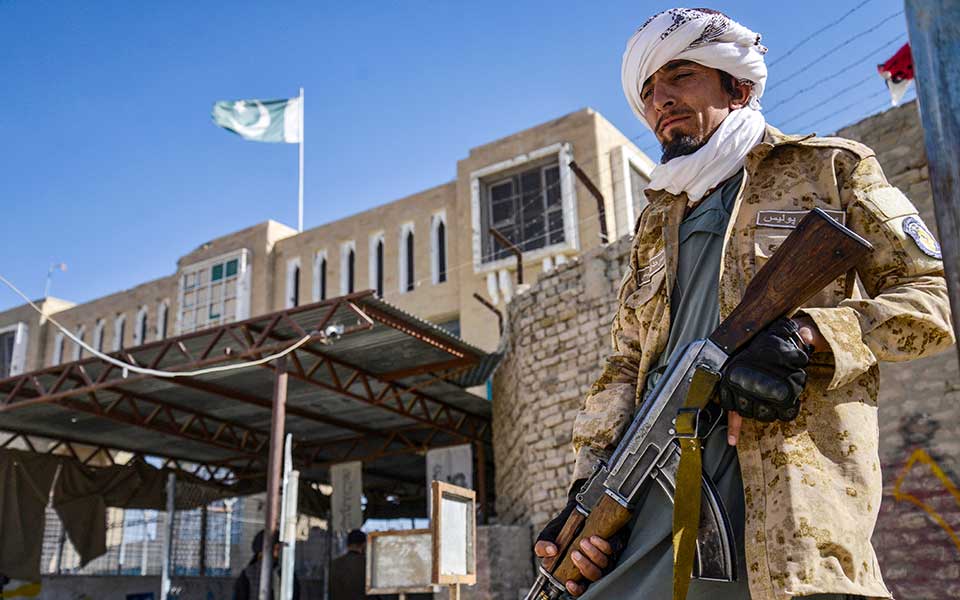
The recent escalation between Afghanistan and Pakistan has demonstrated once more the potential for instability in China’s neighborhood. With both sides reaching an initial truce on Wednesday after a series of strikes, Beijing is again confronted with the difficulty of protecting critical national interests – including Chinese citizens and investments – in a region that has become more volatile following the military exchanges between Pakistan and India earlier this year.
Clashes between Afghanistan and Pakistan are not a new phenomenon. Conflict between the two neighbors – as modern states – has existed since at least the late twentieth century, largely due to territorial disputes over the “Durand Line”, their shared border that Afghanistan does not recognize.
The Afghan-Pakistani border is contentious, not least because it crosses tribal territory. Cultural similarities between Pakistan’s borderland tribes and Afghans make it easier for separatist elements to thrive in Waziristan, where most clashes occur.
From the 1990s onwards, the Afghan-Pakistani conflict was shaped by terrorism, rooted primarily in the Pakistani intelligence service’s (ISI) involvement during the Soviet invasion of Afghanistan. It is widely known that the ISI initially gave support to the Afghan mujahideen at the behest of the CIA, from which the Taliban eventually emerged.
The ISI’s harboring of non-state actors around the borderlands backfired not long after, when these groups turned against the Pakistani state and ended up becoming a major pain point for successive governments. The Pakistani Taliban, or the TTP (Tehreek-e-Taliban Pakistan) continues to cause trouble for Islamabad to date.
For China, this situation presents a complex reality. On the one hand, Beijing’s close relationship with Pakistan, especially in the military domain, automatically makes China an informal – even if hesitant – party to a military conflict.
This is because of Pakistan’s tight integration into Chinese military-technical ecosystems and its status as a “threshold alliance” partner that has fostered increasingly formalized defense cooperation with China.
On the other hand, Beijing has shown little interest in articulating a coherent and sufficiently potent vision for regional order that integrates Pakistan and Afghanistan into a Sinocentric sphere of security cooperation.
Since the Taliban takeover in Afghanistan in 2021, Beijing has merely been involved in setting the table, supporting regional efforts across venues such as the Shanghai Cooperation Organization and trilateral meetings, including Afghanistan and Pakistan. China has also highlighted Afghanistan’s economic potential and Chinese investment in this context.
As Feng Zhang from Yale University notes in a recently published academic article, Beijing has primarily sought to use persuasion and inducement rather than coercion to “convince the Taliban of the importance of domestic reconciliation and international peace.”
It’s unclear, however, if such engagement can really protect Chinese interests in a regional order in flux. India, for instance, has historically considered the Taliban a proxy of the ISI, but has recently shaken hands with them to counterbalance Pakistan in the region.
This has occurred against the backdrop of Islamabad’s charm offensive with the Trump administration, particularly in light of President Trump’s desire to win the Nobel Peace Prize.
With peace-making seemingly becoming a competitive discipline amongst the world’s most powerful political leaders, the question remains if Beijing will step up to assert a more Sinocentric political and security order in its neighborhood – or if a more multi-layered and disordered multipolar system will continue to emerge. From our current vantage point, the latter seems more likely than the former.
Lukas Fiala is the Project Head of China Foresight at LSE IDEAS and Saniya Kulkarni is a Program Manager at LSE IDEAS