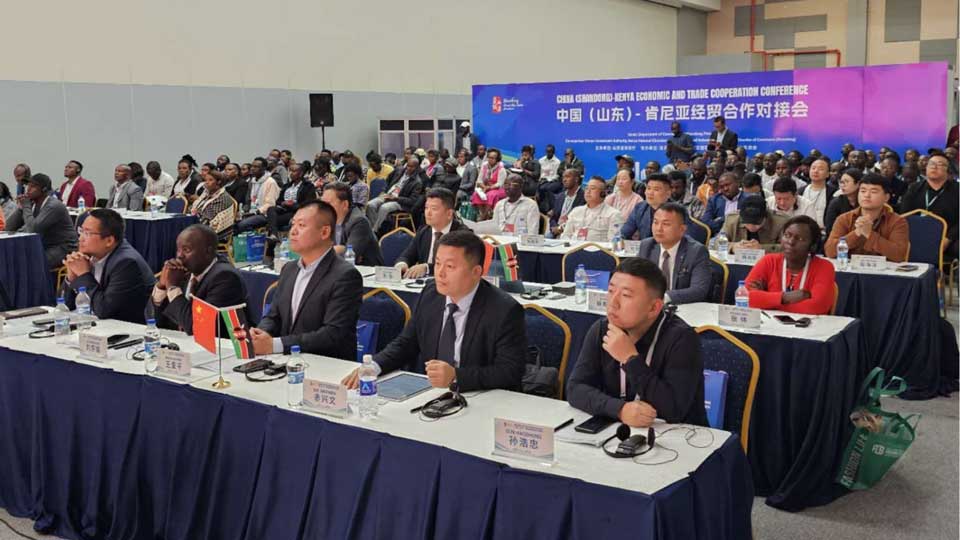
Over more than a decade in Kenya, the popular WeChat commentator Xiao Nie “小聂说事儿,” witnessed three waves of Chinese investment. The first came from Guangdong and Fujian, who are small-scale commodity traders. The second was led by Zhejiang entrepreneurs in manufacturing, wholesale, and e-commerce, followed by a brief property boom. The third wave, which he recently noticed, is the arrival of Shandong’s industrial ecosystem.
Shandong is a province famous in China not only for vegetables and light industrial manufacturing, but also for its intense, almost cultural obsession with taking the civil service exam. This unexpected demographic shift raises a curious question: are Shandong people giving up the race for government jobs at home, only to start competing abroad?
The author lays out his analysis of this phenomenon in his recent article.
The catalyst was a landmark infrastructure deal: a 1.5 billion highway project won jointly by Shandong Hi-Speed Group (SDHS) and China Road and Bridge Corporation (CRBC). For Kenya, the partnership signaled that another arm of China’s “infrastructure juggernaut” had officially landed. While CRBC is an old hand in Africa, SDHS is one of China’s most seasoned toll-road operators. Their collaboration represents not just construction, but long-term, system-level operations and asset management. Projects of this scale exert a magnetic pull on an entire provincial supply chain: steel suppliers, machinery makers, maintenance crews, logistics providers, and even restaurateurs follow.
Shandong manufacturers also fit neatly into Kenya’s growing needs. Kenya lacks machinery, agricultural equipment, construction materials, solar-power systems, light industrial goods, furniture, hardware, and plastic products – the very categories in which Shandong is strongest. In Nairobi, Shandong businesses are leading the development of the China–Kenya Global Trade Center, a new commercial hub designed not merely as an office tower but as a full ecosystem: warehousing, logistics, showrooms, retail, wholesale, and export facilitation.
A more consequential shift is also underway: Shandong entrepreneurs are no longer content with trading. Instead, they are buying land, building factories, and setting up farms. Recent investment patterns include industrial parks, large-scale maize and vegetable farms, sunflower cultivation, agricultural machinery assembly lines, furniture and textile workshops, and cold-chain logistics centers.
The author uses Shandong Jialejia as a telling example. Jialejia is an agriculture and livestock company that recently signed a major investment agreement with the Kenyan government. In 2025, the firm committed roughly $30 million to build a modern poultry and livestock complex on 40–100 acres of land in Kajiado County. The project includes a 500,000-bird egg-laying farm, a parent-stock breeding facility with more than 10,000 birds, and a feed mill. If successful, such large-scale, modernized projects could ease chronic egg shortages, stabilize prices, improve local diets, and create thousands of jobs in farming, logistics, management, and processing.
WHY IS THIS IMPORTANT? Provinces like Shandong and major cities like Chongqing and Shanghai are playing an increasingly prominent role in Chinese economic engagement in Africa and other Global South regions. While the central government in Beijing remains important in setting overall strategy, Beijing is ceding much more room to sub-national actors today than it did even just a few years ago.