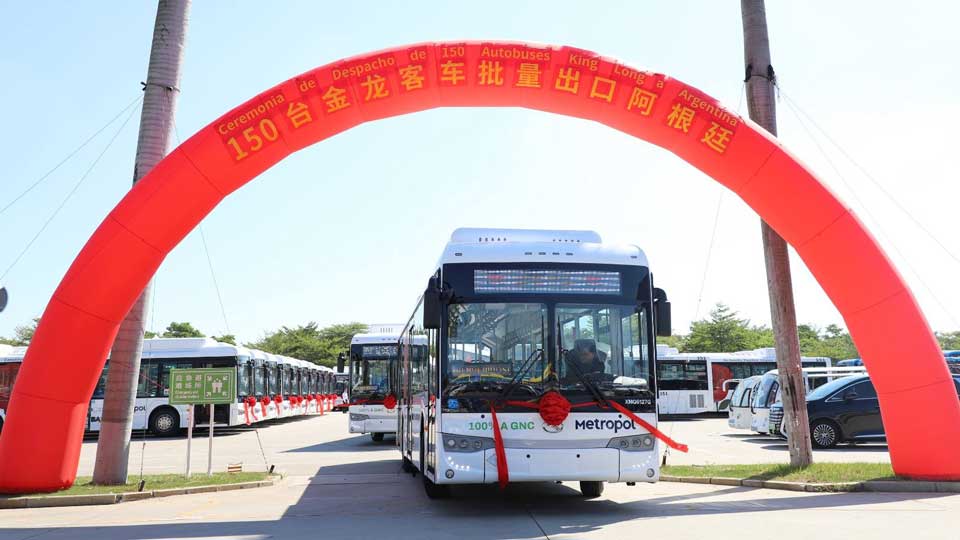
Argentina recently committed $45 million to purchase 150 natural-gas buses from China’s King Long, a move that may seem counterintuitive to readers accustomed to seeing Latin American cities embrace full electrification. But an article on a WeChat public account focused on Latin America’s economy explains that Argentina’s choice reflects its own energy realities.
The article lays out a simple economic logic. A standard diesel bus in Argentina costs around $220,000, a CNG bus roughly $350,000, and an electric bus close to $600,000. Although CNG buses require a higher upfront investment than diesel models, they are far cheaper to operate day to day. What makes the difference even more compelling is Argentina’s abundant natural-gas reserves, which allow the country to fuel buses domestically rather than relying on imported diesel, a long-standing vulnerability for its transport system and for its national finances.
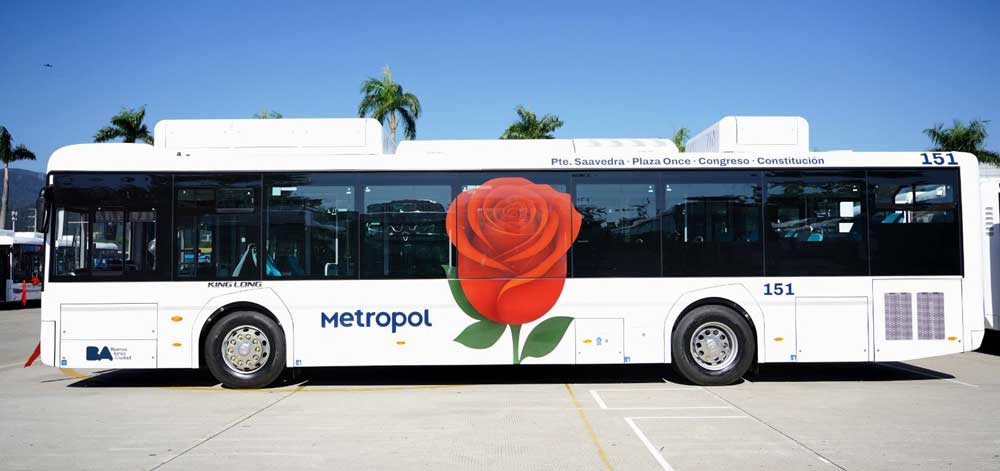
Major operator Metropol describes CNG as Argentina’s most realistic and quickly scalable option in the near term. Electrification remains the long-term direction, but initial capital costs remain too high for a public transport system already under financial pressure. As government incentives for sustainable mobility improve, both CNG and electric models may eventually benefit, but today, CNG offers the most straightforward path to lowering operating costs while strengthening energy security.
From a broader perspective, Argentina’s procurement helps reduce dependence on imported diesel, supports the local natural gas industry and technical services sector, and eases the fiscal strain on municipal transport operators.
WHY IS THIS IMPORTANT? China has increasingly exported CNG buses to countries such as Mexico, Israel, and Kyrgyzstan, promoting natural gas as a more affordable and immediately deployable green-energy solution for cities that are not yet ready—financially or infrastructurally—to adopt electric buses at scale. Argentina’s decision illustrates how Chinese manufacturers are shaping an alternative “green transition” pathway that aligns with the economic constraints of many emerging markets.