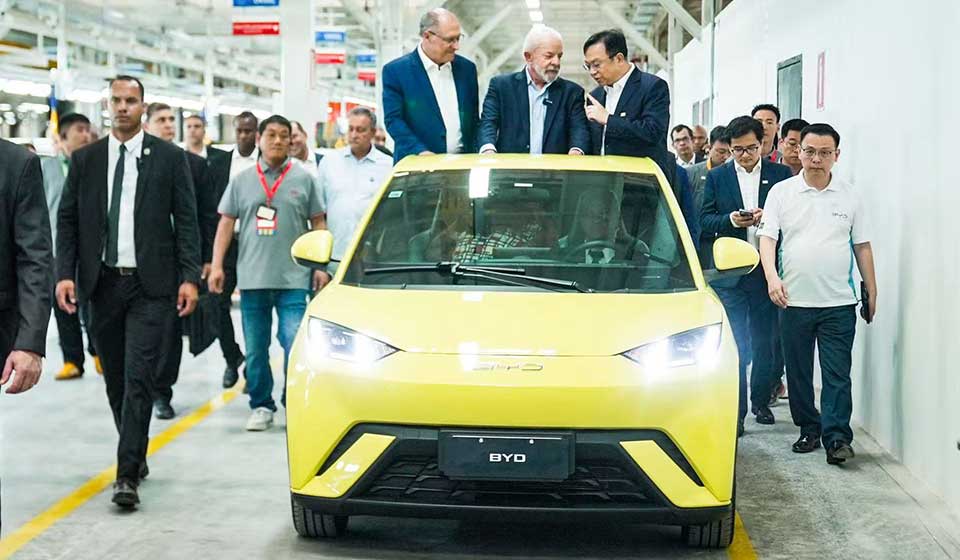
Brazil’s President Luiz Inácio Lula da Silva has made an unusually public endorsement of a Chinese automaker. On October 9, Lula became the owner of a BYD Song Pro SUV, the company’s 14 millionth new energy vehicle.
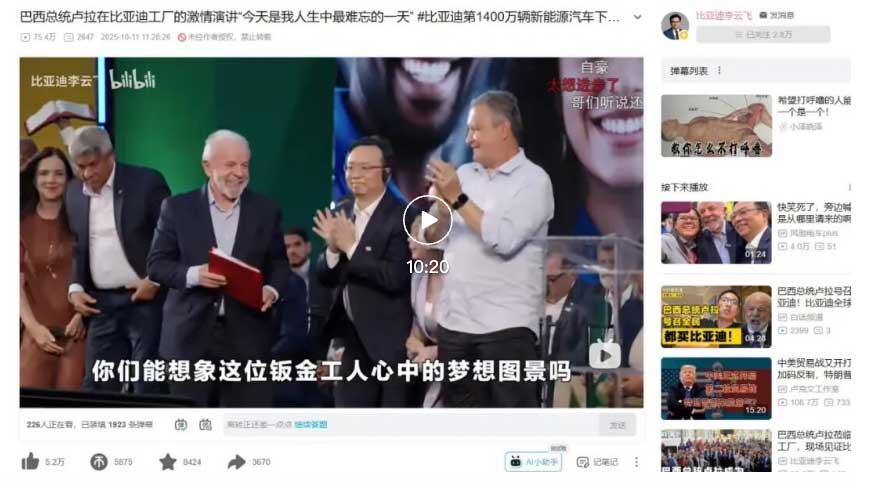
He also released a speech urging Brazilians to buy BYD cars, and videos of that speech quickly went viral in China.
A commentator on WeChat public account called it “a political education masterclass…almost like a modern-day Communist Manifesto,” praising Lula’s defense of workers’ rights, industrial development, and economic independence from the West.
In the speech, Lula reminded viewers that when Ford closed its factories in Brazil last year, more than 20,000 workers lost their jobs overnight. BYD immediately announced it would take over Ford’s abandoned plant in Bahia and restart production. BYD ramped up operations at record speed, and by July this year cars were already rolling off production lines, putting thousands of Brazilians back to work.
Lula emphasized his working-class background—he grew up hungry, only ate bread for the first time at seven, and never graduated from college—saying this is why he fights for ordinary people. He also declared that Brazil has “no ideological bias against any country” and seeks only “civilized and mutually beneficial partnerships.” Chinese audiences saw this line as a direct challenge to U.S. pressure campaigning against Chinese investment in Latin America. Some
called Lula’s remarks a powerful expression of “Global South solidarity.”
Why Is This Important? This is a milestone for BYD’s globalization, showing that successful international expansion requires deep localization.
According to Guancha, BYD’s entry into Brazil faced challenges: just before its plant opened, four local automakers lobbied to block fair import tariffs, claiming BYD threatened “local industry” and demanding a return to 35% import taxes by mid-2026. BYD responded with an open letter defending its technology and value to consumers.
The move triggered public support, not against BYD, but against Brazil’s own carmakers. Thousands of Brazilians criticized domestic brands for price gouging and monopolistic practices.
Guancha also notes a symbolic twist: the road outside BYD’s new Camaçari factory has been renamed “BYD Road,” replacing its former name, “Henry Ford Road.”