Donald Trump has never thought very highly of Africa, famously referring to the continent as a place of “sh**hole countries.” While there’s no indication that sentiment has changed, he’s recognized that African resources are essential if he wants the U.S. to decouple from Chinese dominanted critical mineral supply chains.
In February, the administration unveiled an ambitious new critical minerals sourcing initiative in which African countries, in particular, play an outsized role. But the Chinese have a 20+ year head start sourcing and refining these minerals and metals, so displacing them is not going to be easy.
For some perspective on this burgeoning U.S.-China rivalry, Eric & Géraud are joined by two of the top editors at the online news site Semafor. Yinka Adegoke is Semafor’s Africa Editor, and Andy Browne is the outlet’s Managing Editor, who will oversee Semafor’s new China newsletter.
📌 Topics covered in this episode:
- The intensifying U.S.-China rivalry across Africa
- China’s expanding role in Congolese cobalt and critical minerals
- Xi Jinping’s duty-free access offer to 53 African countries
- Mining versus refining and why processing capacity is the real bottleneck
- U.S. efforts to counter China through critical minerals partnerships
- Trade imbalances and the limits of African industrialization
- Debates in Washington over corruption and China’s business practices
- Governance in the DRC and the deeper roots of regional instability
Sign up for Semaphor’s Africa and China newsletters:
- Semafor Africa: https://www.semafor.com/newsletters/africa
- Semafor China: https://www.semafor.com/newsletters/china
Show Notes:
- Semafor: How African nations got stuck with China by Andy Browne
- Semafor: US courts African minerals giants as China rivalry escalates by Yinka Adegoke
- U.S. House Foreign Affairs Africa Subcommittee: Advancing Peace in DRC and Rwanda through President Trump’s Washington Accords
About Yinka Adegoke and Andy Browne:
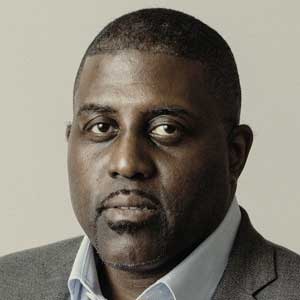
Yinka Adegoke, Africa Editor – Yinka is a former editor at Rest of World; Quartz Africa, which he launched in 2015; and Billboard. In 2018, he was named one of the 100 Most Influential Africans by New African magazine. He previously wrote for Reuters, The Guardian, and The FT, among others, and has reported from more than 20 countries across Europe, Africa and the Americas. He oversees the Semafor Africa newsletter, which tracks the most important stories and analysis from the continent and digs into everything from political upheaval and China’s growing influence to a cultural renaissance and innovative startups.

Andy Browne, Managing Editor – Andy brings over three decades of experience in geopolitics, trade, and China, having previously run the editorial program at the Bloomberg New Economy Forum and served as China Editor at the Wall Street Journal, where he was part of the 2007 Pulitzer-winning team for International Reporting. Most recently, he was a partner at The Brunswick Group. In addition to producing the editorial program for Semafor World Economy, the largest gathering of Fortune 500 executives in the US, Browne will helm Semafor’s forthcoming China newsletter, Semafor China.
Transcript:
ERIC OLANDER: I’m Eric Olander, and as always, I’m joined by CGSP’s Africa editor, Géraud Nima, back from his journeys from Washington, back in the beautiful Indian Ocean Island of Mauritius. A very good afternoon to you, Géraud.
GÉRAUD NEEMA: Good afternoon, good evening to you, Eric.
ERIC OLANDER: Géraud, we can’t avoid this topic. There’s just so much that’s going on. So we’re going to go back to the US, Africa, and China.
I don’t know what to call it, a relationship, but the dynamic among these three entities. We’ve got a lot to talk about. In part, I want to take advantage of the fact that again, we mentioned in our earlier show this week, that you were in Washington, you had the opportunity to testify before the House Foreign Affairs Subcommittee on Africa.
I want to play a soundbite from that. But first, I want to give a quick update: we got some news this week that Chinese President Xi Jinping announced to the African Union that 53 African countries will have duty-free access to the Chinese market as of May 1, 2026. This is something we’ve been covering all year.
There’s been a series of bilateral negotiations between Kenya and China, South Africa and China, and Ghana and China. And Cobus, our colleague, explained to us that, for these trade relationships to be recognized by the WTO, they have to be bilateral. Nonetheless, according to Xi, on May 1st, 2026, we’ve talked a lot about this in the past: just because they’re going to get duty-free access does not mean we’re going to see a big surge of trade from Africa to China.
There are a number of structural barriers in the way that prevent African goods from entering the market, including phytosanitary requirements, product diversification, and so on. So, nonetheless, that’s happening. Okay, Giro, let’s talk about what happened with you at the House Foreign Affairs Subcommittee.
And it’s absolutely fascinating. You were there to discuss the U.S.-DRC and DRC-Rwanda situations. Tell us very quickly, before I get into some of the things that were said, what was the topic, and why were you invited there to comment?
GÉRAUD NEEMA: It was the second part of a series of hearings aimed at talking about advancing Donald Trump’s initiative after the Washington Accord, as it was called. The Washington Accord was between DRC-Rwanda and Washington to a certain extent. So, they had the first hearing where they had an official from the State Department.
And for the second hearing, they wanted to have a specialist expert to talk about the topic, basically to understand how to advance those agreements, how those agreements can be helped to sustain peace, long-term peace in Eastern DRC with Rwanda, and how to a certain extent is also going to help to sustain U.S.-DRC relationships. So, I was called because I’m kind of an intersection of all these different topics: DRC politics, geopolitical competition in the DRC, minerals, because we also had a minerals component in the Washington Accord between the U.S. and DRC in the Strategic Partnership Agreement, and geopolitics, DRC-Rwanda as well. So I was kind of in the mix of different layers of this conversation.
That just led me to be part of the panel to talk about the Washington Accord as a whole.
ERIC OLANDER: Not surprisingly, though, and I had a chance to watch the entire hearing, China came up as a major theme. In fact, Chris Smith, a New Jersey representative who chairs the subcommittee on Africa, made China a key priority in his comments. And I want to play a few remarks from his opening statement.
And Géraud, I have to tell you that you are a very patient man, because if I sat through this, I don’t think I would not have contained myself. And this is why I am not invited to these things, and you are. Let’s take a listen to some of the opening remarks on China by Representative Chris Smith.
REPRESENTATIVE CHRIS SMITH SOUNDBITE: On the cobalt issue, the hope is that if this agreement were to truly bear the fruit that we all hope and pray that it will, the need to pass legislation like mine, which I’ve been pushing now for several years, becomes moot. You know, if the cobalt stays in and the other minerals, coltan and all the others, inside of dear Congo, or are processed by a nearby friendly country that is not a human rights abuser like the Chinese nation, then we will have achieved much. And my hope is, and I said this to President Tshisekedi when he met with a number of us last week, that we want the wealth to stay inside of dear Congo so that the people will benefit first and foremost.
And that means the children, that means the families. I mean, the wealth is so extraordinary. And unfortunately, the people who want to steal it by force and by deception are ever-present.
So the hope is that that will happen. My bill would provide a rebuttable presumption that anything coming from China, cobalt, is inadmissible to the U.S. We know that the EV fleet that the Chinese is producing, which is now growing in numbers every single day, for instance, in the EU, is a huge moneymaker for Xi Jinping. So he wants that cobalt in the worst way.
President Tshisekedi made it clear that he’s trying to get a better deal. But I do believe that so long as China, which has no such thing as a foreign corrupt practice act like we do, you can count on them engaging in this in a very corrupt and misleading way. And the fact of the matter is that the people of Congo are suffering because of it.
ERIC OLANDER: There is just so much inaccuracy in that statement. I don’t even know where to begin. First of all, Donald Trump suspended the Foreign Corrupt Practices Act.
He will not enforce it. So the United States does not have it. The use of cobalt in EV batteries by the Chinese and by others is following precipitously.
So he’s wrong in terms of the assessment of how badly they want cobalt for batteries. When you listen to that, this is the same rhetoric we’ve been hearing from Capitol Hill for 15, 20 years on the Chinese in the DRC and about the U.S., the presumption that the U.S. is benevolent and the Chinese are malevolent. Again, we’ve covered the fact that Chinese corruption and Chinese environmental abuses are a problem.
There’s no doubt that’s true. But the framing of this is highly problematic because it’s not fact-based. What’s your take on that when you were listening to it?
GÉRAUD NEEMA: It was really interesting to listen to because the framing of the conversation was, first of all, framing between advancing the Washington Accord. So when in his statement he pointed out China, it was really interesting for me to listen because I tried myself as much as possible to stay away from the China debate in that hearing. And I even had the opportunity to react to that because there was an opportunity to react.
I was like, I’m not going to react to that because if I do react, we might really shift the whole conversation. One thing I wanted to point out is the fact that China doesn’t have a Foreign Corrupt Practices Act. That’s true and not true at the same time.
It’s not true when you think of like one single regulation about it, like the US has, but not now it’s being suspended. But China has a series of regulations that just condemn and that just indict any corruption that any Chinese companies are doing overseas. And we had many Chinese mining executives indicted in China for corruption that occurred, for example, in the US and in other parts of the world.
So it’s really interesting because, of course, those are the kind of part that people don’t follow closely. They don’t know about. It’s easy to say China doesn’t have it, the way China has kind of legislation about that.
And I think that’s really important to point out and not to link the fact that if Chinese companies are operating in corruption, it’s because they don’t have regulation. They do have regulations. Now it becomes a part of like, what’s the part of the host country?
What’s the part of the single company? What’s the part? It’s a whole ecosystem that needs to be taken into account.
So you see, I’m just commenting on that. And I just, when I was listening to him, I was like, if I go through that route, it’s going to turn into a lecture about what China does and what China doesn’t do. And I’ll be like, no, I don’t want to find myself here now, finding myself in a space where you have to defend China, where actually you want to defend just facts on the ground.
So it was really interesting for me. And I really tried to restrain myself, even though at the end, I made some comments to kind of rectify a few points. But I really tried myself to stay away from the China angle, because I said, I’m not going to fall into that element and make that about China geopolitics, because it’s really not about China geopolitics.
At the end, it’s much DRC, peace, Eastern DRC, the United States, how to have those conversations in a very useful and fruitful way for the DRC.
ERIC OLANDER: Okay, well, let’s dive into the issue a little bit more, looking at the U.S.-Africa relationship, and then China-U.S., and how this all kind of fits together, especially when we’re looking at China’s role in the world in this new era that we’re in. Again, Geraud, you have far more patience than I would, but the two gentlemen that we have on the show today, I’m thrilled we’ll be able to give us some insights. We’re thrilled to have Yinka Adegoke, our old friend of the show, Africa Editor at Semafor, formerly of Rest of World, and way back in the day, the Africa Editor at Quartz Africa.
He joins us from New York. And Andy Brown, for the first time, joins us, Managing Editor of Semafor, previously the China Editor at The Wall Street Journal, and the man behind Semafor’s new China newsletter, Semafor China, that will be coming out very shortly. Yinka, Andy, thank you so much for joining us today.
YINKA ADEGOKE: Thanks for having us.
ANDY BROWNE: Thanks for having us.
ERIC OLANDER: Listen, there’s a lot of ground to cover here.
We’re going to go in a bunch of different directions. Yinka, let’s start with you. When you listen to those remarks from Chris Smith, this is the same kind of rhetoric that we’ve been hearing from U.S. stakeholders on the China-Africa relationship more broadly. But let me get your reaction to what you heard from Representative Smith in terms of this type of rhetoric simply has not helped the United States advance its agenda in Africa by going after the Chinese. And in many ways, it stands in stark contrast to what you have heard in your own reporting from Nick Checker, who is the State Department’s head of the Bureau of African Affairs, who says, listen, we’re not going to go dollar for dollar with the Chinese. We’re going to be much more targeted in our approach in Africa.
Give us your take on all of this, Yinka.
YINKA ADEGOKE: Listen, you, and I, Géraud, and the rest of the team have been hearing this stuff for years now. You always feel, when you speak with various arms of the U.S. government about the kind of China-Africa conversation, that they’re always a few steps behind, as if they’re talking about some other period, something that doesn’t seem to reflect reality. And by the way, let’s be very clear about this.
It doesn’t matter who’s in government. You always get this sense that there is a very fixed narrative. We know what this is about.
China is this big, bad enemy. We’ve kind of almost come back to a Cold War mindset, that we’ve got to transfer it to this new paradigm of U.S.-China and this great power rivalry. And what’s just happened in the last few years is that it just gets more extreme, right?
Particularly, this Trump 2.0 is that the conversations are just more extreme. And a few of the African sort of representative congressmen, people on Capitol Hill, a few of them are pretty dramatic with their language, as you heard there in that hearing. And it doesn’t seem to reflect the day-to-day reality.
When I spoke with Nick Cheka, the State Department, he was also not far off on the ideological kind of path, because, frankly, you can’t survive in this administration, even lower down in the middle ranks, if you’re not prepared to say some stuff that’s kind of a little bit more very much on that path. But as you point out, he had a little bit more subtlety in terms of, or maybe not subtlety, I don’t know if the right word is more, he was more realistic about what the U.S. strengths are, right? Like, you know, U.S. companies are not going to go all the way out to African countries and start building roads. They just don’t have that capability in the same way as Chinese companies.
ERIC OLANDER: They can’t do it in Manhattan, much less in the DRC, let’s be honest, right? We have enough challenges here in the United States.
YINKA ADEGOKE: What you hear from someone like Cheka is a lot more of the, yes, these are the big bad guys, but, but, but. This is the bit that we’re going to focus on. We’re going to be sort of more innovative and creative with our financing.
We’re going to think about different types of partnerships. We’re going to work with the African countries, and it’s all going to work out. So that’s kind of a little bit different.
But the thing that’s very particular about this period is you have to stick to this kind of very ideological focus that those guys out there are terrible. We’re focusing on, you know, on making America great again, America first, and all that. The framework is America first, right, when it comes to foreign policy.
And then we’re just going to do all these great transactions, and maybe we’ll get into a bit more of that.
GÉRAUD NEEMA: So I’m going to get to you, Andy, because you and Yinka have been covering Africa from the United States, giving the perspective on what administrations see and think and how they perceive Africa during this period in general. I want to get to, based on what Yinka had just said, because when I was in D.C., I had a conversation with Eric earlier this week when I noticed that there was a kind of, as much as we had a hawkish narrative about China’s engagement in Africa, but it was not across the border, just like it used to be. It seems like we now have a specific topic, a specific area that has become much more focused.
And I connected to what Yinka had just mentioned about Checos because we’re not going to compete dollar with dollar with China. So are we seeing a kind of more specific, targeted U.S. hawkish narrative or focus on what China does in Africa, or it’s just like it used to be before, across the board about China, Africa in general?
ERIC OLANDER: But Andy, just picking up on what Joe was saying, that kind of speaks more broadly to the U.S.-China relationship. Trump has effectively silenced a lot of the hawks, including Marco Rubio. So how is the U.S.-China discussion happening? And then how does that relate, do you think, to other parts of the world?
ANDY BROWNE: I think that’s absolutely true. I think that Trump has thrown everything up in the air. If you look at the latest statements he just made on Taiwan, quite extraordinary.
He’s saying that, I’m talking about U.S. arms sales to Taiwan with Xi Jinping.
ERIC OLANDER: And I’m going to… Which is inconceivable for people who don’t follow this closely. This is not something that would have ever happened in a previous administration.
ANDY BROWNE: Right. I’m going to make a decision about it. Well, of course, we know very well that Xi Jinping wants what Xi Jinping wants from Trump in the summit that’s coming up in April.
He wants some concession on Taiwan. I’m not sure that even Xi would expect that Trump would give in an arms sale deal on Taiwan. I mean, the United States is committed to defending the island under an act of Congress.
So yeah, on the one hand, there’s an awful lot of giveaways. Look, the newsletter, our newsletter, is looking at this from U.S.-China relations from a business perspective. We’re very focused on the economics, geopolitics, and geoeconomics.
And what you’re always saying about the congressman and his view on China and Africa, that it’s all about the corruption. I hear this all the time. China has made its way in the world because it’s corrupt or because it’s ripping off the United States or doesn’t respect IP.
The fact of the matter is that China is competitive because in many areas, it’s just really good. And in fact, manufactures amazing EVs, which the United States would like to buy. Now, does that mean that the United States should rely on Chinese EVs?
Absolutely not at all. It needs to build out its own EV supply chains, and maybe it does that through technology transfers. But I just don’t think from a competitive perspective, it’s very useful for the United States to think about China through that type of ideological lens.
ERIC OLANDER: Yeah, Yinka, Andy’s saying what you said as well, like it’s almost hearing Chris Smith. It’s like coming from a different era. And these talking points that Andy brought up about China are basically entirely corrupt and also have gained all of its advances by copying U.S. intellectual property, again, is a 15-year-old talking point. And what I find so perplexing about the narrative in D.C. is how the United States is among the best in the world at China knowledge production. We have some of the best universities in the world that have amazing institutes, such as Boston University, Global Development Policy Center, Johns Hopkins, and Deborah Brautigam, among others. I mean, I could go on.
I mean, we’ve been producing a show for the past 16 years relying heavily on U.S.-based scholars who do amazing work on China, Africa. And yet you’ve got bozos like Chris Smith who are using 15-year-old talking points consistently for the past 15 years. The data just doesn’t seem to get updated in the beltway when it comes to China and Africa and China and other parts of the world.
And again, just to Jero’s point, when we talk like this, we sound like we’re defending China, which we are absolutely not. What we are criticizing is intellectually lazy thinking inside the beltway, two very, very different things. You’ve been following this as well.
Why is it that the elite policymaking circles in Washington can’t seem to process new information?
YINKA ADEGOKE: I think it’s just people go to their comfort zones, right? They’ve got a narrative that’s fixed. I mean, listen, those of us who cover Africa, whether you’re covering China, Africa, or you’re covering, you know, broader as I do, you also see this across the board with developing countries, right?
They have some very fixed narratives and people stick to them, and they keep on coming back to them over and over and over again. And the China, Africa one is, I mean, you’ve told this story so many times, it’s a really easy one, right? Like this country comes from nowhere overnight, apparently, even though they’ve had this relationship going back decades.
And as they’ve grown, they’ve also decided, oh, we see an opportunity on the African continent, and we’re going to, whatever you think about their approach, whether it’s through loans, whether it’s through trade, all these various approaches that they’ve had to grow with the African continent. And in two decades, they’ve become the largest trading partner for the entire continent. And that’s happened not because of corruption or some underhanded deals.
They’ve worked with these countries to give them what they want, so to speak, right, to partner with them. And that has been, it’s just easier for some of these folks in Washington or wherever they are to just stick to the idea that this can’t be right, this, you know, we’re the greatest power in the world, and everybody should be looking to us.
ERIC OLANDER: Andy, you and I have been covering China for a long time. What’s your take on this evolution of the China narrative in DC and the US more broadly in terms of how it’s updated and how elites are processing new information, new understandings of China or not?
ANDY BROWNE: I would push back a little bit. I think China gives U.S. critics plenty of ammunition.
ERIC OLANDER: 100%. I don’t disagree on that. I mean, there’s no disagreement on that.
ANDY BROWNE: I’ve just written a column on Jimmy Lai, the publisher of the Apple Daily in Hong Kong, who’s just been jailed for 20 years. He’s 78 years old on trumped-up charges, collusion with foreign forces. The Apple Daily is being closed down.
He’ll probably die in jail. You talk about human rights abuses. It’s not wrong, right?
You talk about Chinese trade abuses. I mean, you know, it’s a mercantilist country. It’s taken advantage of open markets, particularly in the United States, its own markets.
Those who look at last year ran a $1.2 trillion trade surplus with the world. So criticism of China is not misplaced. I guess my argument would be, you know, fine, criticize, but the real work of countering China needs to be done here in the United States, right?
You’re not going to change China. China is going to be China. What you can change, of course, is how you approach the relationship and how you deal with the consequences of having a mercantilist nation that has twice the industrial firepower that you do.
GÉRAUD NEEMA: Andy, you just mentioned an element that’s become one of the talking point about China engagement in the global south, trade deficit with China in Latin America, trade deficit with China in Africa, was basically also the results of how the trade war that we’ve seen between the United States and China, where China has finally find just other opportunities and other markets where to ship its goods. So now talking about trade element and other points where we saw critical minerals becoming one of the center point of U.S. strategy and how to counter China in Africa and the rest of the world, we are talking about the processing of information here, how the elite in D.C. are understanding, how they’re approaching that. Are we seeing a kind of refining, a fine tune refining on U.S. strategy in Africa? And here I’m going to get that to Yinka because Yinka, you made a paper on that about how the U.S. is refining its strategy toward Africa because there was a lot of criticism that, you know, all the, you know, visa bans, all of it, all the bad narrative about Africa, but somehow are we seeing a better strategy taking place now in D.C.?
YINKA ADEGOKE: So what’s happening here is that they started out thinking that it was very much focused on Donald Trump’s, we’re going to be about peace, we’re going to be about, you know, ending wars in eastern D.R.C. and Sudan, all the rest of it, that hasn’t kind of worked out quite as easily as they thought it would. So now they focus more on transactions, right, on these kind of transactional relationships. And the other part of this, of course, is also ending aid, as we know, the end of USAID and the end of foreign aid, and then doing these sort-to-s of transactions on health and saying, well, now instead we’re just going to do country to country relationships, bilateral relationships.
So there’s a few things, few elements going on here. And the two we’ve ended up with are bilateral relationships in both health aid and mining for critical minerals. So that’s where the focus is now.
And the idea is that we’re going to see what we can get out. I mean, you were in D.C. recently, which is just right after the week before we’d had the Critical Minerals Forum as well. So there’s a lot of focus on what we can do with these partner countries and how it can work, what’s in it for us, that kind of thing.
That’s the sort of simplest, almost crude way of thinking about it. What’s in it for the U.S., right? That’s America first.
And some of that is going to work, I guess, because enough African countries are concerned about how they’re going to make progress on the global stage. And of course, there’s a lot of talk about, well, let’s just not extract minerals. We want to partner with you and also refine them.
But again, I listen to this podcast regularly. I read everything you guys write. It’s clear that that’s not some straightforward thing where they’re going to suddenly, the U.S. is going to come in with a big bag of money and lots of American companies will start refining minerals on the African continent. That’s very unlikely in any sizable way that really will make an impact. So listen, this is what they say they’re going to do. How it will play out is what we’re all going to be watching and see if it works.
But those are the two big areas. When you talk about refining, literally using the word refiner, the policy of refining Africa policy is to really think about those two big areas. And both of them, honestly, leave you with a lot more questions than they do answers because neither seems as robust as they claim they are.
ERIC OLANDER: Andy, let’s pick up on the trade surplus issue you brought up. And obviously, with Africa, this is a pretty sensitive issue. Trade between China and Africa last year went up by 17.8 percent. Géraud, I think the total for 2025 is $324 billion. Exactly. And some stunning statistics that Géraud put together in beautiful infographics, based on General Administration of Customs data: a stunning 55 percent of all African exports come from just three countries.
I mean, it’s just stunning to see how distorted this relationship is when it comes to trade. But, Andy, the complicated part, when you start looking at the numbers in detail, is the top-line narrative of trade surpluses being harmful. OK, I think a lot of people get that.
But when you look at what China is selling to Africa, the bulk of it is intermediate goods. It’s machinery, chemicals, and cement. It’s things that Africans use to actually create things.
When it comes to healthy trade and things that you would want to be buying, it’s not the little plastic flowers and yellow trinkets. It’s an intermediate good. It’s chemicals.
It’s those kinds of things. That’s not that unhealthy, actually, for a continent that is under-industrialized.
ANDY BROWNE: The problem, Eric, is that China exports everything. OK, so it exports high tech. It competes with the best in the world on robots, on EVs, on solar.
And in fact, it outcompetes in those areas. And it pumps billions of dollars into R&D with a centralized command economy. It also, as you say, makes intermediate goods.
So yes, countries in Africa and Southeast Asia, and actually the U.S., are highly reliant on intermediate goods to produce products that they then export. But it also exports lower-end, you know, the most basic. I mean, you can see this if you go to a place like Shenzhen or Guangdong province in China, and you’ve got a DJI, which is making the best drones in the world.
You’ve got Huawei, which makes world-leading telecom equipment. And right next door, I mean, literally a few miles down the road, you’ve got young women from the countryside in dingy factories sewing clothes, rock bottom, fast fashion. Right.
So it competes in every single category. And the problem for developing countries is that this is blocking their pathway to industrialization, to prosperity in exactly the same way that China pulled itself up in the world. So it’s that competitiveness, which, of course, is backed by cheap loans, all the advantages that China gives to its companies.
And the rest of the world simply cannot compete, can’t compete with the scale, can’t compete with the technology, can’t compete on price. And I think that deindustrialization is the real threat that China poses now to the developing world.
GÉRAUD NEEMA: I’m going to push back a bit on that narrative to ask because Eric is smiling because we had a conversation on that, especially from an African perspective. But I’m going to go out of Africa and just pose a simple question. Was not that the principle of globalization the way we wanted it?
We wanted to go to a cheaper, good, competitive advantage, and we wanted a cheap manufacturer. And the idea was that when we wanted China to go that route, because we expected the cheap manpower, cheap goods, and all of that. At the end, we’re kind of complaining today because China has cheated the system, finding a way that, OK, I’m going to do that.
I’m going to still keep industrializing myself and not share the share, the other part of the manufacturing process. So I don’t know. Here, I’m going to play devil’s advocate where China isn’t playing fair.
It’s just playing by the rules that were posed on the game by just saying, I’m not going to go all the way in. I’m just going to keep that part.
ANDY BROWNE: I’m not sure that that is how globalization worked. I mean, if you if you look at the textile industry, Lowell, Massachusetts, back in the day, was the global center of textiles. The textile industry had migrated there from the United Kingdom.
It then goes from the north of the United States to the south. It goes from there to the Caribbean. It goes from the Caribbean to Japan, to South Korea.
Those countries move up the technology ladder, shed the bulk. The basic textile industry goes to Taiwan. Taiwan sends that industry over to China and they’re sort of stopped.
Right. So nobody can compete against China now. It doesn’t shed its low end industries to allow other countries to compete and to rise in the world.
So I think in that sense, globalization has stopped in China.
ERIC OLANDER: Yeah. Yinka, Cobus, often says that China may be the last country to industrialize. And just because of a lot of the things that Andy has talked about, this poses real problems for African countries that in many instances are desperate to find employment for this burgeoning youth population that’s there.
And if the pathways to traditional development through industrialization may be frustrated by the Chinese, I don’t want to say they’ll be cut off. Maybe that’s too extreme, but it may be more difficult because you are competing against the Chinese price when you’re making socks and flip flops and ceramics all the way up to semiconductors, much less refined, critical minerals. OK, so what is a policymaker in Cote d’Ivoire, in Kenya, in Egypt to do when they are now thinking about how to build an industrial policy that has to take into account the Chinese price?
YINKA ADEGOKE: Yeah, you start to wonder if countries will start to think about the Trump worldview, right? Which is to think about tariffs, which I don’t know if that will work, but to think about it from two points of view, right? The first thing that everyone has talked about, and we don’t know if it’s how this will play out, is the African Continental Free Trade Agreement, because clearly, we often hear that African countries do not trade enough with each other.
And is there a way for African countries to make this free trade work with each other on certain low-end products for starters, right? To start with that, and then probably on an African-wide basis, introduce tariffs on those products which they can sell to each other. Maybe there is some way that can work.
GÉRAUD NEEMA: This sounds like I’m saying this- before going there, I mean, what are we producing? Let’s face it, I mean, except for a few elements, a few textile products here and there, but what on a scale in any African countries producing in a way that it can trade with each other, that’s really valuable.
ERIC OLANDER: Uganda is not going to sell Rwanda coffee, right?
YINKA ADEGOKE: Exactly. And this is the problem. This is why I said, are there basic products that we can actually produce in these various countries that are useful to each other?
But that’s like, I’m saying something that feels like just wishful thinking. And so much of what you and I read in these various forums and stuff, or listen to, often feels like wishful thinking. Because even this Continental Free Trade Agreement is often brought up as the sort of answer to everything.
And I’m never quite sure, like, okay, this is great, but what’s being traded here? And who’s moving what to Jura’s point? Listen, I don’t want to be like, none of this can ever happen.
Because of course, over time, it’s just taking a very long time. It’s going to take way longer because we have the problems of everything from energy and logistics, and, you know, just sort of policy around- Bad governance, corruption, bad industrial policies, and all of that. Just to be able to move these things around, even if you could make them, but it has to happen.
Something like that has to happen because the China question is very real. The way Andy laid it out there is exactly the point, right? Globalization has essentially stopped in one country.
And the African continent is currently at a huge disadvantage, and only sort of deep thinkers and people actually implementing policy, not just great ideas or great policy, but actually implementing it, right? Would be nice to see as well.
ERIC OLANDER: So, Andy, what’s going to happen? Because the Chinese are showing no indication that they’re going to change. And I think I can already see the YouTube comments coming in right now saying, Andy, you’re only complaining about the Chinese now because the West is losing.
No one was complaining 20 years ago when everybody was going to Walmart for cheap t-shirts. In memory of Bill Clinton, you know, bringing China into the WTO is going to benefit everybody. And we were all about a tech-and-finance economy, free trade, and NAFTA.
Now that the West has deindustrialized, it has created a populist backlash. Well, there’s a little bit of whining going on in capitalism. You know what?
There’s no crying in baseball, right? You know, what’s going to happen here? I mean, China’s not backing down from any of this, and the US is not showing any competence in rivaling it in terms of industrialization.
Very little of what Donald Trump has implemented is leading to more manufacturing jobs, and the same in Europe. So where do we go? Let me add something on that as well.
GÉRAUD NEEMA: You said that globalization has basically stopped in China, but let’s also keep in mind that China is still having a very export-oriented economy that is putting in place, meaning that it still needs the rest of the world in terms of market, in terms of access. So how does China balance the need of the rest of the world with its own market demands while at the same time demanding industrialization that China is blocking on its shores?
ANDY BROWNE: Well, look, this isn’t working very well for China either. This is probably the year when the rest of the world is going to start pushing back quite firmly against Chinese trade practices. You’re already seeing it.
Tariff barriers are going up, not just in the rich world, but also in emerging economies, such as Mexico, Indonesia, and South Africa, everybody’s putting up tariffs now on China. Everybody is putting up barriers to Chinese exports. China is too big to grow its economy by exporting.
It has to develop. It has to rebalance towards domestic consumption. The economy is in big trouble now.
I mean, if you go there, if you go to third–tier cities, fourth tier cities, unemployment is high, it’s linked to the real estate collapse, but it has to, in the long run, stimulate more domestic demand rather than borrowing demand from the rest of the world. United States has to rebalance its own economy. It has to save more and spend less.
It can’t continue with these enormous budget deficits relying on the rest of the world for funding. So there needs to be a mutual rebalancing between Western economies and China. And I think that’s the ultimate answer.
Now, whether we’re going to get it or not is a different question.
GÉRAUD NEEMA: Talking about Chinese demand, I don’t know if you can help us have an understanding of that. There is a question that many are trying to grapple. Why is China’s demand so low, like China’s consumption?
I mean, China has longer holidays. They put policies on the ground to allow Chinese to consume more. But I’ve lived in China for 10 years.
I’ve seen so many policies that really encourage consumption. But somehow, China is not consuming as much as people would have expected. It’s a country with one of the lowest shares of consumption to its GDP.
Why is that the case? Do you have an idea why Chinese are not consuming as much, though they’re producing that much?
ANDY BROWNE: China is using national wealth to feed to its large conglomerates, to the business sector, to capital. Not enough is going into the pockets of ordinary Chinese households. They don’t have enough money to spend.
That’s the simple but basic problem.
ERIC OLANDER: And also, something that the Americans and the Chinese have in common is that the average Chinese family, like the average American family, lives one health care disaster away from poverty. So many Chinese families are saving huge sums for health care. And that then restricts their ability to pay for other goods in demand.
Because the social welfare system in China, like the United States, is quite limiting for people. So, Yinka, Andy, thank you so much for this very lively conversation. Both of you have newsletters.
Andy, yours is coming up. Yinka, before we sign off, could you tell everybody about the Semafor Africa newsletter you put out? Oh, thank you.
YINKA ADEGOKE: Yeah, we publish three times a week, Monday, Wednesday, and Friday. And we cover, rather like Andy’s upcoming newsletter, a lot of business and economic issues about the African continent. But we obviously cover the key geopolitical issues that impact so much of what happens in these countries.
And, you know, our focus is primarily sub-Saharan Africa. But, you know, increasingly, we cover everything from the relationship between Africa and the Gulf and China, of course, and the U.S. And you’re getting some scoops every once in a while, like your Nick Checker interviews.
ERIC OLANDER: Once in a while, trying to make that more regular. So Andy, the Semafor China newsletter is coming out soon. Tell us what we can expect.
ANDY BROWNE: Yeah, there is a tremendous amount of great material, great stories, great reporting coming out on China. You do an amazing job in China and Africa. A lot of other people do China tech.
We’re focused on business. We’re focused on how companies operating in China are faring and how Chinese companies are faring globally. That’s the lens through which we’re going to look at the world.
And I think that that is really undercover right now. And that’s where we see an opportunity.
ERIC OLANDER: Well, we’re going to put links to both of those newsletters in the show notes. Yinka Adegoke, the Africa editor at Semafor, and Andy Brown, the managing editor and the man behind the new Semafor China newsletter. Thank you both for joining us today.
We really appreciate it. Thank you. Great to be here.
Thank you. Thank you, Eric. Always interesting to talk with the folks from Semafor.
And Yinka has been an old friend of ours. And again, he’s as perplexed by the U.S.-China-Africa relationship as we are. But there’s one part of all this that I want to talk to you about.
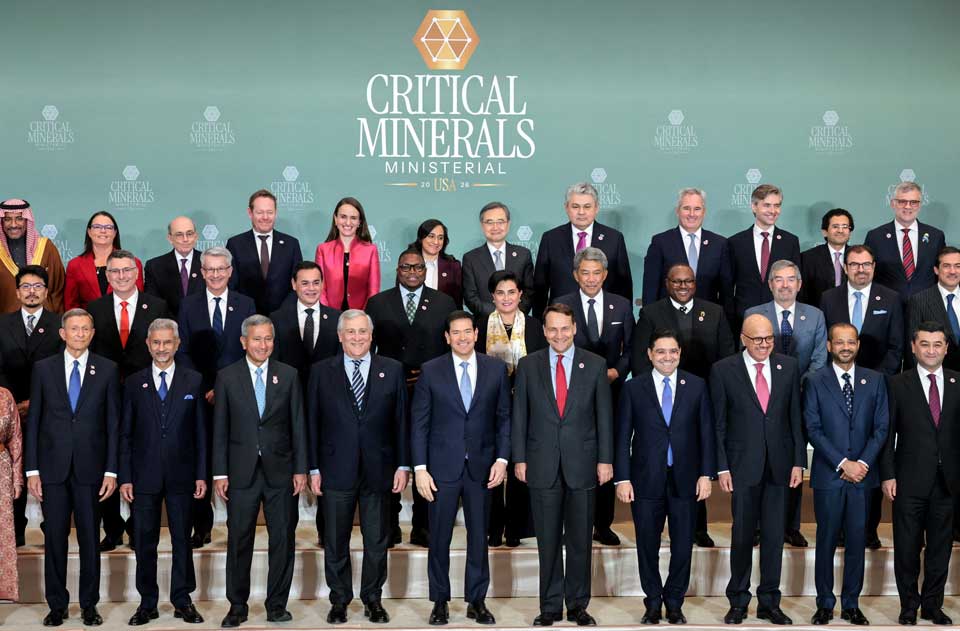
And this is your specialty on critical minerals. It’s been quite a past few months in the critical mineral space where you just hear one announcement after another at the Critical Minerals Ministerial, say that one backwards. And J.D. Vance, the vice president, he launched the theory that we had been talking about. Remember, I think it was last year when he was saying the theory that the Chinese, and he never mentioned the Chinese by name, but we all knew who he was talking about, the Chinese flood the market in order to intentionally lower the price. Tank the price.
GÉRAUD NEEMA: Tank the price. Without any investment from Western companies in this space.
ERIC OLANDER: I can’t criticize the vice president on that because, for a long time, that was my operating theory as well. I don’t believe that anymore simply because I’ve spoken to several analysts, some from Trafigura, some elsewhere, who say that the Chinese government doesn’t control the mining companies that way. There is no evidence, again, to prove that.
It’s a theory. It was a theory in the absence of any other information.
GÉRAUD NEEMA: But at the same time, you remember we had a conversation with the Chinese mining executive under anonymity, telling us that sometimes the state-owned companies, they’re also willing to take losses because they’re also operators of a geopolitical nature. True.
ERIC OLANDER: That is true. So that may be the case with the state-owned companies. So there may be some truth to what J.D. Vance was saying. I’m just not convinced that it’s the only truth. I think there are multiple truths at play here. The thing that I want to talk about, and we ran a story, our China editor, Han Zhen, wrote a story last week that kind of surveyed China analysts on all of this critical mineral stuff coming out of the U.S. And there’s not a sense of too much concern in Beijing and in China about the U.S. moves, in part because they said that everybody’s focusing on the extraction part of this equation, OK? This is in the DRC, in Central Asia. It’s all about how do we get stuff out of the ground? Remember, there are two parts of the process when it comes to critical minerals.
You’ve got to get the stuff out of the ground, and then you’ve got to refine it. And so the Americans can pull all of this cobalt, lithium, and nickel out of the ground. They don’t have the refining capacity, nor do their partners or allies.
A big chunk of refining capacity for graphite, cobalt, and a number of these minerals is in China and the technologies there. And what I don’t understand about what the U.S. is doing is that at the same time, they’re saying how mission critical these critical minerals are to the future national security of the United States. And yet the Trump administration is just ravaging the scientific academic research infrastructure in the United States that is needed to produce the engineers who will refine these critical minerals.
China has 39 universities that produce engineers who work in the critical minerals mining and processing space. I don’t understand what’s happening here, because Europeans are saying the same thing. They’re only talking about one side of the equation.
They’re not talking about the other side of the equation.
GÉRAUD NEEMA: Because the equation is quite complex for them to approach. You have to keep in mind that when you listen to narratives coming from the White House, you have this sense that it’s a very short-term, immediate solution that they want to find. Because they’re much aware of the complexity, to say we’re going to engage ourselves in long-term policies, because they’re not even sure they’re going to be there in 2028, and all of that.
So they have to find short-term solutions and acquire like minerals that are ready to be bought rather than pursuing long-term processing and transformation policies. So that’s why I think they’re going to focus on things like copper: it’s much easier to process, and you can buy it directly from producing countries. But besides that, other minerals like lithium, graphite, all of that, they’re going to have to take into account the complexity of how China is dominating those spaces.
And I like the piece that Hinka wrote last week, when he said, good luck trying to change the world which was basically saying, good luck fighting a world that China has created for itself. So basically, you’re like, you are trying now to gain space in a space where China set the norms, the rules, the technology, basically, quote, unquote, the regulation that now you have to do that at cost. And I think this is something that the United States and all the countries are going to have to grapple with to the point that it’s not going to be a short-term strategy.
It’s not going to be something that you’re going to have to win now. We’re going to have to commit and engage ourselves with at least a 15-year, 15-year, it’s a multi-decade policy strategy to put in place. And, keeping in mind something I’ve said in Washington during a conversation, that during those times, China will not sit idle and wait for it to catch up.
During these 15 years, China is also going to continue maintaining the advances that it’s going to make. So it’s a very tricky situation to find themselves in, in this situation right now.
ERIC OLANDER: I just want to caution people on some of the talking points that I’ve been hearing. I was in Canberra last December. I’m going to Washington in April.
And I’ve heard this, they say, no, no, no, Eric, you don’t understand. We are actually building refining capacity in our countries. And they said there’s one, there’s a facility in Texas that they’re going to refine cobalt, I think.
There’s the MP in, I forget the name of the company, but MP Logistics or MP is in Colorado, and they’re going to do something. And it’s kind of cute and quaint when you see what they, the scale that they’re talking about compared to what is in Zhejiang province, which are these industrial scale, we’re talking multiple football field size, just huge operations. And we’re, and they will give you an example of one facility, two facilities.
That is not going to feed the US economy enough refined critical minerals. So this is the part that I think whenever you hear this critical minerals debate, say, that’s great, but what about the refining? And the Europeans aren’t talking about the refining.
The Japanese aren’t talking about the refining. And now when they do talk about it, here’s the other part of this, this is fascinating. And this is where I think it comes back to Africa.
When you look at the violence that smelting nickel does in Indonesia, and the only word I can use is violence. It is traumatic what it does to the human body and to the environment. I mean, just, it is, when you see the scale of, I mean, we have these pictures, we won the World Press Photo of the Year award last year for an amazing picture, a photograph of nickel smelting in Indonesia.
So the Europeans, the Japanese, the South Koreans, the Americans, they don’t want that crap in their backyard. They don’t want that violence in their neighborhoods. You know what they’re going to do?
They want it in Africa. There we go. They want it in the DRC.
GÉRAUD NEEMA: Africa will be the place. And plus they’re going to tell us anyway, you guys, you want value addition. You guys want processing.
You want refinement. Why don’t you take it? Why don’t you take it and give us the final product?
That’s what they did with China. That was the idea at the beginning, when they didn’t, they allowed, they let China do it, because China is willing to take all the environmental cost of doing that.
ERIC OLANDER: Now they find themselves where like. And that’s where I agree with you. And I didn’t a hundred percent agree with Andy on that.
We had no complaints when we were offshoring our pollution to China, none whatsoever. And China today is good. Yeah.
And China today has some of the worst air, land, and water in the world because of that. And so we were able to offshore and basically outsource the pollution to somebody else. And I don’t think we want it.
We want to do this. And, and I’ve, and I’ve made the point when I was in South Africa last year, and it’s a very unpopular point. I was trying to tell some people, I don’t think Africans want this.
It’s like having an AI data center now in the U.S. where the communities are pushing back. The AI data centers consume huge amounts of electricity and water and don’t create many jobs. Critical mineral processing is the same thing; there are very few jobs.
And the value, just as in mining, will go to a very small number of people, this fantasy BS that Chris Smith has, that somehow the people are going to benefit. If the Americans are doing mining, we know this isn’t true because American mining companies have been operating overseas for 2, 3, 12, maybe 1.5 centuries, in the country or anywhere. So, I mean, show me a country where an American mining company has built infrastructure and made the people better and richer.
And I’m not even trying to pick on the American Jamaican Jamaicans have a lot to say about that. Yes, that’s right. And I’m not picking on the Americans.
Mining is an awful business. Yeah. Very few people benefit from it.
I don’t even think African countries like the DRC and others advocating for refining really want this. They shouldn’t want it because it’s going to suck up so many resources.
GÉRAUD NEEMA: We are talking about refining and processing in a country where governance is just bad. Even if we get to the point where we have value addition and more resources, as you said, that money will just be diverted to the top level of the elites. It’s going to stop there.
It’s not going to trickle down to the economy to diversify or change it. Because let’s face it, if 20 years after China’s effective engagement with Africa in the mining industry, in oil, and all those different sectors, we had good governance today, we’d be having a different type of conversation. We would not be having those conversations.
The simple fact that we’re having these conversations today tells you that, even if we achieve value addition tomorrow, the resources will not trickle down to the population. But what’s going to trickle down is pollution, disease, and all that.
ERIC OLANDER: And you’re going to divert water and electricity from productive uses in society in order to feed the refiners. And the reason why we know this is happening is that that’s what they’re doing in the United States for the AI data centers. And that’s what they’re doing for data centers in other parts of the world as well, is they’re diverting electricity and water away from the community towards the tech industry, and in this case, the mining industry.
So I know. But when I said that in South Africa, man, people were not happy. They did not like it when I said that.
But I guess, you know, I don’t know. I mean, it just doesn’t make any sense to me. But I think people are so desperate in many senses to say, how can we better benefit from these resources?
And beneficiation of minerals seems to be the answer. The problem is…
GÉRAUD NEEMA: It’s not the answer. Basically, it’s not really the answer. Let’s start now.
We have resources now that we are just managing badly. So having beneficiation, I don’t see how it’s going to help Africa to further anyway.
ERIC OLANDER: I mean, that narrative, yeah. So Girod, this is going to be an interesting test. The price of copper now is just surging, right?
Skyrocketing, yeah. Skyrocketing is a better word. So now this is Zambia and the DRC’s opportunity, right, to profit enormously.
BHP, one of the largest Australian mining companies, recorded huge profits this week because of copper. Okay. So if the theory that beneficiation is going to benefit the people, okay, let’s see where the money from all this copper production goes to in Zambia and in the DRC.
GÉRAUD NEEMA: Let me just give you a hint already. The IMF released a report the day before yesterday being worried about the amount of money that’s going to salary for high public efficiency in the DRC. That’s the answer that you have.
That’s the answer. I mean…
ERIC OLANDER: So don’t believe a word, anything that you hear out of African elites. Don’t believe a word about anything that you hear out of DC elites. They’re all full of it.
That’s my take on it.
GÉRAUD NEEMA: And I’m going to talk to my African friends here. A prerequisite is good governance. Before they sell you out, we have to pollute the environment. Before we do that, ask them, what are you doing with what we already have right now?
What are we doing? Are we doing well with the resources we have right now, before saying we need to pollute more? Because if we pollute more, we’re going to have more money that benefits us.
With the money that we have right now, is it benefiting us in any shape or form? If the answer is no, you basically know that even if tomorrow we have beneficiation, we are not going to benefit from that.
ERIC OLANDER: It’s not going to help. It’s interesting, Gérôme, because the testimony that you gave, the video on YouTube, got quite a few comments. Normally, these types of testimonies don’t get a lot of comments and a lot of views.
They’re boring as sin. This one generated a lot. And what was interesting was you raised some issues on governance, and a lot of people started hate-posting on you on that.
To me, that’s just pretty straightforward. But really, they called you pro-Rwandan, too, by the way. You’re a sellout.
You’re a sellout. You’re pro-Rwandan. You hate the DRC because you were talking about governance.
GÉRAUD NEEMA: A US lobbyist went on Twitter saying, I’m pro-Rwanda. I hate the United States. I’m pro-China.
I’m like, I mean, come on.
ERIC OLANDER: See, this is why I told you not to go in front of Congress. This is what happens when you do that.
GÉRAUD NEEMA: All of it’s because you come and say the prerequisite that Rwanda is not the core problem of the DRC instability, that at the end, the main problem of DRC instability will remain bad governance and weak institutions, all of that. And those kinds of issues coming from Rwanda will always be the consequences of bad governance at the root cause of it. And let’s deal with that.
Of course, we have to condemn Rwanda. Of course, Rwanda has to relieve the DRC. That’s not a debate.
But the deep debate, and especially talking with the US policymakers to say, if you want a good DRC to be a good partner to the United States, you have to root for the DRC to solve its root problem, the issue of bad governance instability in a way that 20 years from now, no, five years from now, we don’t find ourselves here in another hearing trying to find why now this time it’s about Uganda, or it’s about Burundi, it’s about Angola or any other countries, we have to tackle the root cause of the issues.
And saying that, people say, no, no, no, no, no, no, no. Rwanda is the almighty evil of everything that’s wrong in the DRC. And if you don’t say that, you’re a traitor.
ERIC OLANDER: Géraud, to pull this full circle, if you pull that thread on the governance issue, you’re going to end up in a bad place. And the bad place is that the United States, in my lifetime, I’m 56 years old, in my lifetime, was absolutely 100% complicit in the bad governance of the Democratic Republic of the Congo. Oh, yes, you cannot separate the United States from the governance problems today, whether it is in the death of Patrice Lumumba, the empowerment of Mobutu Sese Seko, and all of that.
And I even say that. And whether it’s turning a blind and ignoring in the in the Kabila era, just ignoring everything and not paying attention and just tuning out, you cannot ignore it, which is one of the reasons why when you hear these committees, and you see in the idea that the United States is somehow benevolent in all of this is is just kind of maddening because there’s no understanding of the recent modern history of the Congo and understanding the U.S. role in the bad governance that exists today.
GÉRAUD NEEMA: And that was one of the messages I wanted to also convey in my last comment when I was during the hearing, I said the time for the U.S. to behave on Sese Seko in the DRC as they did with Mobutu is over, because that kind of behavior is the ones that strengthen bad governance in the name of geopolitical alignment. We have to stop doing that. The United States, if it really cares about DRC good governance and stability, needs to stop turning a blind eye to bad governance, to bad institutions, to all these bad just because the man in power is our guy, or just because the man in power portrays himself to be our guy against the other, the new bad guy in town being China.
So that was my message. And I hope that they get the message right. And they really, really care about the DRC.
But at the end, for me, the responsibility will always be about the DRC people. We have to understand that we are the main actors of our own good. We have to work for our own good.
You control your own destinies. At the end of the day, it’s up to you. Control our destiny.
We have to stop looking overseas. We have to look into, let’s say, what we need to do to change things and move forward.
ERIC OLANDER: A lot to process there. Yeah. I mean, these are heavy things.
I mean, these are big, heavy topics. But it’s important to kind of break it down and to challenge all sides. And again, we get crap for being pro-China, anti-U.S., pro-U.S., anti-China. Now you’re pro-Hold on, let me see. You’re pro-Rwanda, anti-DRC. And then sometimes you are now pro-Chesa-Katy, anti-Kabila, pro-Kabila, anti-Chesa-Katy.
You can’t keep track of it. I mean.
GÉRAUD NEEMA: I’m telling you, you don’t win. You will never win in this battle. And I think the fact that we are not winning is a good thing.
It’s a good sign that we’re doing our job right. It is what it is.
ERIC OLANDER: But I just say don’t trust any of them is my point here. But listen, I mean, the way that you combat all of this is through fact-based information. And that’s what Géraud does every day, both, by the way, in French and in English.
So if you are francophone, go to Projet Afrique Chine. And he’s got a fantastic newsletter that’s there that he’s putting out every week and a site that he’s at twice a week. Also, I’m very, very happy to hear that Géraud is being quoted now more and more in the francophone press, so it took us a while to get there.
But finally, we’re getting there after, what, six years now, it feels like. But now the francophone press is finally recognizing Géraud quite a bit. But this is the work that we’re doing at the China Global South Project with teams in Asia, Africa and the Middle East and all over.
And now, Maria is also in our Spanish service in China and the Americas, doing a fantastic job. She also has a weekly newsletter. So if you are Hispanic and want to follow what China is doing in Latin and South America, Central and South America, go to the link in the show notes.
And of course, if you want to support the work we’re doing, you need to support it. Again, this type of independent journalism where we’re pissing off literally everyone. And that’s what it takes today.
But we can do that because we are supported by you, our readers, and the community. And so your support is absolutely essential for us to continue this work and especially from voices from the Global South, Géraud, Maria, Cobus and Njenga, Kevin, all of them in Africa, in Latin America and in Asia. And so we want to continue doing this.
Go to China Global South dot com slash subscribe. And if you are a student or a teacher, email me with your school address and your email address, and I will send you the half-off discount links, Eric, at China Global South dot com. So for Géraud Nima in Mauritius, I’m Eric Olander.
We’ll be back again next week with another episode of the China in Africa podcast. Thank you so much for listening and for watching.