On November 13, 2025, amid reports of a possible visit by members of Panama’s National Assembly to Taiwan, the president of Panama, José Raúl Mulino tweeted that such a trip did not have the support or approval of his government. The tweet triggered a chain of diplomatic reactions that quickly exposed the sensitivity of Panama’s relationship with Beijing and underscored the country’s strategic position at the intersection of U.S.–China competition.
That same day, the tweet was followed by a statement from Panama’s Ministry of Foreign Affairs (MFA), which stressed that the foreign policy of Panama falls exclusively within the remit of the executive branch and that Panama maintains diplomatic relations solely with the People’s Republic of China.
While the emphasis on the executive’s exclusive authority over foreign policy overlooked the role played by regional and subregional parliamentary bodies, the statement was clearly crafted to appease Beijing ahead of ahead of what would be the first visit by Panamanian elected officials to Taipei since 2017.
When Panama switched diplomatic recognition from Taipei to Beijing, it also adhered to the One China principle — a political position, as defined by Beijing, holding that there is only one China and that Taiwan is part of it. In doing so, Panama committed itself to refraining from any official contact or exchange with Taiwan.
For Mulino’s government, the tweet and the statement from the MFA were meant to reassure Beijing of Panama’s continued adherence to the One China principle. For Beijing, however, the situation was interpreted rather differently.
This is, in part, informed by broader disagreements around the meaning and scope of the One China principle. Beijing construes it as prohibiting any type of relations with Taipei and claims that the principle was laid out in the United Nations General Assembly Resolution 2758, which recognized the People’s Republic of China as the sole legitimate representative of China to the United Nations and expelled the representatives of Chiang Kai-shek, Taiwan’s then-leader.
In contrast, the One China policy, adopted by a number of countries, is more ambiguous and allows for unofficial and commercial relations with Taiwan while maintaining diplomatic ties with China. For the 59 countries adhering to this policy, the One China principle is generally circumscribed to the United Nations framework.
According to some of the parliamentarians traveling to Taiwan, they received a WhatsApp message from the Chinese Ambassador to Panama, Xu Xueyuan, reminding them of the One China principle and warning that their trip to Taiwan would be interpreted as an interference in Chinese domestic affairs and have a negative impact on Panama-China relations.
The Ambassador’s messages were seen as a threat and triggered a reaction from Panama’s MFA, which released another statement on November 19th categorically rejecting foreign interference in Panamanian domestic affairs by any diplomatic mission accredited in Panama. It also stressed that as a sovereign state, it does not accept conditions or pressures that seek to influence the legitimate decisions of its authorities – including those involving members of the National Assembly, even when their actions are not supported by the executive branch. That same afternoon, the Chinese Ambassador was summoned by the MFA so that Panama’s categorical rejection of any act of interference could be conveyed in person.
The next day, during his weekly press conference, President Mulino’s tone changed. When asked about diplomatic tensions with China, instead of reiterating his posture, he questioned the agency of the eight parliamentarians who traveled to Taiwan, suggesting that they were acting under the direction of the United States. He added that Panama had no role to play in the broader U.S.–China standoff.
In a subsequent exchange during the press conference, Mulino subtly adjusted his stance, stating that his government would be open to considering some form of unofficial or commercial ties with Taiwan, but only if that request came from Taipei. In doing so, he departed from Beijing’s more rigid interpretation of the One China principle.
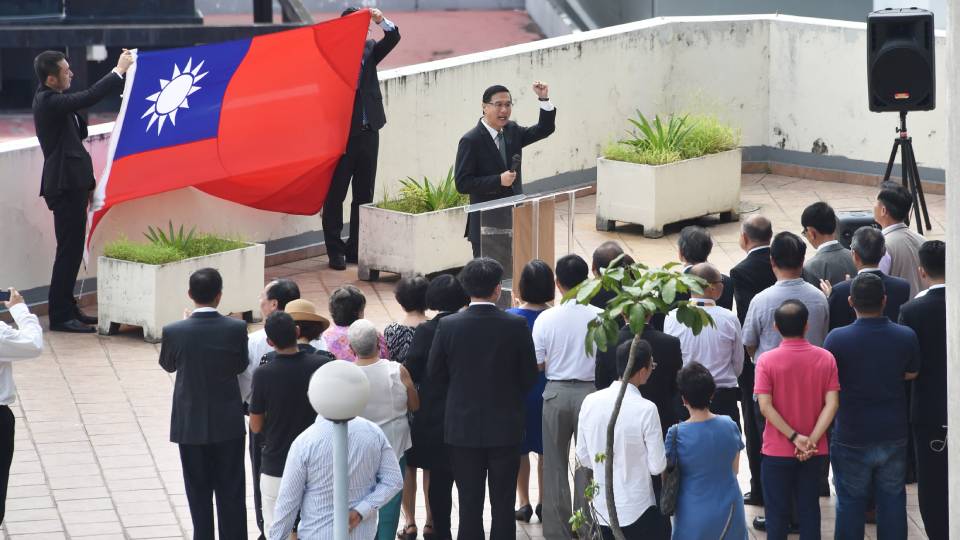
The parliamentarians traveled to Taiwan, meeting with Taiwan’s Vice President and Foreign Minister, as well as high-ranking officials from the Ministry of Commerce and the Legislative Yuan. According to Panama’s executive branch, this visit will not affect in any way the current status quo and once again downplayed the significance of the delegation.
However, there is an uncontestable fact: Taiwan remains Panama’s third-largest export market destination, climbing to second place in the first quarter of 2025. For a small country whose economy is heavily oriented toward logistics and services — notably the Panama Canal and port operations — and whose primary sector is relatively modest, such an export market cannot be easily dismissed or replaced. This is particularly important considering that most of the exports to Taiwan are based on a free trade agreement signed between Taipei and Panama, which continues to operate de facto, even though it was formally denounced by Panama in 2017.
President Mulino is trying to strike a delicate balance. He finds himself in a difficult position, shaped partly by his own actions and partly by Panama’s geostrategic characteristics. Any coherent national strategy must take into account that China is the second-largest user of the Panama Canal, while Taiwan is a critical player in the global semiconductor industry, an area in which Panama has expressed interest in positioning itself.
For global superpowers, Panama has always been included in their geopolitical calculus. This has been particularly clear since the outset of the second Trump administration. China’s decision to halt the CK Hutchison-BlackRock deal over the ports of Balboa and Cristobal is also a reminder of Panama’s strategic relevance.
Mulino faces no easy task. If strategic autonomy is his goal, he may be considering what would appear many to be a subtle switch: from the One China principle to the One China policy. This would grant Panama more flexibility to deal diplomatically with China while maintaining commercial and informal ties with Taiwan.
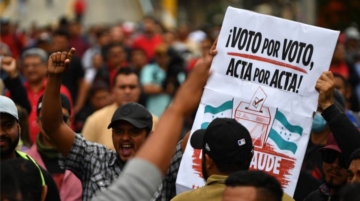
However, as shown by China’s reaction to the parliamentarians’ visit to Taipei, that switch may be easier said than done. These developments, together with the results of the presidential elections in Honduras may have put Chinese diplomacy in Central America on a more defensive posture for the first time in many years. This could make Beijing’s actions and reactions less predictable. Navigating these dynamics, Mulino confronts a narrowing margin for maneuver, and the region will be watching him closely.
Alonso Illueca is CGSP’s Non-Resident Fellow for Latin America and the Caribbean.