
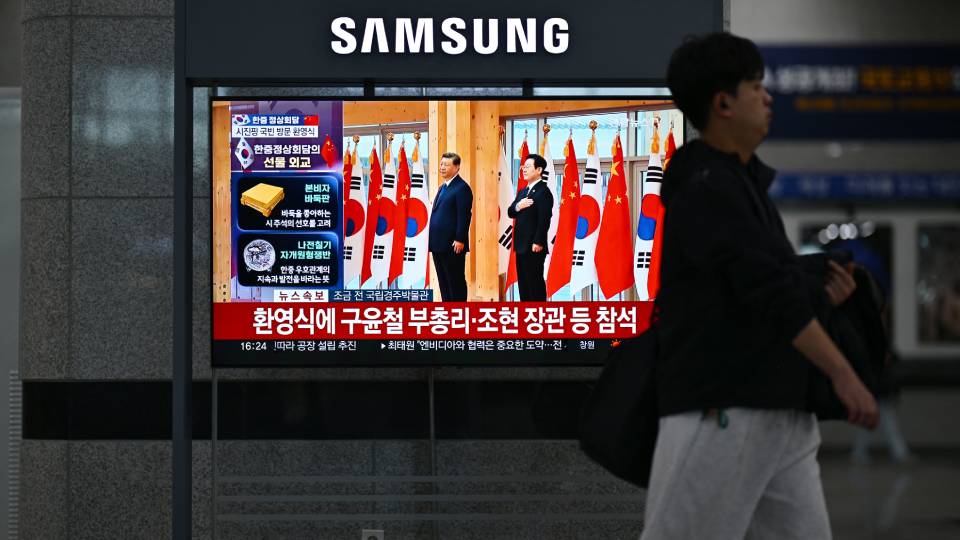
The 2025 APEC Summit, held in early November in Gyeongju, South Korea, came to a close with a hopeful image: a renewed spirit of dialogue between the United States and China following a bilateral meeting between President Trump and President Xi.
While the outcome of that meeting remains uncertain, the fact that APEC (short for Asia Pacific Economic Cooperation Forum) provided the setting for such engagement suggests that it can still serve as a rare platform for dialogue in an increasingly divided global landscape.
For Latin America, the developments within APEC are a reminder that it is still possible to engage economically with both Washington and Beijing, rather than being forced into a binary alignment. The bad news is that there has been a moratorium on new member admissions since 1998. The moratorium, which was supposed to end in 2010 but was instead extended, effectively freezes Latin America’s participation in the organization, cutting off another valuable avenue by which the region could engage with the world’s superpowers.
The Pacific Alliance
Latin America’s presence in APEC has remained limited, with only three economies participating as members: Chile, Mexico, and Peru. Those three economies, together with Colombia, another APEC hopeful, established the Pacific Alliance in 2012. The Alliance aims to promote trade liberalization and integrated markets with an outward focus on the Asia-Pacific region.
However, the Alliance’s cohesion is complicated by significant headwinds. Chile is preparing for presidential elections next year, and Mexico, whose economy is closely intertwined with the U.S., continues to navigate the complexities of the Trump administration. Colombia faces diplomatic friction with Washington under President Petro, while Peru remains mired in political instability. Collectively, these dynamics impact the Alliance’s capacity to project coherence in its engagement with Asia-Pacific economies.
What Lies Ahead
China is set to host the 2026 APEC Summit. By dealing with economies rather than states, APEC can deal with tariffs and trade restrictions by tackling the issues from a purely transactional standpoint. This positions APEC as uniquely capable of sidestepping some of the political paralysis that plagues other multilateral bodies.
For Latin America’s APEC members, this presents a valuable opportunity: to deepen engagement with both the U.S. and China where it matters most — economic and trade cooperation — while also engaging with other critical Asia-Pacific actors and diversifying its relationships.
Success in this effort would help prevent new patterns of dependency and advance the region’s long-standing goal of strategic autonomy. Achieving that balance will require diplomatic agility, strategic foresight, and effective economic statecraft. The Pacific Alliance (and the broader community of Latin American economies) must now demonstrate whether it is prepared to meet that challenge.
Alonso Illueca is CGSP’s Non-Resident Fellow for Latin America and the Caribbean.