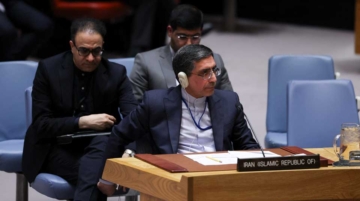
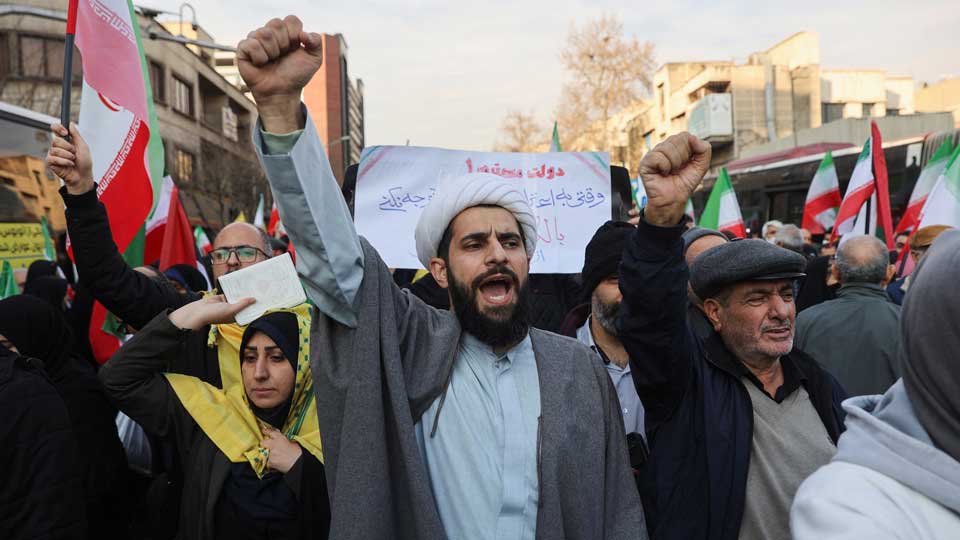
China’s relationship with the Middle East is a perennial topic in discussions about China’s role in the Global South, especially at moments of crisis. Now, despite its publicly touted close relationship, as the Islamic Republic faces perhaps the most serious crisis in its 45 year history, including direct threats by the United States, China is nowhere to be found.
For a casual observer, this might come as a surprise. Isn’t China supposed to be a rising diplomatic power spearheading an anti-Western alliance? Didn’t it just broker a peace agreement between Iran and Saudi Arabia? Isn’t it a close Iranian ally with a $400 billion 25-Year investment agreement? With so much at stake, why doesn’t China do something?
However, for close observers and people living in the region, China’s lack of intervention is just business as usual. To understand why, let’s take a closer look at the crisis, China’s response, and its broader relationship with Iran.
What’s Happening in Iran?
At the beginning of 2025, the Iranian government was at its weakest point in decades. After surviving the 2022 Women Life Freedom protests sparked by the death of Jina Mahsa Amini, the Islamic Republic faced a stark lack of legitimacy, runaway inflation, and an escalating campaign of external pressure that culminated in a U.S.-Israeli 12-day bombing campaign last June.
As the year ends, the country has been rocked by mass anti-government protests, followed by a wave of violent repression unprecedented in its ruthlessness and technological efficiency.
The unrest began with protests led by merchants and businessmen against spiraling inflation and economic instability, but was joined by university students and soon evolved into a broad protest against the government.
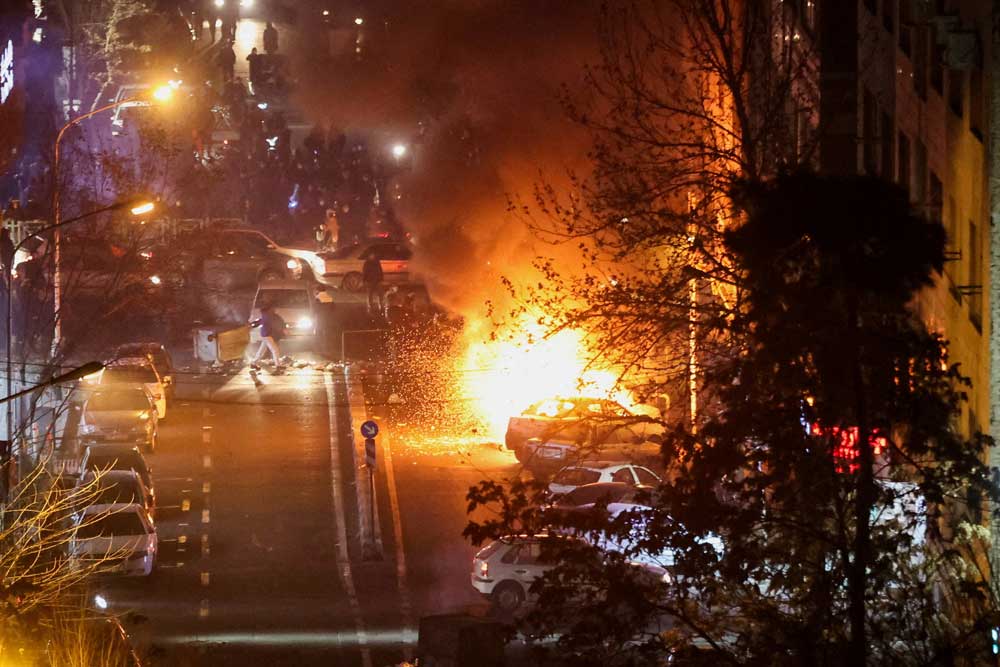
The protests were spurred on from abroad by figures like Reza Pahlavi, the son of the deposed Shah, and threats from Donald Trump to intervene if the protesters were harmed. As the protests spread, an internet blackout and brutal crackdown ensued, taking full advantage of Tehran’s highly advanced security apparatus – much of which was notably built with Chinese technology and expertise.
China’s Response
Chinese officials have struck a cautious tone in response. Mao Ning of the Chinese Ministry of Foreign Affairs expressed hopes that “the Iranian government and people will overcome the current difficulties and uphold stability,” walking a careful line between supporting the government and acknowledging the unrest. Wang Yi and state media have focused far more on condemning the U.S. threat of military intervention, calling it a return to the “law of the jungle” and offering to play a “constructive role” in any dialogue.
Chinese officials and academics are unanimous in their rejection of deeper involvement beyond offering diplomatic or political support.
But even this rhetorical and diplomatic support seems restrained compared to its reaction to the destruction of Gaza or the U.S abduction of Venezuelan President Nicolas Maduro. Alongside this cautious diplomatic support is a quiet disengagement from potential entanglements.
In contrast to its active (if ineffective) shuttle diplomacy during the Gaza crisis, China has taken no substantive actions in response to the unrest, not even the evacuation of Chinese civilians. Mao Ning also had nothing to say about South Africa’s request that Iran withdraw from upcoming BRICS military exercises involving China, only referring reporters to “the relevant authorities.”
This may be temporary, depending on the length and strength of the unrest. If the situation stabilizes, we may see a more full-throated defense of Iranian interests, especially if American threats persist. But in the short term, at least, China seems to have put Sino-Iranian relations on the back burner.
Not As Close As They Seem
China’s response makes sense if you consider the bigger picture of Sino-Iranian and Sino-MENA relations. Despite the media fanfare and dubious claims of $400 billion dollars worth of investment, China’s presence in Iran is and has long been relatively limited.
While China is happy to sell cheap products in the Iranian market and buy even cheaper Iranian oil by skirting the sanctions, it is far less eager to become deeply involved in the Iranian economy or invest in its infrastructure. From this perspective, Iran has long been on the back burner of the Belt and Road Initiative.
To give a sense of comparison, since the 25-Year agreement signed in 2021, Chinese yearly investment in Iran has been measured in the millions, not billions. By 2023, investment reached a cumulative total of $3.9 billion, but many of these projects have historically been cancelled or never materialized. By contrast, China has over $50 billion worth of investment deals with Saudi Arabia alone.
Across the Gulf, Chinese investment in Iran’s neighbors is several orders of magnitude greater than its investment in Iran. With the threat of U.S sanctions hanging over any international transactions, it’s no wonder Chinese businesses are skittish.
Risk vs. Reward
Undoubtedly, prolonged civil unrest or even state failure and collapse in Iran poses a threat to Chinese interests. China does have some economic interests in Iran, and has invested considerable diplomatic clout in its support for the Iran-Saudi agreement. Any unrest spilling over to neighboring countries could also seriously impact its broader economic and diplomatic strategy.
However, the risks of deeper involvement do not outweigh the potential benefits, especially given Iran’s relatively minor position in China’s overall regional strategy. First, it would run counter to Beijing’s broader diplomatic messaging, which capitalizes on the contrast between American coercion and Chinese non-interference, a contrast that has become increasingly stark in the Trump era.
Second, and perhaps more significantly, there really isn’t much China can do. Its comparative strength in diplomacy relies on its strong economic ties with a wide range of partners, which enable it to act as a mediator and exert implicit economic pressure.
The unrest is rooted in Iran’s domestic politics and institutional weakness, which is far more difficult to address with this toolkit. The only real support that China can offer is as a mediator between Iran and the Trump administration, which is unlikely given the latter’s penchant for unilateral decision-making.
Looking Back
With so much uncertainty, China may want to look to history as a guide. In 1978, Hua Guofeng was the last official to visit Iran on the eve of the Islamic Revolution, when protests against the Shah had already become widespread, as a show of support for the embattled regime. When the government fell, the nascent Islamic Republic was initially hostile to China, and Khomeini accused Beijing of supporting the Shah while the streets ran red with the blood of Iranian youth. The irony seems lost on Islamic Republic officials today, but Beijing may want to avoid a similar impression should history repeat itself.
William Figuerora is an assistant professor at the University of Groningen in the Netherlands