
This is a free preview of the upcoming China-Central Asia Weekly Digest, part of the new CGSP Intelligence service launching in late 2025.
This week’s developments demonstrate China’s expansion into consumer-facing sectors across Central Asia, moving beyond infrastructure projects into direct engagement with regional populations through e-commerce platforms, electric vehicles, healthcare services, and transport connectivity. The launch of JD.com’s Kazakhstan marketplace, NIO’s Uzbekistan showroom, expanded healthcare cooperation with Kyrgyzstan, and transport corridor development with Tajikistan reflect Chinese companies’ efforts to establish a comprehensive market presence across the region.
These partnerships address specific consumer and development needs—from online shopping access and electric vehicle options to healthcare modernization and transport connectivity—while creating direct relationships between Chinese brands and Central Asian populations. The consumer-oriented nature of many projects marks a shift toward deeper market integration that extends beyond government-to-government agreements into everyday economic interactions.
This week in China-Central Asia Cooperation:
China’s JD.com to Launch E-Commerce Marketplace in Kazakhstan
One of China’s largest online marketplaces, JD.com, is set to launch a new e-commerce platform in Kazakhstan. The project is a joint venture between Kazakhstan’s national postal operator, Kazpost, and the Chinese state investment fund, CITIC Poly Fund. The joint venture, named Qazpost-JD Tech Co., will pilot the service in October with a full rollout expected by the end of the year.
Why This Matters: This partnership gives Kazakhstani consumers direct access to a vast catalogue of international goods, while also creating new opportunities for domestic producers to sell their products globally. For Kazakhstan, this move supports the modernization of its logistics sector and strengthens its position as a key hub in regional trade. The service is aimed specifically at retail consumers, not wholesale.
For China, this project marks a significant step in exporting its “digital silk road” model into Central Asia. By partnering with a national postal service, JD.com gains a crucial logistical and operational foothold, enabling it to penetrate the market efficiently and build a loyal consumer base. The involvement of state-backed entities like CITIC Poly Fund highlights the strategic nature of this expansion, aligning commercial goals with broader state-level economic and geopolitical objectives. This move also positions JD.com to compete directly with other major e-commerce players, such as Alibaba, and solidifies China’s dominance in the regional digital economy.
Chinese EV Giant NIO to Open First Showroom in Uzbekistan
The Chinese smart electric vehicle brand NIO is set to open its first official showroom in Uzbekistan in October 2025. The launch is the result of a strategic partnership with ABU Sahiy Motors, which will serve as the exclusive distributor for NIO vehicles in the country.
Why This Matters: For Uzbekistan, it provides consumers with direct access to globally competitive, smart EVs, moving beyond the market’s current focus on economy models. This aligns with the government’s broader goals of improving urban air quality in Tashkent and reducing fossil fuel dependence. Furthermore, the partnership with a local distributor, ABU Sahiy Motors, creates a new high-value retail segment, generating jobs in sales, marketing, and advanced vehicle maintenance and charging infrastructure.
For China, with its growing middle class and ongoing urban development, Uzbekistan represents a classic expansion target for Chinese automakers seeking growth beyond saturated domestic and heavily contested Western markets. This is not just about car sales; it is about exporting China’s entire EV ecosystem, creating future demand for NIO’s proprietary battery swapping stations and charging networks, and further embedding Chinese technology and standards into the region’s infrastructure.
Kyrgyzstan and China Partner on Healthcare and Pharmaceutical Development
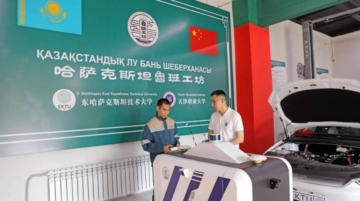
Kyrgyzstan and China are expanding healthcare cooperation under the Belt and Road Initiative. Health Minister Erkin Checheybaev met with representatives from Xinjiang Medical University to discuss bilateral projects, including high-tech medical equipment provision, specialized simulation centers for medical universities, and free degree programs for Kyrgyz students in China.
Why This Matters: For Kyrgyzstan, this partnership addresses critical gaps in its national healthcare system. The provision of high-tech medical equipment and the construction of a pharmaceutical plant would directly improve domestic care quality and reduce dependency on imported medicines, enhancing public health resilience.
The educational grants and specialized training centers represent a vital investment in human capital, helping to stem the brain drain of medical professionals by creating higher-skill jobs and opportunities at home. Furthermore, the traditional medicine center leverages Kyrgyzstan’s natural herb resources, potentially creating a new, valuable export industry.
For China, this is a strategic soft power expansion that deepens influence through societal benefits. By funding infrastructure and education, China builds significant goodwill among the Kyrgyz public and elite, anchoring the relationship beyond government-to-government deals. For Chinese companies, investing in drug production and medical equipment assembly in Kyrgyzstan provides a tariff-free manufacturing hub to supply the wider Central Asian and Eurasian Economic Union market, turning the country into a strategic node in China’s health-focused BRI ecosystem.
Tajikistan and China Advance Cooperation on Road Infrastructure and Transport Corridors
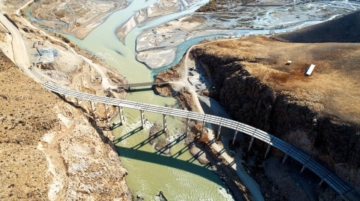
Tajikistan’s Transport Minister Azim Ibrohim met with Chinese Ambassador Guo Zhijun to discuss bilateral cooperation in transport infrastructure, focusing on road construction and modernization in Dushanbe and regional areas. The parties agreed to strengthen the construction of two-level interchanges in Dushanbe at three key intersections. Feasibility studies have been completed and are undergoing approval, with main construction work to begin after documentation approval and contractor selection.
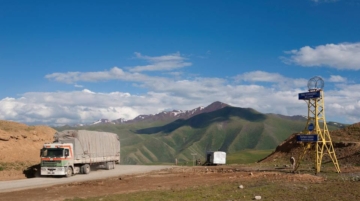
The meeting also addressed promoting international transport routes, including China-Tajikistan-Uzbekistan-Turkmenistan-Iran-Turkey-Europe and China-Tajikistan-Afghanistan corridors. The cooperation provides access to Chabahar (Iran) and Karachi (Pakistan) seaports while integrating into the Belt and Road Initiative framework.
Why This Matters: For Tajikistan, this partnership is critical for overcoming its landlocked geographic constraints and stimulating economic development. The construction of modern two-level interchanges in Dushanbe addresses severe urban congestion, improving logistics efficiency and quality of life in the capital.
More strategically, China’s support for developing the transport corridors is a game-changer. It transforms Tajikistan from a remote mountainous nation into a vital transit hub, unlocking access to seaports in Iran and Pakistan and generating future revenue from transit fees and logistics services.
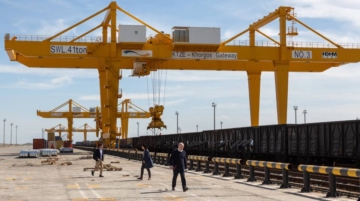
For China, this engagement solidifies the Belt and Road Initiative’s core objective of creating efficient, multi-modal transport links to Europe and the Middle East. Investing in Tajikistan’s internal road network ensures the reliability and capacity of a crucial bottleneck route, securing an alternative supply chain corridor that is less vulnerable to geopolitical disruptions elsewhere. Enhancing the Kulma–Karasu crossing streamlines the flow of goods between China’s Xinjiang province and Central Asia, facilitating regional economic integration and stability.
In Context
This week’s partnerships reveal Chinese companies’ strategy to establish comprehensive market ecosystems that combine consumer services with infrastructure development. JD.com’s e-commerce platform creates digital marketplaces that require logistics networks and payment systems, while NIO’s electric vehicles need charging infrastructure and service networks. Healthcare partnerships provide both equipment and training programs, while transport projects enable the physical connectivity that supports all other commercial activities.
The consumer focus is particularly significant because it creates direct relationships with regional populations rather than relying solely on government partnerships. E-commerce platforms, electric vehicles, and healthcare services generate daily interactions that build brand recognition and consumer loyalty, while transport improvements enable increased trade volumes and economic integration. These partnerships establish Chinese companies as integral parts of daily life rather than distant infrastructure providers.
The takeaway: Chinese partnerships in Central Asia are expanding from infrastructure development into comprehensive market presence across consumer-facing sectors. Both China and regional countries benefit from improved services and market access, though the operational requirements of these partnerships—from e-commerce platform management to vehicle service networks—create long-term dependencies that require careful management.
Central Asian countries must balance the immediate benefits of accessing advanced consumer technologies and services against the risks of concentrated market dependence on Chinese platforms and standards. Success depends on developing competitive domestic alternatives where feasible, while maximizing the development benefits of Chinese partnerships in sectors where local capabilities remain limited.
Yunis Sharifli is CGSP’s Non-Resident Fellow for Central Asia.