
In 2014, the Cameroonian government launched the “Cameroon Intelligent City Project,” where 70 Huawei-supplied CCTV cameras were installed across six localities. The project expanded through several phases, with some sources noting that the government hopes to install 24,000 cameras nationwide. By December 2025, government borrowing for these initiatives had reached $270 million, including $70.13 million from China CITIC Bank for the project’s national expansion.
The Cameroonian case is just one example among many in Africa where digital transformation ambitions outpace pressing development needs and regulatory frameworks, while simultaneously masking the rise of digital authoritarianism.
To understand this, it is necessary to examine the technology being deployed in Cameroon. A core feature of Cameroon’s Intelligent City—also referred to as the Safe City—is facial recognition. This technology processes images in real time, matching them against various data sources so that, in the words of Cameroon’s General Delegation for National Security (DGSN), “crowds will no longer be anonymous.”
The system is also equipped with AI and predictive analytics capabilities, purportedly to detect harmful behavior. Automated Number Plate Recognition (ANPR) is another reported feature, used to identify vehicles for both crime and traffic management.
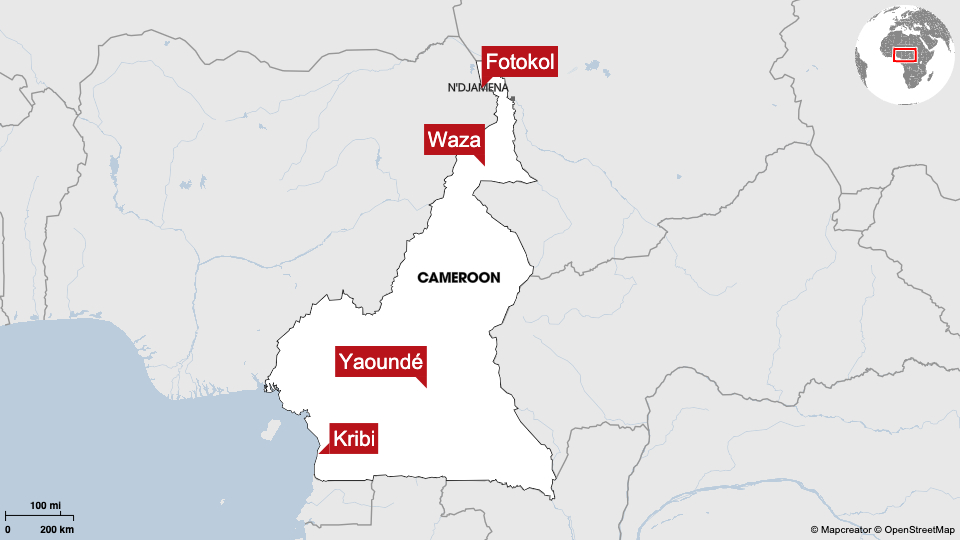
At its core, the technology represents a digital transformation of Cameroon’s security forces, framed within the Digital Cameroon 2035 national strategy. Its geographic deployment is notable. Phase one installed 1,500 cameras across administrative centers, economic hubs, and sensitive border regions. These include Yaoundé (the Center region), Kribi (home to the country’s largest deep-water port), and areas such as Waza and Fotokol, which are vulnerable to attacks by the insurgent group Boko Haram.
Cameroon’s adoption of Safe City systems should thus not be understood as an external imposition but rather as an instance of Cameroon’s exercise of agency.
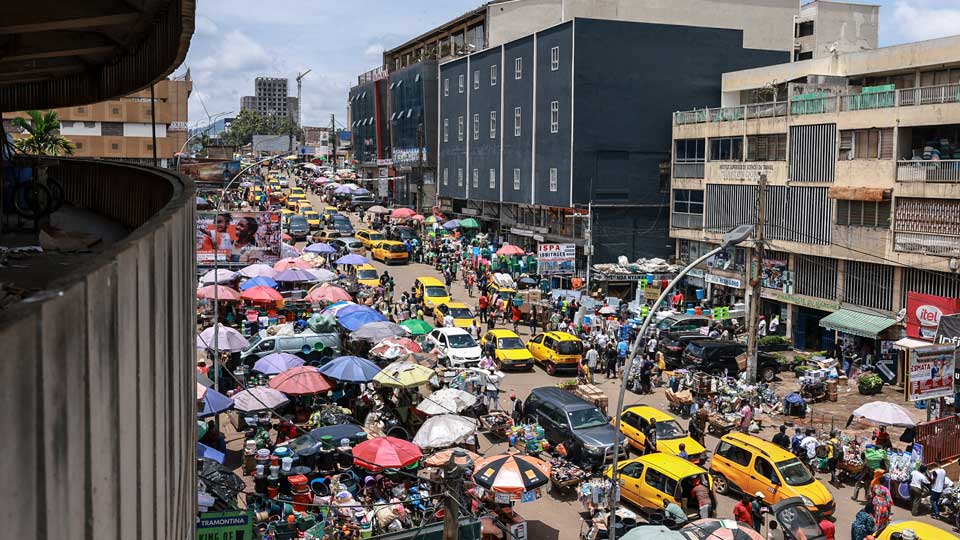
Yet, as Georges Macaire Eyenga, an assistant professor at the University of Dschang in Cameroon, observes, the mere installation of cameras does not address the deeper structural and urban challenges of Cameroonian cities. In places such as Yaoundé, poor infrastructure, anarchic spatial occupation, and limited law-enforcement capacity mean that cameras often function more as symbols of state modernity than as practical security tools. This is especially concerning, given the lack of evidence that the system improves security and reports indicating that assault, abduction, kidnapping, and murder continue to rise.
Cameroon’s case illustrates that surveillance alone cannot substitute for comprehensive governance or a coherent understanding of social dynamics, and uncritical reliance on imported technology risks exacerbating vulnerabilities rather than resolving them.
Some observers have raised concerns about government priorities, rising debt burdens, and how these technologies reshape state–citizen power relations. Some question the adoption of AI systems, while the police lack more immediate necessities, such as vehicles and fuel. Others argue that financial resources could have been directed toward providing more reliable nationwide electricity. Additional concerns include mounting debt obligations, a weak regulatory environment, limited technology transfer, and technological lock-in.
Crucially, digital rights advocates warn that such systems transform urban spaces into sites of data extraction, in which individuals are no longer merely people in a crowd but sources of data to be collected, categorized, and analyzed in real time. This shifts the balance of power toward the state, enabling it to identify “problematic individuals” and creating a chilling effect on dissent. In poorly regulated environments, very few people know how data are collected, stored, or shared, leaving these systems vulnerable to abuse.
Cameroon’s deployment of Safe City technologies reflects broader concerns about the rise of digital authoritarianism in Africa—the use of modern technologies to suppress dissent and shrink civic space.
While Chinese technology companies have been implicated in this development, placing the blame solely on them overlooks the role of African agency and the involvement of other actors.
As noted by Mandira Bagwandeen, an international relations lecturer at Stellenbosch University in South Africa, African agency matters. Governments actively choose to implement these technologies based on local decisions and governance practices. Technology alone does not equate to digital authoritarianism; it requires political actors willing to use it for repression. Bagwandeen also highlights the involvement of other technology companies, including Western firms, in Africa’s surveillance landscape. This situates the continent within a broader Chinese and Western technological and geopolitical competition, rather than as a direct target of Chinese authoritarian export.
Indeed, while digital transformation holds promise for enhancing security in Africa, robust frameworks to ensure that these systems promote, rather than infringe on, human rights remain underdeveloped. Rights groups continue to flag areas of concern regarding Safe City systems, particularly as they occupy a grey zone in which the boundaries between digital security and digital authoritarianism blur.
Cameroon’s Safe City thus offers both a warning and a lesson: digital ambition without governance safeguards risks turning security into control, and transformation into authoritarianism. It is also a warning against technological solutionism, where the adoption of high-tech systems is assumed to solve complex social and security challenges without addressing underlying structural, institutional, and political realities.