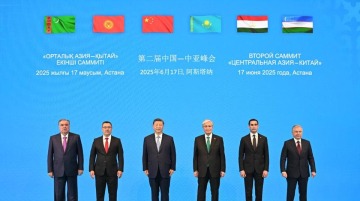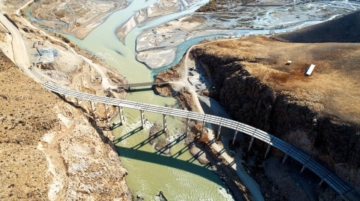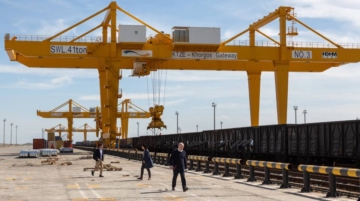
Over the past decade, China has poured billions into the Central Asian countries, financing infrastructure, renewable energy, agriculture, and digital technologies, while presenting itself as a reliable development partner. Central Asian governments, eager for investment and diversification, have embraced China as a strategic ally in trade and growth.
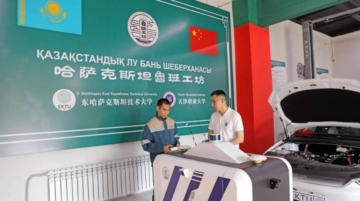
Alongside this economic push, Beijing has expanded its soft power efforts—through educational exchanges, Confucius Institutes, media cooperation, and cultural programs—aimed at creating a positive image to accompany its growing influence.
However, a gap persists between elite-level enthusiasm and grassroots perceptions. Despite China’s expanding economic footprint and close ties with Central Asian leaders, skepticism and anti-China sentiment remain widespread among ordinary citizens. This tension becomes especially visible in public opinion surveys.
Favorability and Public Perceptions of China
According to Central Asia Barometer (CAB) surveys, favorable views of China were relatively high in 2017: 75% in Kazakhstan, 73% in Uzbekistan, and 55% in Kyrgyzstan. But since then, public opinion has shifted. By 2021, positive perceptions had fallen dramatically: approximately 39% in Kazakhstan, 44% in Uzbekistan, and 46% in Kyrgyzstan expressed favorable views.
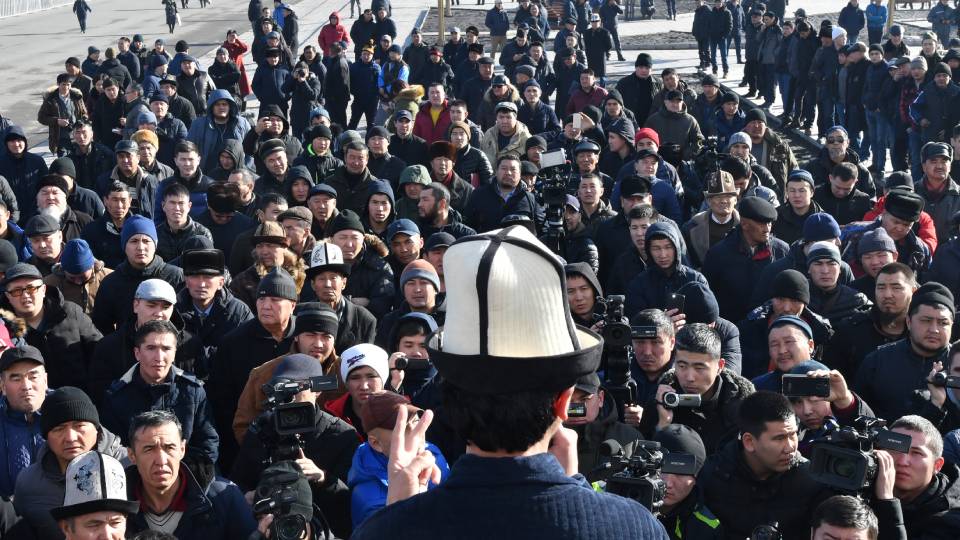
These downward trends coincided with a surge of China-related protests in the region. In 2019, Kyrgyzstan witnessed about 40 anti-China demonstrations, while in 2021, Kazakhstan saw more than 40 such protests. The grievances echoed familiar themes seen elsewhere in the world: concerns about Chinese labor practices and environmental degradation.
In this sense, Central Asia is not an exception but part of a broader global pattern. From Latin America to sub-Saharan Africa, China’s expanding investment presence has often been met with growing public unease, suggesting that economic influence does not automatically translate into public trust or approval.
After 2021, however, public perceptions began to improve in Kazakhstan and Kyrgyzstan. According to CAB surveys, favorable views reached 67% in Kyrgyzstan and 54% in Kazakhstan. This recovery may be linked to Beijing’s growing efforts to adapt to local concerns—such as committing to hire more local workers in Chinese-backed projects, investing in renewable energy that addresses environmental anxieties, and supporting initiatives that generate greater value addition for local economies.
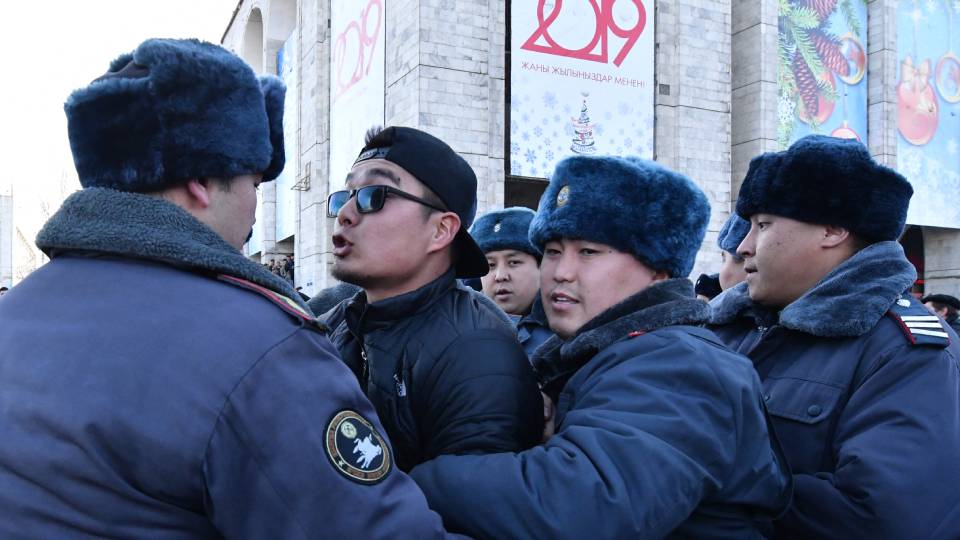
Kyrgyz police officers detain supporters of opposition politician Amanbol Babakulov during a rally against so-called Chinese expansion at the Ala-Too square in Bishkek on January 17, 2019. (Photo by Vyacheslav OSELEDKO / AFP)
Uzbekistan stands out as an exception. Favorable views toward China remain stuck at 44%, nearly identical to 2021 levels. Several factors help explain this divergence. First, Uzbekistan has historically pursued a more inward-looking and sovereignty-conscious foreign policy, which fosters greater public caution toward external influence—including from China.
Second, unlike Kyrgyzstan and Kazakhstan, where cross-border trade and cultural exchange with China are part of daily life, Uzbekistan’s society has had less direct engagement with China. As a result, perceptions are shaped more by external narratives than lived experience.
While concerns about labor practices and environmental degradation exist, similar to other parts of the region, the primary drivers of negative perceptions across all three countries are the debt dependency and land acquisition that shape public opinion toward China.
Debt Dependency Concerns
Debt dependency remains one of the core drivers of negative perceptions toward China in Central Asia. According to the CAB survey, 79% of respondents in Kyrgyzstan expressed concern in 2023 that Chinese development projects could increase national debt.
These fears are not unfounded: Kyrgyzstan owes roughly $1.7 billion to the Export-Import Bank of China, accounting for about 36.7% of the country’s external debt. Public anxiety is particularly acute regarding the potential for debt obligations to be exchanged for national assets—such as mineral reserves—reinforcing suspicions that China could leverage financial dependence for strategic or political gain.
By comparison, Kazakhstan and Uzbekistan have far lower levels of debt exposure to China. Beijing’s lending represents just 3.5% of Kazakhstan’s GDP and around 13% of Uzbekistan’s total external debt. Yet despite these relatively modest figures, CAB survey data from 2023 show that 72% of respondents in both countries worry that Chinese projects could increase national debt. This reveals a striking divergence between objective financial exposure and public perception.
The persistence of these fears suggests that trust, not just numbers, drives public opinion. Across Central Asia, some citizens view Chinese lending as carrying political or economic strings, even when the evidence does not support claims of coercive “debt traps.” Research on China’s financing practices shows a far more mixed and pragmatic reality, yet public attitudes are still influenced by commentary and media narratives that focus on risks of dependency. In this sense, even where financial exposure is modest, perception alone can shape how Chinese projects are understood.
Public attitudes are still influenced by commentary and media narratives that focus on risks of dependency. In this sense, even where financial exposure is modest, perception alone can shape how Chinese projects are understood.
Citizens fear that cumulative obligations, combined with strategic investments, could erode decision-making power or compromise national resources. Whether in highly indebted Kyrgyzstan or in relatively less exposed Kazakhstan and Uzbekistan, the fear of debt dependency functions as a lens through which Chinese investment is interpreted—often amplifying distrust and skepticism.
The Land Transfer Debate
Another major driver of anti-China sentiment in Central Asia is the widespread fear of land transfer to Chinese investors. According to the CAB survey, concern about this issue is even greater than debt worries: in 2023, 90% of respondents in Kazakhstan, 88% in Kyrgyzstan, and 83% in Uzbekistan said they have concerns about Chinese buyers wanting to purchase land in their country.
Nowhere has this anxiety been more visible than in Kazakhstan. In 2016, thousands of citizens took to the streets after the government passed a law allowing foreigners to rent agricultural land for up to 25 years. The proposal sparked outrage, with many fearing that the legislation would pave the way for Chinese land ownership.
The protests grew so intense that then-President Nursultan Nazarbayev was forced to announce a moratorium on changes to land laws until 2021. For many Kazakhs, the idea of handing over farmland—whether temporarily or permanently—to Chinese investors directly touches on questions of national sovereignty and identity.
The issue resonates beyond Kazakhstan. In Uzbekistan, where Chinese engagement has expanded significantly since 2016, rumors that farmland was being handed over to Chinese companies also fueled unease.
Even though Uzbek law stipulates that farmers lease land from the state for 49 years, with strong protections against confiscation, speculation about Chinese land acquisitions has persisted. These narratives, regardless of their factual basis, reinforce deep-rooted fears about external control over national resources.
The Limits of China’s Soft Power
Despite Beijing’s growing efforts to expand its soft power in Central Asia its reach to the broader public remains limited. Persistent concerns over debt dependency and land transfer continue to shape the foundation of anti-China sentiment in the region.
These anxieties are not merely about numbers on a balance sheet or legal frameworks on land ownership. At their core, they reflect deeper fears about the erosion of sovereignty. For many Central Asians, Chinese loans and land leases are interpreted less as economic opportunities and more as potential levers of control. Debt and land issues, therefore, converge into a powerful narrative: that Chinese investment poses a long-term threat to national independence and self-determination.
This dynamic explains why even in countries with relatively low debt exposure to China, such as Kazakhstan and Uzbekistan, public concern about debt dependency remains alarmingly high. Similarly, rumors about farmland transfers in Uzbekistan, despite legal safeguards, are enough to spark distrust. The perception gap between governments that welcome Chinese capital and citizens who view it with suspicion has become one of the defining features of China’s regional engagement.
Unless Beijing pairs its growing economic footprint with genuine grassroots diplomacy—initiatives that address local concerns, highlight mutual benefits, and directly engage ordinary citizens—negative perceptions will persist. Without such an approach, debt and land anxieties will continue to fuel backlash, limiting the effectiveness of China’s soft power and constraining its influence in Central Asia.
Yunis Sharifli is CGSP’s Non-Resident Fellow for Central Asia.