Bangladesh Election Fuels China Pivot, Reshaping South Asia’s Power Balance

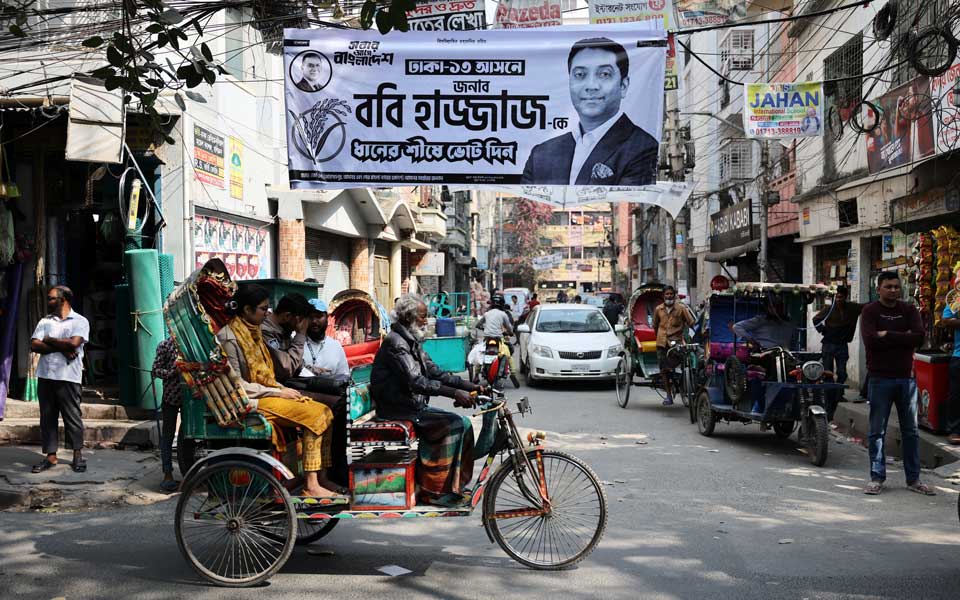
A rickshaw passes by an election campaign banner of Bangladesh Nationalist Party (BNP) candidate Bobby Hajjaj, ahead of the national election, in Dhaka, Bangladesh, February 9, 2026. REUTERS/Mohammad Ponir Hossain

Bangladesh’s national election on Thursday may shift South Asia’s geopolitical balance as China expands influence while India’s regional standing weakens. The vote follows last year’s student uprising that toppled Prime Minister Sheikh Hasina, who remains sheltered in India despite extradition requests.

Interim leader Muhammad Yunus has deepened ties with China and Pakistan, with analysts calling the pivot “irreversible.” China recently signed a defense agreement for a drone plant near India’s border and granted duty-free access to Bangladeshi goods. Indian former diplomat Dilip Sinha acknowledged “China delivers infrastructure in a way India cannot.”

  • Get a daily email packed with the latest news and analysis from Africa, Asia, and across the Global South.
  • Read exclusive insights on the key trends shaping China’s relations across the Global South.
  • Full access to the News Feed that provides daily updates on Chinese engagement in the Global South.

China, Africa and the Global South... find out what’s happening.

Subscribe today for unlimited access.

What is The China-Global South Project?

Independent

The China-Global South Project is passionately independent, non-partisan and does not advocate for any country, company or culture.

News

A carefully curated selection of the day’s most important China-Global South stories. Updated 24 hours a day by human editors. No bots, no algorithms.

Analysis

Diverse, often unconventional insights from scholars, analysts, journalists and a variety of stakeholders in the China-Global South discourse.

Networking

A unique professional network of China-Africa scholars, analysts, journalists and other practioners from around the world.