By Hector Velasco and Mariëtte Le Roux
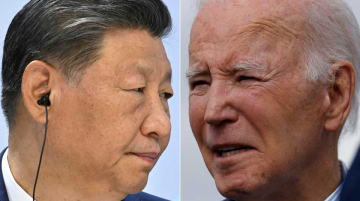
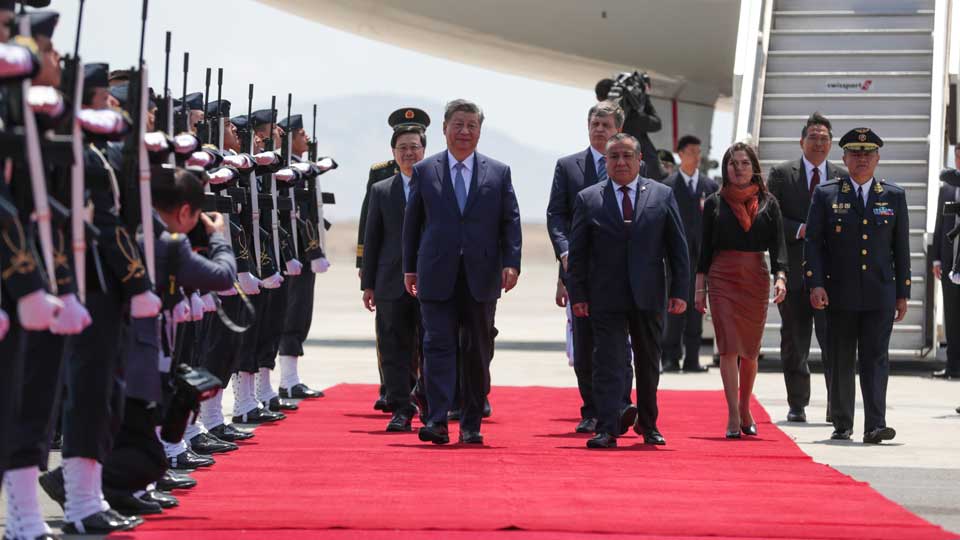
US President Joe Biden and his Chinese counterpart Xi Jinping arrive Thursday in Lima for an Asia-Pacific summit overshadowed by the prospect of a world embroiled in trade wars under Donald Trump.
Saturday’s face-to-face will likely be the last meeting between the sitting leaders of the world’s largest economies before Biden hands the reins back to Trump, who has signaled a confrontational approach to Beijing for his second term in the White House.
Biden and Xi will likely “take stock of efforts to responsibly manage competition,” a senior US administration official told reporters Wednesday before the Asia-Pacific Economic Cooperation (APEC) summit.
APEC, created in 1989 with the goal of regional trade liberalization, brings together 21 economies that jointly represent about 60 percent of world GDP and over 40 percent of global commerce.
The summit program was to focus on trade and investment for inclusive growth and innovation for its members’ common good.
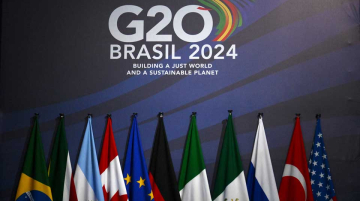
But uncertainty over Trump’s next moves now clouds the agenda — as it does for the COP29 climate talks underway in Azerbaijan and a G20 summit in Rio de Janeiro next week.
“All that… the APEC leaders and G20 leaders will be talking about is the one world leader who is not there -– and that is Donald Trump,” Victor Cha of the Washington-based Center for Strategic and International Studies think tank said this week.
The summits will be “about one thing,” he told reporters in Washington: “What to expect from the next Trump administration on trade, alliances.”
America First
Xi and Biden will meet on the second and final day of the summit, which will also bring together leaders and senior officials from Japan, South Korea, Canada, Australia, and Indonesia, among others.
Russia’s President Vladimir Putin will not attend.
On Thursday, ministers will set the tone for the heads-of-state summit with a meeting of their own.
US Secretary of State Antony Blinken — whom Trump announced Wednesday he will replace with China hawk Marco Rubio — will attend the ministerial-level talks along with US Trade Representative Katherine Tai.
Trump’s “America First” agenda, with protectionist stances on global commerce, fossil fuel extraction, and foreign conflicts, is threatening alliances Biden had built on issues ranging from the wars in Ukraine and the Middle East to climate change and trade.
The Republican president-elect has threatened to slap tariffs of up to 60 percent on imports of goods from China in an attempt to balance bilateral trade.
China is grappling with a prolonged housing crisis and sluggish consumption that can only be made worse by a new trade war.
But economists say punitive levies will likely also harm the American economy and affect trade with its neighbors and with Europe.
Criminals and Drugs
China is an ally of Western pariahs Russia and North Korea and is building up its own military capacity while ramping up pressure on Taiwan, which it claims as part of its territory.
It is also expanding its reach into Latin America through infrastructure and other projects under its Belt and Road Initiative.
Xi will on Thursday inaugurate South America’s first Chinese-funded port, in Chancay, north of Lima.
Biden, meanwhile, will meet Japanese Prime Minister Shigeru Ishiba and South Korean President Yoon Suk Yeol, who are key US allies in Asia.
Trump has not only China in his economic crosshairs.
The Republican president-elect has threatened tariffs of 25 percent or more on goods coming from Mexico — another APEC member — unless it stops an “onslaught of criminals and drugs” crossing the border.
Mexico’s new President, Claudia Sheinbaum, is skipping the Lima summit amid a diplomatic feud with Peru.
Her country has refused to recognize Peruvian President Dina Boluarte, who replaced Pedro Castillo, ousted 18 months after his election in 2021.
Peru has deployed more than 13,000 soldiers to keep the peace in Lima as transport workers and shop owners embarked on three days of protests against extortion by criminal gangs.
On Wednesday, uniformed agents stopped hundreds of demonstrators before they could reach the convention center.