By Hannah Ryder, Deputy Country Director for China, United Nations Development Program
I’m entering into my fourth week here in Beijing, and one of the experiments I tried last weekend was to order a takeaway. I was tired from a very hectic week of meetings – that was my excuse anyway! But it turns out the process of getting a takeaway in Beijing is quite different from getting a takeaway in London or Nairobi – two other big cities I’ve lived in. In London or Nairobi in order to get a takeaway you usually need to phone the restaurant directly, and if they don’t offer a takeaway service then you either have to collect the food yourself or you have to try another restaurant. In contrast, here in Beijing, restaurants don’t generally offer takeaway services themselves. Instead, customers need to phone – and pay – a special company set up simply for the purpose of takeaway to pick up the order and deliver it to your home. That’s right in the language of economists Chinese restaurants effectively “outsource” their takeaway services.
But it’s the same outcome or result wherever you live – a lovely takeaway delivered to your door, but just a different process.
How to get a McDonalds in Beijing? Get on a bike! Credit: Augapfel, 2007
Thinking about it as an economist, these differences are likely to be due to very different economic structures and consumer markets in Beijing, London and Nairobi. For example, in Beijing the cost of transport and labor makes it much cheaper to have a specialized delivery company.
But more importantly, the comparison between the two reminded me of a realization I had two weeks ago, when a report called the Development of Pacific Island Countries Report was published, which was supported by UNDP China and the Australian Department of Foreign Affairs and Trade. The idea behind the report was to highlight the opportunities for China and other countries to support development in three specific countries – Samoa, Tonga and Papua New Guinea, and thereby increase the effectiveness of development cooperation in the region. Of course, the report was a fascinating read and I learnt a lot about the differences between the three countries through it.
However, there was a table on Page 5 of the report which made me pause. The table is entitled “Divergent Interpretations of Development Effectiveness Principles” and is divided into two main columns. One column provides detail of how OECD donors interpret some key “principles” of effective development cooperation, and the other column provides details of how south-south cooperation providers – such as China – interpret those same principles.
And the result is just like the takeaway. Both the OECD donors and the south-south providers aim to deliver and provide the same product – development cooperation, and they both try to provide it as efficiently as possible. But in the same way that the process of getting a takeaway is very different in Beijing versus London, due to very different economic settings, the process of delivering development cooperation from a country like China or the UK is also very different. Or, to put it in my mother’s language (who doesn’t speak like an economist) “there’s more than one way to skin a cat”.
Many of these differences are due to different economic incentives to deliver aid and structures of the civil service at home and abroad. For instance, China does not have a large, standalone aid agency. It doesn’t have a great deal of time or staff to design specialist projects. But this means China has to rely more on listening to the direct demands of country governments such as in Samoa, Tonga or PNG, and that can be very useful. In contrast, many OECD countries have more staff so can spend more time crafting special aid projects, and they can also reach out to non-governmental organizations and foundations to work together on projects, but this also slows them down. There are many more economic differences which have similar effects on other effectiveness principles.
This “divergent interpretations” point seemed a very simple one to make, but I had never seen it made in such a clear way, and there it was, on Page 5 of this fascinating new report. So do read the report, perhaps over a takeaway at home on a weekday night. But when you get to Page 5 do linger, and have a look at how development cooperation from different countries around the world is – in principle – the same, but different too.
Get a daily email packed with the latest news and analysis from Africa, Asia, and across the Global South.
Read exclusive insights on the key trends shaping China’s relations across the Global South.
Full access to the News Feed that provides daily updates on Chinese engagement in the Global South.
China, Africa and the Global South... find out what’s happening.
For the second time in just three years, Chinese expatriate businessman Liu Zhiyong has been granted an honorary chieftaincy title in Nigeria’s Lagos state. Liu received his latest title last month from Chief Gbobaniyi (photo) ...
The chief of the central Nigerian town of Keffi in Nasarawa State awarded a local chieftain title to the Shandong native Cong Hui (丛辉) in appreciation of his contributions to economic development in ...
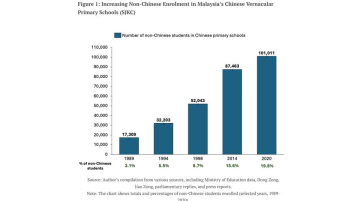
The enrollment of non-Chinese students in Chinese-language schools in Malaysia is reportedly increasing rapidly, partly because employers are increasingly favoring speakers of Mandarin, according to a new report by the Singaporean publication Fulcrum. While ...
From Algeria to Angola, the Chinese population across Africa is growing rapidly. In less than a decade, hundreds of thousands of immigrants have made the long journey from mainland China to cities and ...
What is The China-Global South Project?
Independent
The China-Global South Project is passionately independent, non-partisan and does not advocate for any country, company or culture.
News
A carefully curated selection of the day’s most important China-Global South stories. Updated 24 hours a day by human editors. No bots, no algorithms.
Analysis
Diverse, often unconventional insights from scholars, analysts, journalists and a variety of stakeholders in the China-Global South discourse.
Networking
A unique professional network of China-Africa scholars, analysts, journalists and other practioners from around the world.
We use cookies on our website to remember your login status and manage your subscription access. By clicking “Accept”, you consent to the use of ALL the cookies.
This website uses cookies to improve your experience while you navigate through the website. Out of these, the cookies that are categorized as necessary are stored on your browser as they are essential for the working of basic functionalities of the website. We also use third-party cookies that help us analyze and understand how you use this website. These cookies will be stored in your browser only with your consent. You also have the option to opt-out of these cookies. But opting out of some of these cookies may affect your browsing experience.
Necessary cookies are absolutely essential for the website to function properly. These cookies ensure basic functionalities and security features of the website, anonymously.
Cookie
Duration
Description
cookielawinfo-checbox-analytics
11 months
This cookie is set by GDPR Cookie Consent plugin. The cookie is used to store the user consent for the cookies in the category "Analytics".
cookielawinfo-checbox-functional
11 months
The cookie is set by GDPR cookie consent to record the user consent for the cookies in the category "Functional".
cookielawinfo-checbox-others
11 months
This cookie is set by GDPR Cookie Consent plugin. The cookie is used to store the user consent for the cookies in the category "Other.
cookielawinfo-checkbox-necessary
11 months
This cookie is set by GDPR Cookie Consent plugin. The cookies is used to store the user consent for the cookies in the category "Necessary".
cookielawinfo-checkbox-performance
11 months
This cookie is set by GDPR Cookie Consent plugin. The cookie is used to store the user consent for the cookies in the category "Performance".
viewed_cookie_policy
11 months
The cookie is set by the GDPR Cookie Consent plugin and is used to store whether or not user has consented to the use of cookies. It does not store any personal data.
Functional cookies help to perform certain functionalities like sharing the content of the website on social media platforms, collect feedbacks, and other third-party features.
Performance cookies are used to understand and analyze the key performance indexes of the website which helps in delivering a better user experience for the visitors.
Analytical cookies are used to understand how visitors interact with the website. These cookies help provide information on metrics the number of visitors, bounce rate, traffic source, etc.
Advertisement cookies are used to provide visitors with relevant ads and marketing campaigns. These cookies track visitors across websites and collect information to provide customized ads.